
Contents
HOKA Mach vs Saucony Kinvara: Which Lightweight Trainer Fits?
Compare the HOKA Mach 7 and Saucony Kinvara 15 on weight, cushioning, fit, tempo use, and daily training versatility.

Quick Hits
- •The Mach 7 adds 8mm more heel stack and high cushioning while remaining a daily-speed trainer.
- •The Kinvara 15 is 0.7oz lighter for men, lower at 29/25mm, and $25 less expensive.
- •Mach has a narrow standard-only fit; Kinvara offers standard and wide but still requires a careful low-drop try-on.
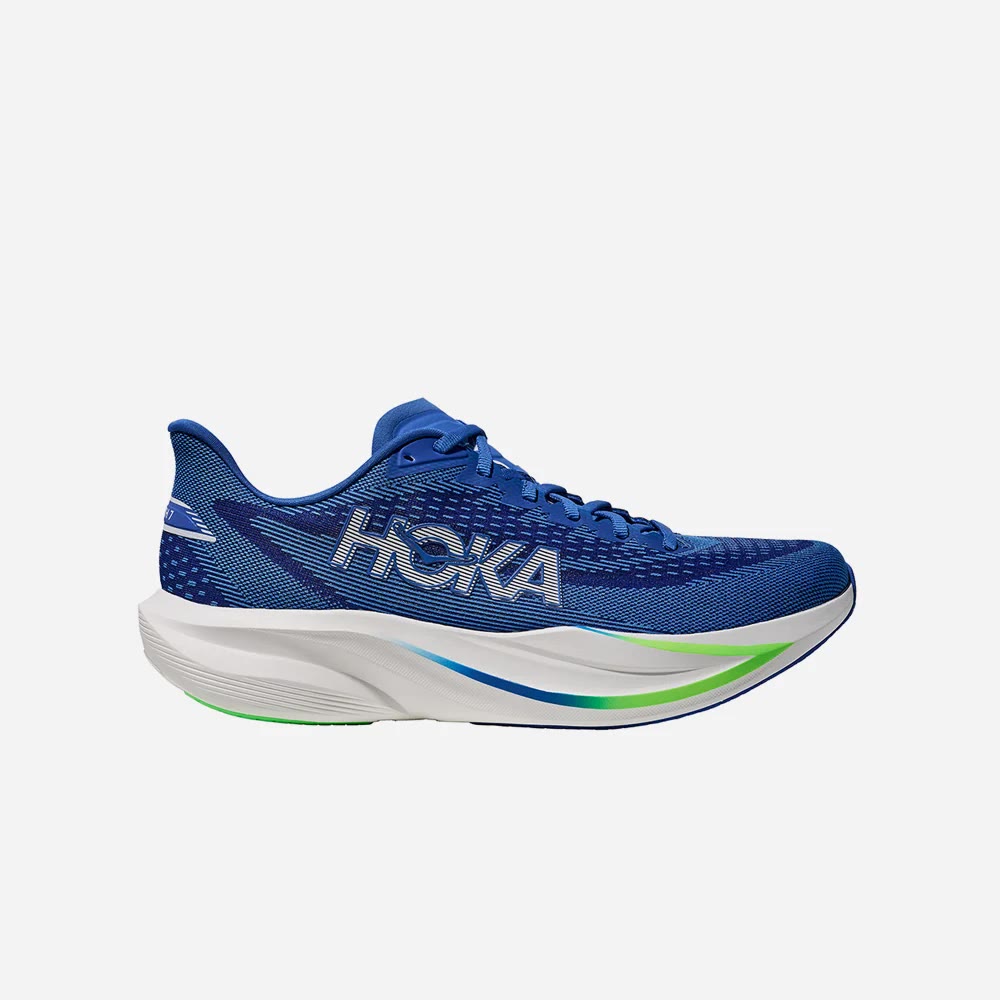
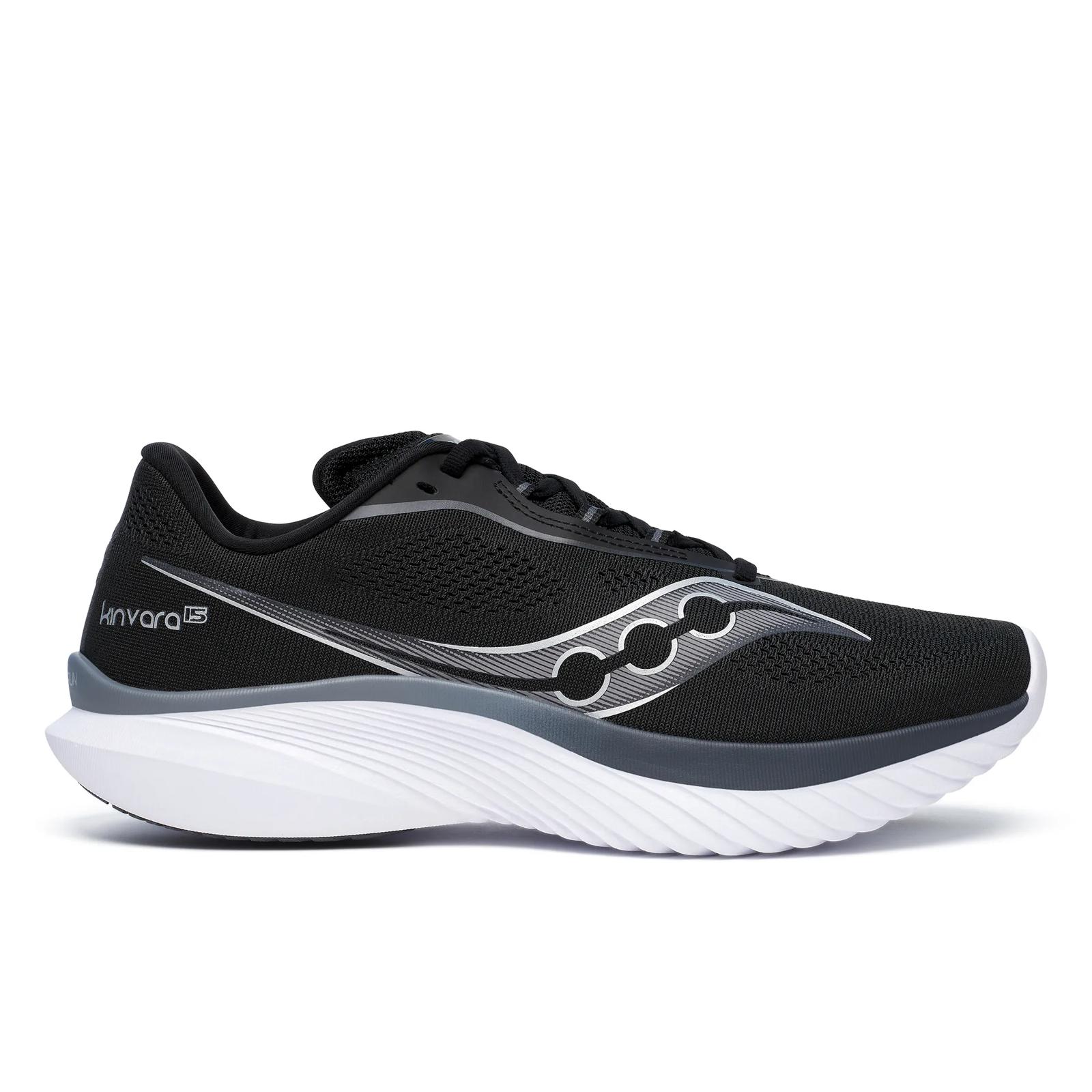
Head-to-head breakdown using our audited shoe database.
HOKA Mach vs Saucony Kinvara
Quick Verdict
The current matchup is HOKA Mach 7 versus Saucony Kinvara 15. Both are neutral road shoes cataloged for daily and speed use, but they represent different amounts of shoe.
Choose the HOKA Mach 7 for a 37/32mm high-cushion platform that can cover ordinary mileage and tempo work. Choose the Saucony Kinvara 15 for a 29/25mm, 4mm-drop platform with lower weight, wide sizing, and a MSRP: $25 lower MSRP.
Specification Comparison
| Specification | HOKA Mach 7 | Saucony Kinvara 15 |
|---|---|---|
| Categories | Daily, speed | Daily, speed |
| Cushion | High | Low |
| Drop | 5mm | 4mm |
| Weight (men/women) | 8.5oz / 7.1oz | 7.8oz / 6.6oz |
| Stack | 37mm / 32mm | 29mm / 25mm |
| Support | Neutral | Neutral |
| Widths | Standard | Standard, Wide |
| MSRP | MSRP: $145 | MSRP: $120 |
Key Differences
The Mach 7 has 8mm more heel stack and 7mm more forefoot stack. RTINGS and OutdoorGearLab testing describe a firm-responsive, breathable trainer with stronger forefoot rebound and useful pace range. It is not the softest long-run shoe, and its higher stack does not automatically mean a plush ride.
The Kinvara 15 is lighter, lower, and more flexible. Fleet Feet and Doctors of Running emphasize its traditional Kinvara identity: a straightforward, low-drop trainer that lets the foot work without a plate or extreme rocker. That does not mean it requires exceptional “foot strength,” nor should it be labeled unsafe for beginners.
Fit and Sizing
Independent Mach 7 testing found its standard-only upper secure but narrow through the forefoot. Runners with broad feet have no cataloged wide version in this generation.
The Kinvara 15 comes in standard and wide. Published reviews generally treat length as conventional, but low stack and flexibility do not compensate for a poor fit. In either shoe, preserve toe clearance and avoid sizing longer solely to gain width.
Ride and Best Uses
The Mach 7 is better for runners who want one shoe to cover steady daily runs, intervals, tempo sessions, and some moderate long outings. Its higher stack offers more material underfoot, while its firm character helps avoid a deeply soft sensation.
The Kinvara is best for shorter daily runs, strides, tempo work, and runners who deliberately prefer ground feel. It can handle more mileage when the runner is comfortable in it, but the catalog's low-cushion designation deserves attention. Our best lightweight shoes provides other workout options.
Who Should Choose the HOKA Mach 7
- Runners seeking more cushioning without a plate.
- Athletes who want daily-to-tempo versatility from one shoe.
- Standard-width feet that fit the narrow forefoot securely.
Who Should Choose the Saucony Kinvara 15
- Runners who prefer low stack, 4mm drop, and flexible transitions.
- Athletes prioritizing low weight and a MSRP: $120 MSRP.
- Wide-footed buyers who need a formal wide option.
Tradeoffs
Mach's extra cushioning comes with more weight, a MSRP: $25 premium, and standard-only width. Kinvara's lighter construction supplies less underfoot material and may feel abrupt to runners accustomed to maximum cushioning. Neither has a stability designation, and no source supports guaranteed durability mileage for either.
Runners wanting more protection should compare our best daily trainers and best long-run shoes.
Value and Rotation Context
Mach is the easier one-shoe choice because it supplies enough stack for routine mileage while remaining quick. In a larger rotation, it can serve as the workout trainer between a cushioned easy shoe and a plated racer.
Kinvara is a useful contrast shoe for runners who already own a tall trainer and want flexibility, low weight, and ground connection. Its MSRP: $120 MSRP is compelling when that distinct role is intentional. It is less valuable when the runner repeatedly avoids it because the lower stack or 4mm drop does not match their preferences.
Final Verdict
The Mach 7 is the more protective and broadly versatile lightweight trainer. The Kinvara 15 is the clearer minimalist-leaning value: lighter, lower, wider in availability, and less expensive. Choose based on the amount of cushioning and structure you actually want, not unsupported injury or longevity assumptions.
Key Takeaway
Choose the Mach 7 for cushioned, firm-responsive daily speed; choose the Kinvara 15 for a lighter, lower, more flexible ride at a lower MSRP.
Frequently Asked Questions
Which is better for tempo runs?
Which works better as a daily trainer?
Is the Kinvara's 4mm drop a problem?
References
- https://vn.hoka.com/en/products/giay-chay-bo-nam-hoka-mach-7-1171904-cbltb-cobalt-blu
- https://www.rtings.com/running-shoes/reviews/hoka/mach-7
- https://www.fleetfeet.com/blog/saucony-kinvara-15-review-less-is-more
- https://www.doctorsofrunning.com/saucony-kinvara-15-review-2024/