
Contents
Individualized Workout Intensity: Personal Prescription for Every Runner
Generic intensity prescriptions ignore your unique physiology. Here's how AI calculates the exact intensity that maximizes YOUR adaptation without overtraining.

Quick Hits
- •The same percentage of max heart rate produces vastly different training effects in different runners
- •Your optimal tempo pace depends on YOUR lactate threshold, not generic formulas
- •AI analyzes your workout data to find where YOUR physiological transitions occur
- •Daily readiness affects appropriate intensity—what's optimal Tuesday may not be optimal Friday
- •Personalized intensity prevents both undertraining (too easy) and overreaching (too hard)
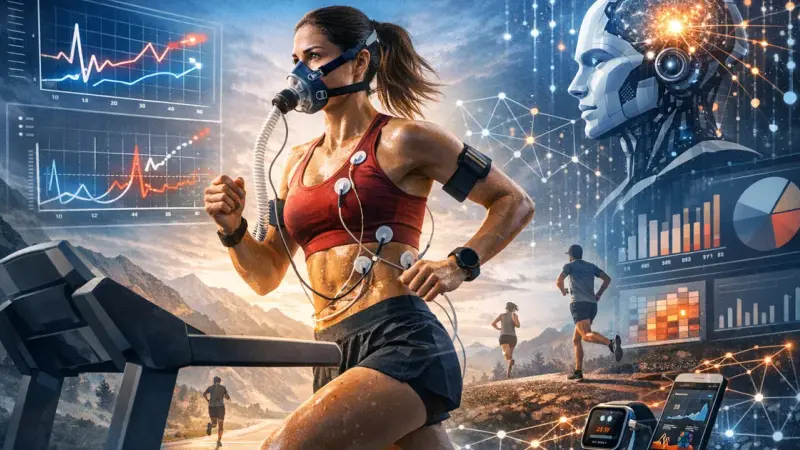
The "right" intensity for you isn't the same as the "right" intensity for everyone else.
Why Generic Intensity Fails
The One-Size-Fits-All Problem
Most training plans prescribe intensity using formulas:
- "Tempo pace: 25-30 seconds slower than 5K pace"
- "Easy run: 65-75% of max heart rate"
- "Threshold: pace you could hold for one hour"
These formulas assume uniform physiology. In reality:
- Lactate thresholds range from 65-90% of VO2max
- Running economy varies by 40%+ between runners
- Recovery capacity differs dramatically
- Response to different intensities is individual
Real-World Impact
Runner A and Runner B:
- Both have 20:00 5K pace (6:25/mile)
- Formula says tempo pace: 6:55/mile
- Formula says easy pace: 8:30-9:00/mile
But physiologically:
Runner A (high threshold, average economy):
- True tempo pace: 6:40/mile (faster than formula)
- True easy pace: 8:00-8:30/mile (faster than formula)
Runner B (average threshold, excellent economy):
- True tempo pace: 7:10/mile (slower than formula)
- True easy pace: 9:00-9:30/mile (slower than formula)
Using generic formulas:
- Runner A: Tempo runs too easy, easy runs too easy
- Runner B: Tempo runs too hard, easy runs too hard
Both runners train at wrong intensities despite following "correct" formulas.
The Cost of Wrong Intensity
Too easy (insufficient stimulus):
- Adaptations are smaller than possible
- Training time partially wasted
- Slower improvement despite consistent effort
Too hard (excessive stress):
- Incomplete recovery between sessions
- Accumulated fatigue without proportional adaptation
- Increased injury risk
- Eventual burnout or breakdown
The goal is precise matching between intensity and your body's optimal training zone.
Factors in Personal Intensity
Physiological Factors
Lactate threshold: The intensity where lactate accumulates faster than clearance. Tempo/threshold training targets this level—but WHERE that level falls varies enormously between runners.
VO2max: Your maximum aerobic capacity. Sets the ceiling for sustained aerobic work. Higher VO2max means faster potential at all intensities.
Running economy: How much oxygen you use at a given pace. Better economy means less physiological cost for the same speed.
Fiber type distribution: More fast-twitch fibers favor shorter, faster efforts. More slow-twitch fibers favor longer, steadier efforts. This affects optimal intensity distribution.
Training Factors
Training history: Runners with extensive aerobic bases can handle different intensity distributions than newer runners.
Current fitness: Your threshold pace today isn't what it was three months ago. Intensities should track current fitness, not historical.
Accumulated fatigue: Today's optimal intensity depends partly on recent training. Fresh versus fatigued states require different intensities.
Phase of training: Base building, speed development, and race-specific phases all have different intensity priorities.
External Factors
Environmental conditions: Heat, cold, altitude, humidity—all affect the intensity your body experiences at a given pace.
Life stress: Work pressure, sleep deprivation, emotional stress reduce capacity for high intensity.
Nutrition and hydration: Fueling status affects what intensity is sustainable and beneficial.
AI Intensity Calculation
Data Analysis
AI determines your personal intensity zones by analyzing:
Workout performance:
- What paces do you hit at what heart rates?
- How does this relationship change over time?
- Where does HR start accelerating (threshold identification)?
Recovery patterns:
- How quickly do you recover from different intensity sessions?
- Which intensities cause excessive fatigue?
Performance trends:
- What intensities are producing improvement?
- Which sessions move the needle most effectively?
Finding Your Thresholds
Aerobic threshold: The intensity where your body shifts from primarily fat-burning to mixed energy systems. Identified by subtle HR acceleration at certain paces.
Lactate/anaerobic threshold: The highest intensity you can sustain for extended periods. Identified by analyzing sustained effort data.
VO2max intensity: The intensity that maximally stresses your aerobic system. Identified by peak heart rate and performance data.
These thresholds form the basis of personalized intensity zones.
Daily Calibration
Beyond long-term zones, AI calibrates daily intensity based on:
Readiness indicators:
- HRV above baseline: Can push toward upper end of zones
- HRV below baseline: Stay in lower portions of zones
Recent training:
- Coming off hard sessions: Moderate intensity appropriate
- Well-rested: Can hit full intensity targets
Environmental conditions:
- Hot weather: Same intensity requires slower pace
- Cool weather: Can push pace while maintaining intensity
Prescription Output
AI delivers specific, actionable intensity guidance:
Instead of: "Easy run, 65-75% max HR" Personalized: "Easy run at 8:45-9:15/mile pace, HR 138-148"
Instead of: "Tempo run at threshold" Personalized: "Tempo: 4x8 minutes at 7:22-7:30/mile, HR 162-168"
Clear targets based on YOUR physiology, not formulas.
Adjusting Intensity Over Time
As Fitness Improves
The challenge: Your threshold pace improves from 7:30 to 7:15 over 12 weeks. If intensities stay fixed, you're now training below threshold.
AI response: Continuously updates intensity targets based on recent performance. As you get faster, targets get faster.
Seasonal Variation
Summer: Heat reduces pace at same physiological intensity. AI adjusts pace targets down while maintaining HR targets.
Winter: Cold allows faster paces. AI adjusts pace targets up.
Altitude: Reduced oxygen requires slower paces. AI adjusts based on elevation data.
Phase-Specific Intensity
Base phase: Emphasis on lower intensities (Zones 1-2). Quality sessions at moderate intensity.
Build phase: Introducing higher intensities (Zone 4). Tempo and threshold work increase.
Peak phase: Race-specific intensities dominate. VO2max work reaches maximum.
Taper: Maintaining some intensity while reducing volume. Quality over quantity.
AI shifts intensity emphasis based on training phase and goals.
Practical Application
Easy Runs
The most common intensity mistake: Easy runs too fast.
Personalized easy intensity:
- Based on YOUR aerobic threshold
- HR ceiling set to ensure recovery
- Pace range reflecting YOUR efficiency
Trust the easy pace. It often feels slower than you'd choose. That's the point.
Tempo/Threshold Work
Threshold intensity is precise: Too slow: Insufficient stimulus Too fast: Unsustainable, excessive fatigue
Personalized threshold:
- Your specific threshold pace (not formula-derived)
- HR target reflecting YOUR threshold
- Duration appropriate for YOUR fitness
Interval Training
VO2max intervals require correct intensity: Too slow: Not reaching VO2max, missing stimulus Too fast: Anaerobic, different training effect
Personalized interval targets:
- Pace that elicits YOUR VO2max
- Recovery duration matched to YOUR recovery rate
- Rep count appropriate for YOUR current fitness
Long Runs
Long run intensity often overlooked:
Base long runs: Easy intensity throughout. Building duration, not intensity.
Marathon-specific long runs: Incorporating goal pace intensity. Different prescription than base long runs.
Personalized long run guidance specifies exactly what intensity for what portion.
The Intensity Feedback Loop
Workout Execution
You execute the prescribed intensity:
- AI provides specific pace/HR targets
- You complete the workout
- Data automatically syncs
Response Analysis
AI analyzes how you responded:
- Were targets achievable?
- How did HR respond to pace?
- What did perceived effort indicate?
- How was recovery afterward?
Intensity Refinement
Based on response, AI refines future intensity:
- Targets too easy: Increase next time
- Targets too hard: Decrease next time
- Recovery compromised: Reduce intensity or frequency
Continuous Optimization
This loop runs continuously:
- Every workout provides data
- Data refines intensity targets
- Better targets produce better training
- Better training produces better data
The system gets more accurate over time as it learns your specific responses.
Generic intensity is educated guesswork. Personalized intensity is data-driven precision. By training at exactly the right intensity for YOUR physiology, you extract maximum benefit from every workout—improving faster while reducing the risk of over- or under-training.
Get personalized intensity targets on your dashboard.
Key Takeaway
Individualized intensity means every workout is calibrated to YOUR physiology, not generic population averages. By training at the intensity that produces maximum adaptation for your body, you extract more benefit from every workout without the risks of over- or under-training.
Frequently Asked Questions
Why can't I just use percentage of max heart rate?
How does AI know my personal intensity zones?
Should intensity change during a training cycle?
What about perceived effort—does that matter for intensity?
My workout paces feel easy—should I go harder?
References
- Exercise physiology research
- TrainingPlan methodology
- Individual response studies