
Contents
Running for Weight Loss: What Actually Works
The honest truth about running and weight loss. What works, what doesn't, and how to approach running as part of a weight management strategy.

Quick Hits
- •Running burns calories, but you can easily out-eat your running
- •Diet matters more than exercise for weight loss—you can't outrun a bad diet
- •Running often increases hunger, which can offset calorie burn
- •Long-term, running helps maintain weight loss better than achieve it
- •Focus on running for health and fitness first; weight changes may follow
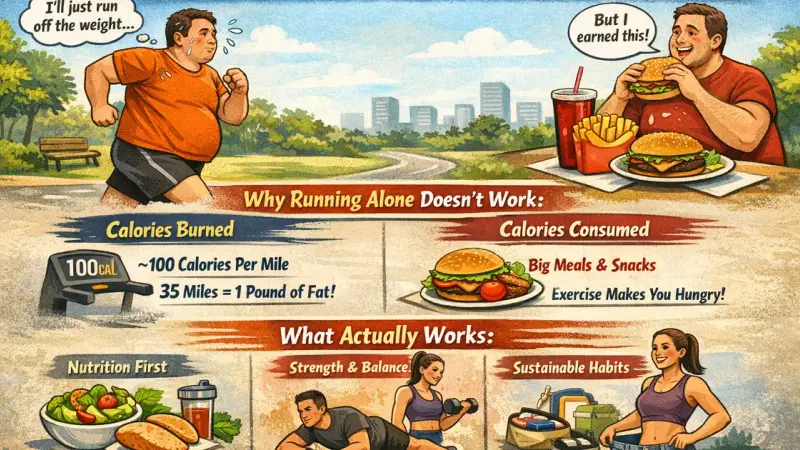
"I'll just run off the weight."
If it were that simple, every runner would be thin.
Here's the honest truth about running and weight loss.
The Basic Math
Calories Burned Running
Approximate calorie burn:
- ~100 calories per mile (varies by body weight)
- 150-lb person running 3 miles = ~300 calories
- Same person running 10 miles = ~1,000 calories
To lose 1 pound of fat:
- Requires ~3,500 calorie deficit
- At 100 cal/mile, that's 35 miles
- If you run 30 miles/week, that's barely over 1 pound
The problem: This assumes no change in eating. But running makes you hungry.
The Compensation Effect
Research shows:
- Exercise increases appetite
- Most people eat back 30-50% of calories burned
- Some people eat back 100%+
Result: Many runners don't lose weight because they eat more.
Why Running Alone Doesn't Work
You Can't Outrun Your Diet
A single meal can exceed a long run:
- 5-mile run: ~500 calories burned
- Large restaurant meal: 1,000-2,000 calories
- Post-run "reward" snack: 300-500 calories
The math: Running for an hour doesn't offset eating for five minutes.
Adaptation Happens
Over time:
- Your body gets more efficient at running
- Same run burns fewer calories
- Weight plateaus even at consistent mileage
Muscle vs. Fat
Running (especially with strength training):
- Builds some muscle
- Muscle weighs same as fat by volume
- Scale may not budge even as body composition improves
Stress and Cortisol
Overtraining or undereating while running:
- Increases cortisol (stress hormone)
- Can promote fat storage
- Can increase water retention
What Actually Works
Approach 1: Nutrition First
The most effective strategy:
- Create calorie deficit primarily through food choices
- Use running for health, fitness, and metabolism
- Don't rely on running to "burn off" eating
How:
- Track food intake (at least initially)
- Moderate portions
- Focus on protein and vegetables
- Limit calorie-dense, nutrient-poor foods
Approach 2: Sustainable Habits
Long-term success requires:
- Habits you can maintain forever
- Not extreme dieting or exercise
- Running because you enjoy it
- Eating in a way that's satisfying
The trap: Extreme approaches work temporarily but backfire.
Approach 3: Body Composition Focus
Instead of weight loss, focus on:
- Adding muscle (strength training + protein)
- Improving fitness (run consistently)
- How clothes fit (better metric than scale)
- Energy and health (non-scale wins)
Realistic Expectations
What Running CAN Do
- Improve cardiovascular health
- Build some muscle in legs
- Improve insulin sensitivity
- Reduce visceral fat (around organs)
- Improve mental health
- Maintain weight loss (better than causing it)
- Create small calorie deficit when combined with diet
What Running CAN'T Do
- Compensate for chronic overeating
- Spot-reduce fat (no such thing)
- Cause dramatic weight loss without diet changes
- Work miracles on its own
Typical Results
If running + reasonable nutrition:
- 1-2 lbs/month weight loss is sustainable
- Body composition improves (less fat, more muscle)
- Fitness improves noticeably
If running + unrestricted eating:
- Weight likely stays same or increases
- Fitness still improves
- Health markers improve even without weight change
Common Mistakes
1. Rewarding Runs With Food
The problem: "I ran 5 miles, I deserve this 800-calorie treat."
The reality: You burned 500 calories, ate 800. Net gain.
The fix: Separate running from "rewards." Eat because you're hungry, not because you earned it.
2. Overestimating Calorie Burn
The problem: Watch says 600 calories, actual burn was 400.
The reality: Devices overestimate by 20-50%.
The fix: Don't rely on calorie tracking for either exercise or eating. Focus on habits.
3. Underfueling Then Binging
The problem: Restricting food too much, then overeating.
The reality: Your body compensates for underfueling.
The fix: Eat adequately during the day. Avoid extreme restriction.
4. Running Too Much, Recovering Too Little
The problem: High volume with poor sleep and high stress.
The reality: This increases cortisol, promoting fat storage and muscle loss.
The fix: Moderate exercise, adequate recovery.
5. Ignoring Nutrition Quality
The problem: Hitting calorie targets but eating junk.
The reality: Food quality affects satiety, muscle building, and health.
The fix: Focus on whole foods, especially protein and vegetables.
A Better Approach
Step 1: Run for the Right Reasons
Primary motivation:
- Health and fitness
- Mental wellbeing
- Enjoyment of the activity
- Challenge and accomplishment
Secondary motivation:
- Support for weight management (not primary driver)
Step 2: Address Nutrition Separately
Running is not the weight loss tool. Nutrition is.
Focus on:
- Adequate protein (supports muscle, satiety)
- Vegetables (volume with low calories)
- Moderate portions
- Consistent meal timing
Step 3: Track Progress Correctly
Better than scale:
- How clothes fit
- Progress photos
- Measurements (waist, hips)
- Fitness improvements (times, distances)
- Energy and mood
If using scale:
- Weekly average, not daily readings
- Expect fluctuations
- Long-term trends matter
Step 4: Be Patient
Sustainable weight loss:
- 0.5-1 lb per week is good
- 1-2 lbs per month during maintenance
- Years of consistency beat months of intensity
Running has countless benefits. Weight loss might be one of them—but only when combined with appropriate nutrition. Run because it makes you healthier, stronger, and happier. Address weight separately through eating habits. The combination works; running alone typically doesn't.
Track your running on your dashboard.
Key Takeaway
Running can support weight loss, but it's not magic. You can't outrun a bad diet. Focus on running for the many health and fitness benefits it provides, manage nutrition separately, and have realistic expectations. Sustainable weight management comes from habits you can maintain, not extreme exercise.
Frequently Asked Questions
How much do I need to run to lose weight?
Why am I not losing weight even though I'm running?
Is running or diet more important for weight loss?
Will I lose weight faster running more?
Why do I weigh more after starting running?
References
- Weight loss research
- Exercise and metabolism studies
- Nutrition science