
Contents
Running in the Cold: How to Dress, Warm Up, and Stay Safe in Winter
Master cold-weather running with expert advice on layering, warming up, pacing, and safety. Learn what to wear at every temperature and how to actually enjoy winter running.

Quick Hits
- •Dress for 15-20°F warmer than actual temperature—you warm up quickly while running
- •The layering system: base (moisture-wicking), mid (insulation), outer (wind/water protection)
- •Extremities lose heat fastest: hat, gloves, and warm socks are non-negotiable in cold
- •Longer warmups are essential—cold muscles are injury-prone muscles
- •Running in cold is generally safe; the danger is underdressing, not the temperature itself
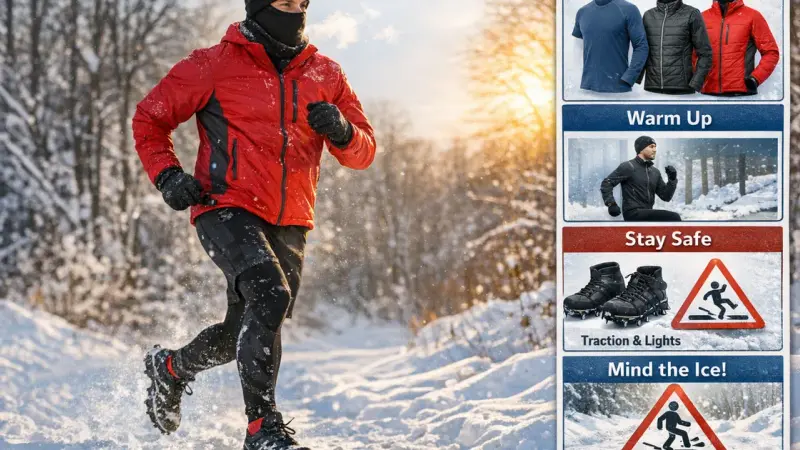
Winter running separates the committed from the casual. But here's the secret: once you learn to dress properly and adjust your routine, cold-weather running can be some of the most enjoyable running of the year.
Empty trails, crisp air, no overheating—winter has its perks.
Let's get you ready for it.
The Golden Rule: Dress for 15-20°F Warmer
When you run, your body generates significant heat. What feels freezing when you step outside becomes comfortable within minutes.
The rule: Dress as if it's 15-20°F warmer than the actual temperature.
If it's 30°F outside, dress like it's 45-50°F. You'll be cold for the first 5-10 minutes—that's correct. If you're comfortable at the start, you'll be overheating by mile 2.
Temperature-Based Dressing Guide
50-60°F (10-16°C): Cool
What you'll feel: Chilly at start, perfect mid-run
Wear:
- Short sleeves or light long sleeves
- Shorts or light tights
- Optional: light gloves, headband
Notes: This is ideal running weather. Don't overdress.
40-50°F (4-10°C): Chilly
What you'll feel: Cold start, comfortably warm after warmup
Wear:
- Long-sleeve base layer (technical fabric)
- Shorts or tights
- Light gloves
- Headband or light hat
Notes: The tricky temperature—easy to overdress. Start a little cold.
30-40°F (-1 to 4°C): Cold
What you'll feel: Definitely cold at start, requires warmup to feel good
Wear:
- Long-sleeve base layer
- Light jacket or vest (windproof)
- Running tights
- Gloves
- Hat or headband covering ears
- Consider neck gaiter
Notes: Full coverage needed. Tights preferred over shorts.
20-30°F (-7 to -1°C): Very Cold
What you'll feel: Cold throughout, hands and feet vulnerable
Wear:
- Moisture-wicking base layer
- Insulating mid-layer (lightweight fleece or thermal)
- Wind-resistant outer layer
- Thermal tights or pants
- Warm gloves (fleece-lined)
- Warm hat covering ears
- Neck gaiter or balaclava
- Wool running socks
Notes: All exposed skin should be covered. Consider traction devices if icy.
10-20°F (-12 to -7°C): Extreme Cold
What you'll feel: Bitter cold, risk of frostbite to exposed skin
Wear:
- Thermal base layer
- Heavy insulating mid-layer
- Wind/water-proof outer layer
- Insulated tights with wind protection
- Heavy gloves or mittens (mittens are warmer)
- Balaclava or face covering
- Warm hat
- Heavy wool socks
- Consider hand and toe warmers
Notes: Minimize exposed skin. Shorten runs if needed.
Below 10°F (Below -12°C): Dangerous Cold
What you'll feel: Dangerous conditions for exposed skin
Wear: Full coverage plus:
- Face completely covered
- Possibly double-layer gloves
- Hand and toe warmers
- Eye protection (ski goggles if windy)
Notes: Consider treadmill or significantly shortened outdoor runs. Frostbite can occur in minutes on exposed skin.
The Layering System
Base Layer (Next to Skin)
Purpose: Wick moisture away from skin
Material: Synthetic (polyester, nylon) or merino wool Avoid: Cotton (absorbs sweat, stays wet, makes you cold)
Fit: Snug but not restrictive
Options:
- Short-sleeve (cool conditions)
- Long-sleeve (cold conditions)
- Thermal/heavyweight (extreme cold)
Mid Layer (Insulation)
Purpose: Trap warm air, provide insulation
Material: Fleece, lightweight down, synthetic insulation
When needed: Below ~35°F
Options:
- Lightweight fleece pullover
- Running-specific insulated jacket
- Vest (core warmth, arm freedom)
Outer Layer (Protection)
Purpose: Block wind, shed water, protect from elements
Material: Softshell (breathable), hardshell (waterproof), windbreaker
Features to look for:
- Wind resistance
- Water resistance (not necessarily waterproof)
- Breathability (crucial for running)
- Reflective elements
- Zippered vents
Note: Heavy waterproof jackets trap too much heat. Save them for rain, not cold.
Extremities: Where You Lose Heat
Your head, hands, and feet lose heat fastest. Protecting them is priority #1 in cold weather.
Head
Below 50°F: Headband covering ears Below 35°F: Full hat covering ears Below 20°F: Hat plus balaclava/face covering
Heat loss through your head is significant. A warm hat is your best cold-weather investment.
Hands
Below 50°F: Light gloves Below 35°F: Midweight running gloves Below 20°F: Fleece-lined gloves or mittens Below 10°F: Heavy mittens + hand warmers
Tip: Mittens are warmer than gloves (fingers share heat).
Feet
Below 40°F: Wool blend running socks Below 25°F: Heavier wool socks Below 15°F: Consider toe warmers
Keep feet dry—wet feet get cold fast. Waterproof shoes or gaiters help in snow.
Warming Up in Cold Weather
Cold muscles are injury-prone muscles. Your warmup needs adjustment.
Extended Warmup Protocol
Indoor pre-warmup (5-10 minutes):
- Jumping jacks
- High knees in place
- Leg swings
- Dynamic stretches
Outdoor warmup (10-15 minutes):
- Start with brisk walking
- Very easy jog for first mile
- Gradual pace increase
Before Quality Workouts
For tempo runs or intervals in cold:
- Warm up indoors more thoroughly
- Add extra easy running before workout
- Consider short strides before main effort
- Wait until you feel warm before hitting target paces
Signs You're Not Warm Enough
- Muscles feel stiff or tight
- Stride feels restricted
- Breathing feels labored
- You're still shivering
If these persist beyond 15 minutes, add layers or head home.
Safety in Winter Running
Frostbite Prevention
At-risk areas: Nose, ears, fingers, toes, cheeks
Warning signs:
- Numbness or tingling
- White, gray, or waxy skin
- Hard or stiff feeling
Prevention:
- Cover all exposed skin below 20°F
- Don't stay out too long in extreme cold
- Check extremities periodically
If you notice symptoms: Get indoors, warm gradually (not hot water), seek medical attention if skin doesn't recover color.
Hypothermia Awareness
Hypothermia can occur even above freezing if you're wet and exposed.
Warning signs:
- Uncontrollable shivering
- Confusion
- Slurred speech
- Loss of coordination
Prevention:
- Don't overdress and sweat excessively
- Head home if you get soaked
- Carry a phone for emergencies
Slippery Surfaces
Ice is the biggest winter running danger.
Prevention:
- Know your routes—avoid known icy spots
- Shorten stride on slippery surfaces
- Slow down
- Use traction devices (Yaktrax, Kahtoola) when needed
- Run on fresh snow rather than ice when possible
Visibility
Winter often means dark running.
Requirements:
- Headlamp or handheld flashlight
- Reflective vest or clothing with reflective elements
- Lights (front and rear if on roads)
- Bright-colored outer layers
Winter Training Adjustments
Pace and Effort
Good news: Cold weather doesn't significantly slow you down Reality: Conditions that come with cold can
Adjustments:
- Icy/snowy surfaces: slow down for safety
- Heavy layering: may feel slightly restricted
- Windy days: run effort-based, not pace-based
- Fresh snow: expect slower times
Long Runs
Long runs require extra planning in winter:
- Carry extra layers in case you slow down and get cold
- Plan routes with bail-out options
- Bring hand warmers for very long runs
- Hydration freezes—use insulated bottles or run routes with water access
Quality Workouts
Tempo runs and intervals are harder to execute in cold:
- Extended warmup is essential
- May need to modify paces slightly
- Choose safer footing (track, plowed path)
- First interval often feels rough—don't panic
Treadmill Days
Sometimes the treadmill is the right choice:
- Extreme cold (below 0°F / -18°C with windchill)
- Ice storms
- When you're sick (don't stress your immune system)
- Quality workouts when outdoor footing is poor
Consistency Over Perfection
Winter is about maintenance and consistency:
- Don't skip runs due to "bad" weather (properly dressed, it's rarely bad)
- Adjust expectations for conditions
- Focus on effort, not pace
- Stay injury-free for spring racing
Gear Recommendations
Must-Have Winter Running Gear
- Technical base layers (2-3 pieces)
- Windproof outer layer
- Running tights (at least one thermal pair)
- Warm running gloves (midweight)
- Fleece hat covering ears
- Wool running socks (3+ pairs)
- Neck gaiter/buff
- Headlamp
- Reflective vest
Nice-to-Have
- Balaclava for extreme cold
- Mittens for very cold days
- Hand/toe warmers
- Traction devices (Yaktrax)
- Wind-resistant running pants
- Trail shoes with good traction
Avoid
- Cotton anything
- Heavy waterproof jackets (trap too much heat)
- Oversized layers (restrict movement)
- Fashion over function (this isn't a style show)
Winter running builds mental toughness and maintains the fitness you worked hard to build. The runners who emerge in spring strongest are often the ones who embraced winter rather than hiding from it.
Dress smart, warm up thoroughly, and get out there. The cold is only cold until you start running.
Check conditions before your run with the Temperature Adjustment Calculator.
Key Takeaway
Cold weather running is safe and can be enjoyable with proper preparation. Dress for 15-20°F warmer than actual temperature, protect your extremities, warm up longer, and adjust routes for safety. The hardest part is getting out the door—once you're moving, you'll generate plenty of heat.
Frequently Asked Questions
At what temperature is it too cold to run outside?
What should I wear running in 40°F (4°C) weather?
How do I prevent my lungs from hurting in cold air?
Should I adjust my pace for cold weather?
Is it safe to run when it's snowing?
References
- Cold weather physiology research
- Winter running experts
- Gear manufacturer guidelines