
Contents
Easy Pace Feels Hard: 9 Common Reasons and How to Fix Them
Struggling to run easy? Discover the nine most common reasons your easy runs feel hard and actionable fixes to make recovery runs actually feel easy.

Quick Hits
- •Most runners run their easy days 30-60 seconds per mile too fast
- •Cumulative fatigue from hard training makes every run feel hard—take a down week
- •Heat, humidity, and altitude can add 20-60 seconds to your easy pace
- •Poor sleep is the most underrated factor in how easy runs feel
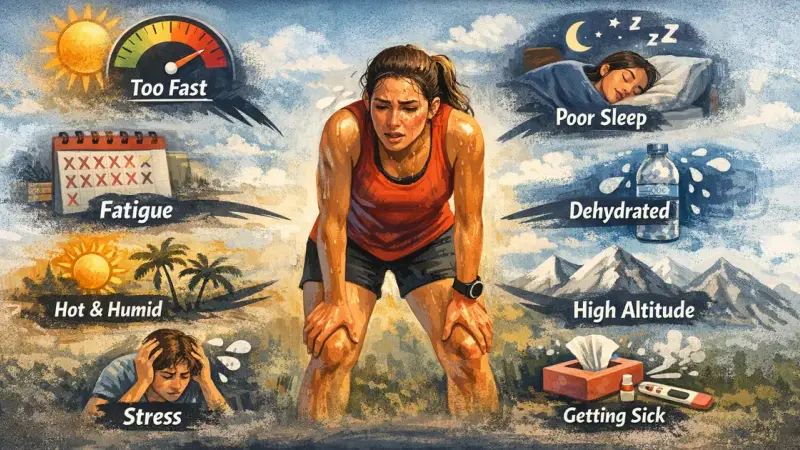
Every runner has been there: you head out for an easy run, and within minutes you're huffing and puffing at a pace that should feel comfortable. Your legs are heavy, your heart rate is through the roof, and you can't understand why something called "easy" feels anything but.
The good news? This is almost always fixable. Here are the nine most common reasons your easy pace feels hard—and exactly what to do about each one.
1. You're Running Too Fast
Let's start with the most common culprit. Most runners dramatically underestimate how slow "easy" should actually be.
How slow is slow enough?
Easy pace should be:
- 60-90 seconds per mile slower than your 5K race pace
- 65-75% of your maximum heart rate
- Slow enough to hold a full conversation without gasping
If your 5K pace is 8:00/mile, your easy pace should be around 9:00-9:30/mile—possibly slower on tired legs or hot days.
The fix
For your next few easy runs, deliberately run 30 seconds per mile slower than you think you should. It will feel almost absurdly slow. That's probably the right pace.
2. You're Carrying Accumulated Fatigue
Training stress is cumulative. If you've been pushing hard for several weeks without adequate recovery, fatigue builds up like debt—and eventually every run feels hard, even the easy ones.
Signs of accumulated fatigue
- Elevated resting heart rate (5+ bpm above normal)
- Difficulty sleeping despite being tired
- Irritability and mood changes
- Decreased motivation
- Persistent muscle soreness
The fix
Take a down week. Reduce your mileage by 30-40% and skip hard workouts entirely. One recovery week can erase weeks of accumulated fatigue and make your easy runs feel easy again.
3. It's Hot or Humid
Heat and humidity have a profound effect on running performance. Your body diverts blood to the skin for cooling, leaving less available for your working muscles.
How much does heat affect easy pace?
| Temperature | Pace Adjustment |
|---|---|
| 60-70°F | Normal |
| 70-80°F | +15-30 sec/mile |
| 80-90°F | +30-60 sec/mile |
| 90°F+ | +60+ sec/mile or run by effort only |
Humidity makes it worse—high humidity prevents sweat from evaporating, reducing your body's cooling efficiency.
The fix
On hot days, abandon pace targets entirely and run by effort. A "10:00 pace" easy run might need to be 10:45 in summer heat, and that's perfectly fine. You're still getting the training benefit.
4. You're Dehydrated
Even mild dehydration (2% body weight loss) significantly increases heart rate and perceived exertion. If you start your run already dehydrated, easy pace will feel hard from the first step.
Signs you might be dehydrated
- Dark yellow urine
- Thirst (already too late, but a sign)
- Headache
- Elevated heart rate at rest
The fix
Hydrate consistently throughout the day, not just before runs. Aim for pale yellow urine as a hydration indicator. On hot days or after hard efforts, consider adding electrolytes.
5. You Didn't Sleep Well
Sleep is when your body repairs and adapts to training. Skimp on sleep and your cardiovascular system operates at a deficit—making every run harder.
How much does sleep matter?
One study found that after a night of poor sleep, heart rate during exercise increased by 10+ bpm at the same pace. That's enough to turn an easy run into a moderate effort.
The fix
Prioritize 7-9 hours of quality sleep. If you had a bad night, consider making your easy run even easier or swapping it for a rest day. You'll get more benefit from the sleep than from a hard-feeling "easy" run.
6. You're Running at Altitude
At altitude, there's less oxygen available per breath. Your body compensates by increasing heart rate and breathing rate—making the same pace feel significantly harder.
Altitude effects on easy pace
| Altitude | Pace Adjustment |
|---|---|
| Sea level | Normal |
| 3,000-5,000 ft | +15-30 sec/mile |
| 5,000-8,000 ft | +30-60 sec/mile |
| 8,000+ ft | +60+ sec/mile |
It takes 2-3 weeks to meaningfully adapt to altitude.
The fix
If you're visiting altitude, slow down dramatically for the first week. Don't expect to hit normal paces until you've been there for several weeks.
7. You're Fighting Off an Illness
Your body is smart. When your immune system is actively fighting something—even before symptoms appear—it diverts resources away from exercise performance.
Early warning signs
- Easy pace feels hard for no obvious reason
- Slight sore throat or stuffy nose
- More tired than usual
- Achiness
The fix
If you suspect you're getting sick, take a rest day. Training through the early stages of illness often makes it worse and extends recovery time. A day or two off now can save you a week off later.
8. You're Stressed or Anxious
Mental stress creates physical stress. Elevated cortisol and adrenaline increase heart rate, raise blood pressure, and make everything feel harder—including easy runs.
How stress affects running
- Elevated resting heart rate
- Disrupted sleep quality
- Increased muscle tension
- Higher perceived exertion at all paces
The fix
If you're going through a stressful period, be gentle with your training. Easy runs should be a stress reliever, not another source of stress. Consider swapping some runs for walks or yoga.
9. There's an Underlying Medical Issue
If none of the above explanations fit, and easy pace has felt hard for several weeks despite rest and recovery, it's worth seeing a doctor.
Conditions that can affect easy running
- Iron deficiency/anemia - Very common in runners, especially female runners
- Thyroid issues - Both hypo and hyperthyroidism affect exercise tolerance
- Overtraining syndrome - A medical condition requiring extended rest
- Heart conditions - Rare but important to rule out
The fix
Get bloodwork done. Iron, ferritin, thyroid panel, and basic metabolic panel can rule out many issues. If you have chest pain, unusual shortness of breath, or dizziness, see a doctor sooner rather than later.
When to Worry vs. When to Adjust
Normal (adjust and continue)
- Easy feels hard after a hard workout yesterday
- Easy feels hard in heat/humidity
- Easy feels hard during a high-mileage week
- Easy feels hard for 1-2 days
Investigate further
- Easy has felt hard for 2+ weeks straight
- You're well-rested but still struggling
- Your resting heart rate is consistently elevated
- You have other symptoms (fatigue, weakness, mood changes)
See a doctor
- Chest pain or tightness during easy runs
- Dizziness or lightheadedness
- Unusual shortness of breath
- Easy has felt hard for 4+ weeks with no explanation
- Symptoms of illness that don't resolve
Remember: easy runs are supposed to feel easy. If they don't, that's your body sending a signal. Listen to it, make adjustments, and the easy will return to your easy runs.
Key Takeaway
If easy pace feels hard, you're either running too fast, carrying too much fatigue, or something in your recovery or health needs attention. Slow down, take a rest day, and if it persists, investigate sleep, nutrition, and stress before worrying about anything else.
Frequently Asked Questions
How slow should easy pace actually be?
Will running slower make me slower?
My heart rate is high even at slow paces. What's wrong?
Should I use heart rate or pace for easy runs?
References
- The Science of Running by Steve Magness
- 80/20 Running by Matt Fitzgerald
- Daniels' Running Formula by Jack Daniels