
Contents
Heart Rate Data Troubleshooting: When the Numbers Don't Make Sense
Your heart rate data looks wrong. Is it the sensor, or is something else going on? Learn to troubleshoot HR issues and understand what abnormal readings mean.

Quick Hits
- •Optical HR sensors struggle with high intensity, dark skin, and cold weather
- •Cardiac drift (HR rising at steady pace) is normal over long runs
- •Caffeine, dehydration, and poor sleep can elevate HR 10-15+ bpm
- •Chest straps are more accurate than wrist sensors for most activities
- •Sometimes 'wrong' data is actually showing you something real
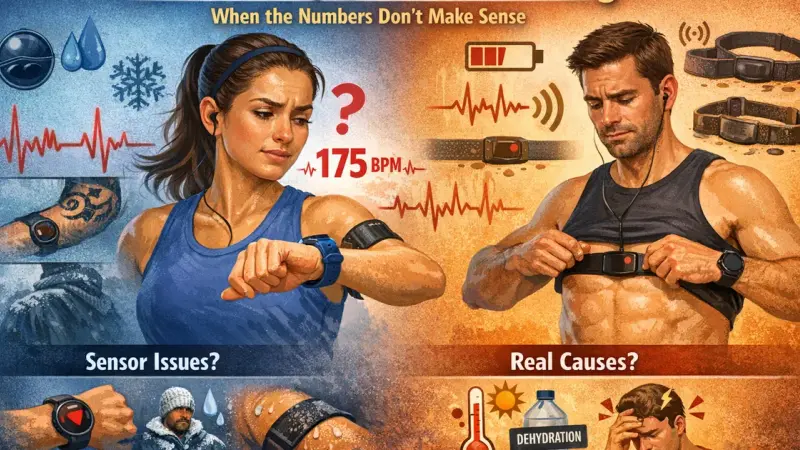
Your watch says 175 bpm. You feel like you're jogging. What's going on?
Heart rate data issues are common. Here's how to troubleshoot.
Sensor Issues
Optical Sensor Problems
Common causes of bad readings:
Poor fit:
- Watch too loose
- Watch positioned wrong on wrist
- Movement during running
Environmental:
- Cold weather (poor blood flow to wrist)
- Very sweaty conditions
- Direct sunlight on sensor
Physical:
- Tattoos under sensor
- Very dark or very hairy skin (some sensors)
- Certain skin conditions
Fix attempts:
- Tighten watch band (snug, not cutting off circulation)
- Position watch higher on wrist
- Clean sensor and skin
- Wait a few minutes for readings to stabilize
Chest Strap Problems
Common issues:
Dry electrodes:
- Strap needs moisture to conduct
- Wet the electrodes before starting
- Use electrode gel for reliability
Battery dying:
- Intermittent readings
- Spikes or dropouts
- Check/replace battery
Interference:
- Other electronic devices
- Certain fabrics
- Power lines (rare)
Worn out strap:
- Elastic stretched
- Electrodes degraded
- Replace every 2-3 years with heavy use
Signs of Sensor Problems (Not Real HR)
- Sudden spikes to 200+ that don't match effort
- HR exactly matching cadence (common optical error)
- Instant drops from high to low
- Readings that don't respond to effort changes
- Data flat-lines at specific numbers
Real Physiological Causes
High HR That's Actually Real
Heat and humidity:
- HR rises 10-20 bpm in hot conditions
- Heart works harder to cool body
- Normal response, not sensor error
Dehydration:
- Less blood volume
- Heart beats faster to compensate
- Can add 10+ bpm to HR
Caffeine:
- Stimulant effect on heart
- Can elevate HR 5-15 bpm
- Effect varies by individual
Poor sleep:
- Recovery compromised
- Elevated baseline HR
- May see 5-10 bpm increase
Stress:
- Cortisol affects heart rate
- Life stress shows up in HR data
- Both baseline and exercise HR affected
Illness (even mild):
- Body fighting infection
- Elevated HR is protective response
- Take extra easy days
- Elevated resting HR
- Higher HR at same pace
- Sign to back off
Cardiac Drift
What it is: HR gradually rises during long runs despite constant pace
Why it happens:
- Dehydration reduces blood volume
- Body temperature rises
- Normal physiological response
Normal range: 5-15 bpm increase over a long run
Concerning range: 20+ bpm increase suggests significant dehydration or overheating
Low HR That's Actually Real
Improved fitness:
- Stronger heart pumps more per beat
- Same pace, lower HR over time
- Good sign!
Cool conditions:
- Less cardiac demand for cooling
- Normal and expected
Downhill or tailwind:
- Less effort for same pace
- HR appropriately lower
When to Worry
See a Doctor If:
During exercise:
- Chest pain or pressure
- Extreme shortness of breath
- Dizziness or lightheadedness
- Palpitations (feeling heart skip/flutter)
- HR won't come down despite stopping
Resting HR changes:
- Sudden, sustained increase (10+ bpm above normal)
- Very irregular heart rhythm
- Concerning symptoms accompanying changes
Probably Not Concerning:
- Occasional single spike in data
- HR variations day to day
- Higher HR in heat or when tired
- Lower HR as fitness improves
Fixing Bad Data
Improve Data Quality
Hardware solutions:
- Switch to chest strap for accuracy
- Try different optical sensor positions
- Use electrode gel on chest strap
- Replace worn equipment
Practice solutions:
- Let sensor stabilize before starting
- Tighten watch band appropriately
- Run a few minutes, then check readings
Clean Up Recorded Data
In most platforms:
- Manually edit obvious errors
- Note conditions that affected readings
- Exclude bad data from analysis
For analysis:
- Focus on clearly good data
- Compare similar conditions
- Use trends, not single points
When Data Conflicts with Feel
Trust Your Body If:
- You feel good but HR says "too high"
- Sensor has been unreliable
- Conditions explain the discrepancy
Investigate If:
- You feel bad but HR looks normal
- Pattern persists across multiple runs
- Other symptoms present
The Middle Ground:
Use HR as information, not instruction.
- Elevated HR is a data point
- Combine with RPE and performance
- Adjust if pattern is consistent
Heart rate data is a tool, not a truth detector. Use our Heart Rate Zone Calculator to set accurate zones, and track your HR trends on your dashboard.
Key Takeaway
Heart rate data is valuable but imperfect. Learn to distinguish sensor problems from genuine physiological signals. When data conflicts with feel, investigate—but trust your body over the numbers.
Frequently Asked Questions
Why does my heart rate spike at the start of runs?
My HR seems too high for easy runs—is something wrong?
Should I trust optical HR or get a chest strap?
References
- Heart rate monitoring research
- Sports physiology studies