
Contents
Adidas Adizero Adios Pro Evo 3 Review: A Sub-100-Gram Racer
The Adidas Adizero Adios Pro Evo 3 is an ultra-light $500 marathon racer. See its ride, fit, tradeoffs, and narrow ideal audience.

Quick Hits
- •Adidas lists a 97-gram average weight and 39/36mm platform, defining a highly specialized marathon racer.
- •WIRED found the ride softer and more propulsive than the prior model, with improved Continental outsole coverage.
- •RunRepeat found a very narrow interior and minimal materials, reinforcing that comfort and longevity are secondary to speed.
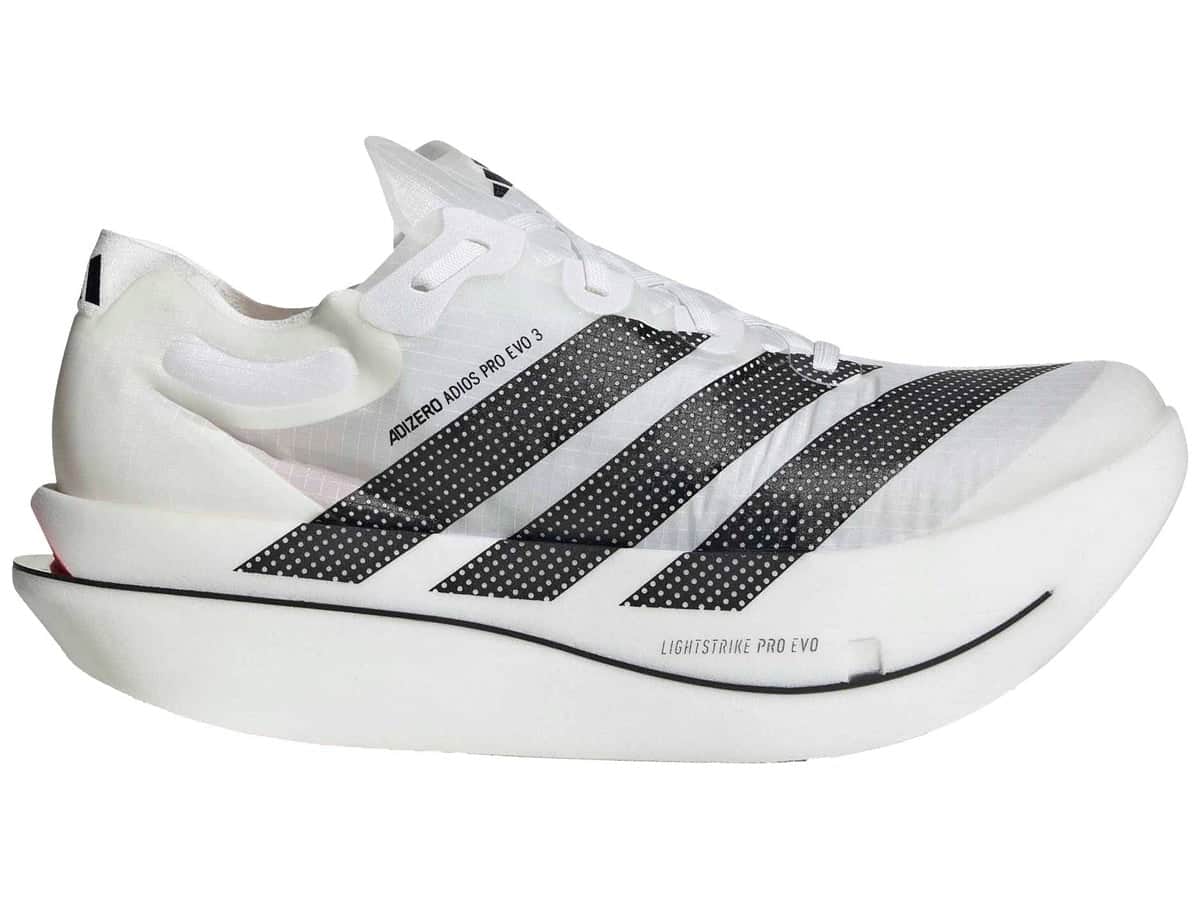
Adidas Adizero Adios Pro Evo 3 Review
Quick Verdict
The Adidas Adizero Adios Pro Evo 3 is a purpose-built road racer, not a premium trainer with racing aspirations. Adidas's launch specification combines a 39/36mm platform, 3mm nominal drop, and 97-gram (3.4-ounce) average weight in UK 8.5. The MSRP: $500 MSRP makes its mission equally clear: marginal performance for runners who already have training, pacing, and race execution highly developed.
WIRED found the shoe exceptionally light, softer and more propulsive than the Evo 2, with a fast rocker and improved Continental outsole coverage. RunRepeat's lab review reinforced the extreme weight reduction while exposing a very narrow fit and minimal material reserves. Our conclusion is that the Evo 3 is technically remarkable and practically niche. See our best carbon racers for broader choices.
Key Specifications
| Spec | Value |
|---|---|
| Category | Racer |
| Cushion Level | High |
| Heel-to-Toe Drop | 3mm nominal |
| Weight (Men's/Women's) | 3.4oz / 3.4oz (unisex) |
| Stack Height | 39mm heel / 36mm forefoot |
| Pronation Support | Neutral |
| Width Options | Standard |
| MSRP | MSRP: $500 |
| Surface | Road |
What Changed
The Evo 3 continues Adidas's effort to remove mass from a legal-height marathon platform. WIRED reported a softer midsole than the Evo 2, a more pliable kite-inspired upper, and strategically placed Continental rubber replacing the earlier liquid-rubber approach. Adidas adds a new Lightstrike Pro Evo foam and carbon-infused EnergyRim. Those changes target ride quality, foothold, and wet-surface confidence without abandoning the weight-first philosophy.
Adidas reports a 97-gram average in UK 8.5, while RunRepeat measured 99 grams in its sample, so the independent result closely corroborates the brand weight. Drop measurements do not align as closely: Adidas specifies 3mm, while RunRepeat measured 5.9mm. The catalog follows the documented policy of storing the nominal brand value and records the lab result as a measurement-method conflict rather than blending the two figures.
Ride and Intended Use
WIRED described a soft, springy ride with a curved rocker that promotes quick forefoot transition at hard effort. The reviewer also warned that the shoe works best when form remains locked in, which is important context: elite geometry does not guarantee an advantage at every pace or for every gait.
This is best reserved for goal races and a small number of specific rehearsals. Routine easy miles would waste the focused construction and expose delicate components to unnecessary wear. Marathoners deciding between specialist models should also review our best half-marathon shoes, because shorter events can reward a different balance of weight, stability, and comfort.
Fit and Sizing
Fit evidence is mixed in description but consistent in purpose. WIRED found the minimal upper airy, flexible, and comfortable on the tester's foot. RunRepeat measured an unusually narrow interior and pointed toe box, concluding that wide feet would struggle. A flexible upper does not necessarily create enough platform width.
Start with the corresponding Adidas unisex size, but do not buy solely from length. Verify forefoot width, toe taper, lace pressure under race effort, and heel security. The standard-only offering provides no formal wide alternative. A runner should be able to corner and accelerate without lateral movement before trusting the shoe for a marathon.
What Works Well
- Extreme weight reduction: The 3.4-ounce brand average is exceptional beside a 39mm heel platform.
- Race-specific propulsion: Independent testing supports a soft, springy ride and fast rocker at hard pace.
- Improved outsole concept: Continental rubber placement addresses a major criticism of the prior generation.
Tradeoffs
- Very narrow fit: Lab measurements show limited interior and toe-box space.
- Minimal material margins: Thin upper and outsole components prioritize weight over everyday robustness.
- Exceptional cost: The MSRP: $500 MSRP buys specialization, not broad training utility.
Who Should Consider This Shoe
- Advanced neutral racers chasing small gains in goal road events.
- Efficient midfoot or forefoot strikers who can maintain secure form at race pace.
- Buyers who understand that a specialist racer complements rather than replaces a training rotation.
Who Should Look Elsewhere
- Wide-footed runners and anyone needing a forgiving fit.
- Newer marathoners who need stability, comfort, and value across training and racing.
- Athletes seeking one shoe for workouts, long runs, and race day.
Cross-Brand Comparison
The Nike Alphafly 3 is a more broadly recognized maximum-stack marathon racer, while the Saucony Endorphin Elite 3 offers another premium race-day approach. The Evo 3's central advantage is radically low mass. The competing shoes may be more rational when fit tolerance, availability, and cost matter as much as marginal weight.
Same-Brand Comparison
The Adizero Adios Pro 3 is the more attainable Adidas marathon platform, and the Boston 12 is the training-oriented choice. The Prime X Evo explores extreme stack for fast long runs. The Evo 3 should be chosen only when race-day minimalism is the explicit priority.
Value
Conventional value arguments do not favor a MSRP: $500 single-purpose shoe. It cannot replace a durable daily trainer, offers only standard width, and is aimed at marginal performance. Its value exists for a very small group: experienced racers for whom the lightest possible legal-height platform is worth more than versatility. Most runners can buy a strong racer and trainer for the same total.
Final Verdict
The Adidas Adizero Adios Pro Evo 3 is an engineering statement translated into a commercial racer. Its sub-100-gram brand weight, legal-height stack, independent ride reports, and revised outsole make a credible elite performance case. The same evidence reveals the limits: narrow dimensions, minimal components, form sensitivity, and an extraordinary price. Admire it broadly; recommend it narrowly to racers whose feet, mechanics, and priorities match the design.
Key Takeaway
The Adios Pro Evo 3 is an extraordinary elite racing instrument with very low weight and strong propulsion, but its narrow fit, minimal durability margins, and $500 price exclude most runners.
Frequently Asked Questions
Who is the Adidas Adizero Adios Pro Evo 3 best for?
How does the Adidas Adizero Adios Pro Evo 3 fit?
Is the Adidas Adizero Adios Pro Evo 3 a daily trainer?
References
- https://news.adidas.com/running/adidas-unveils-its-first-sub-100-gram-supershoe--the-adizero-adios-pro-evo-3/s/ded7b6a2-952a-4246-b675-4129f78787c4
- https://www.runningwarehouse.com/adidas_adizero_Adios_Pro_Evo_3/descpage-AAPE3.html
- https://www.wired.com/review/adidas-adizero-pro-evo-3/
- https://runrepeat.com/adidas-adizero-adios-pro-evo-3