
Contents
Nike Alphafly 3 Review: Verified Specs, Fit and Race Use
Research-based Nike Alphafly 3 review covering official weight and drop, independent fit and ride findings, measurement context, comparisons, limitations, and current value.

What changed: Corrected the illegal 44mm stack claim, official reference weights, price, and fit guidance; removed unsupported injury, guaranteed-performance, adaptation, mileage, and durability claims; and removed an unverified Amazon link.
Quick Hits
- •Nike lists 7.7oz for men's US 10, 6.1oz for women's US 8, an 8mm drop, and a current $305 US list price.
- •Independent measurements place the heel near the 40mm road-racing limit rather than the former article's 44mm.
- •The connected ZoomX midsole, wider Flyplate, Atomknit upper, and two Air Zoom pods define version 3.
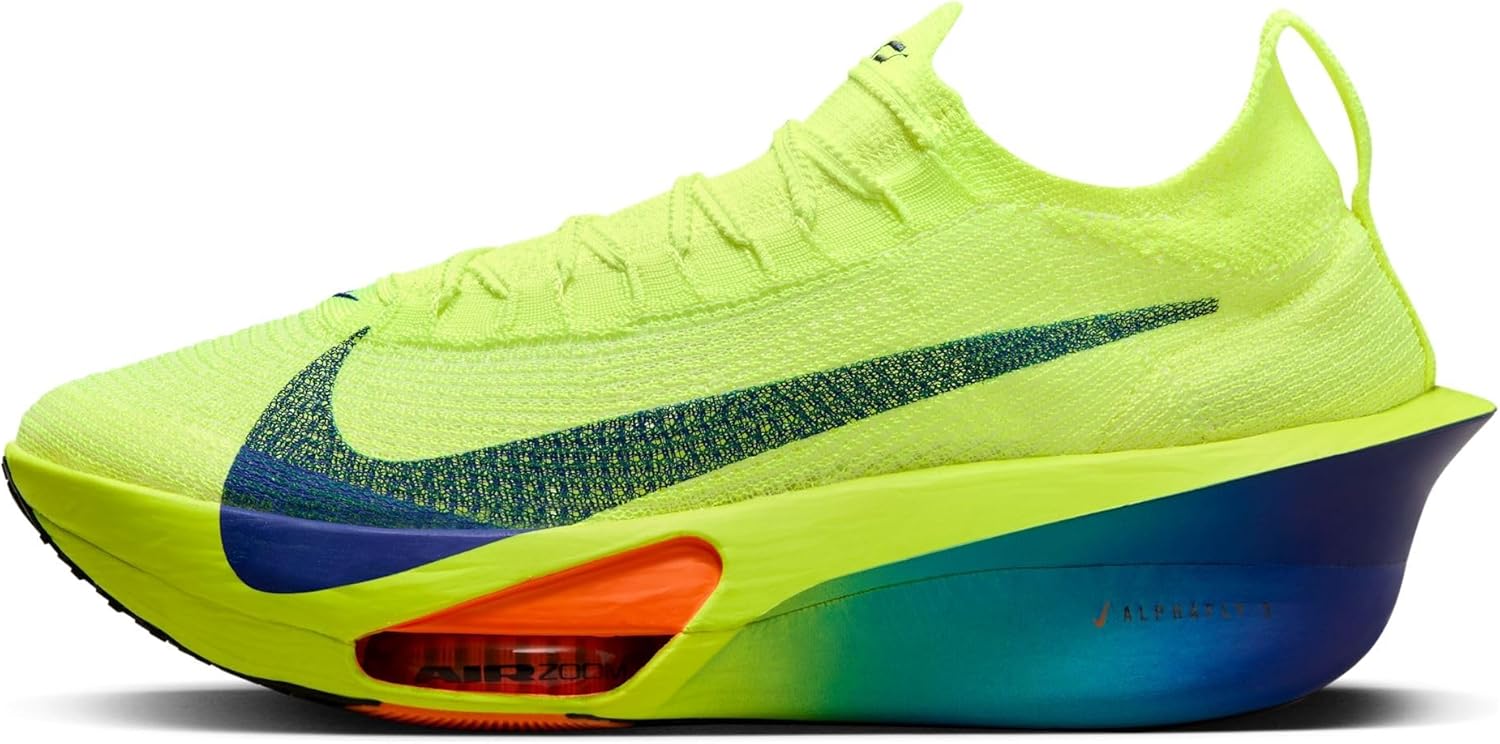
Nike Alphafly 3 Review
Quick Verdict
The Nike Alphafly 3 is Nike's most mechanically distinctive current road racer: a full ZoomX midsole, full-length carbon-fiber Flyplate, and two Air Zoom units under the forefoot. It is lighter and smoother than version 2, with a connected midsole that replaces the previous segmented construction. Independent testers consistently describe a strongly propulsive ride at faster effort, but also a fit and under-arch shape that will not suit every foot.
Nike currently lists the shoe at MSRP: $305 in the US, although colorways are often discounted. That makes a race-pace trial and good return policy more important than marketing claims. TrainingPlan has not hands-on tested this pair; this assessment combines Nike's exact-model specifications with three independent exact-model tests.
Key Specifications
| Spec | Verified value |
|---|---|
| Category | Carbon-plated road racing shoe |
| Midsole / plate | ZoomX / full-length carbon Flyplate |
| Forefoot system | Two Air Zoom units |
| Heel-to-Toe Drop | 8mm |
| Weight (Men's/Women's) | 7.7oz / 6.1oz |
| Stack Height | 40mm / 32mm, independent methods |
| Width Options | Standard |
| MSRP | MSRP: $305 |
Nike's reference sizes differ by gender, so the weights are not a direct same-size comparison. Nike does not publish separate heel and forefoot stack numbers on the current product page. RunRepeat's caliper method and other independent sources place the heel close to 40mm; small differences among published results reflect measurement method and the tested sample, not multiple shoe specifications.
What Changed
Version 3 replaces the Alphafly 2's separated heel and forefoot with a fully connected ZoomX midsole and outsole. Nike widened the Flyplate, changed the outsole material, and introduced an Atomknit upper. The heel-to-toe transition is visually and mechanically more continuous, while the Air Zoom pods remain under the forefoot.
Doctors of Running and RoadTrailRun found the result lighter, smoother, and more stable-neutral than version 2, though testers differed on how aggressive or comfortable the medial arch felt. Those are exact-pair observations, not proof that every runner will prefer the update.
Ride and Intended Use
At faster road-running effort, the combination of compliant ZoomX, a stiff curved plate, and Air Zoom pods creates a pronounced forward transition. Doctors of Running found the shoe especially effective at sustained race efforts and longer intervals. RoadTrailRun's testers also emphasized its marathon-oriented cushioning and improved continuity.
The same features make it specialized. At easy pace, the stiff plate and pods may feel awkward; on broken surfaces or sharp turns, the height demands attention. Nike markets it for half marathons and marathons, but that does not impose a rule. A runner who likes it at 10K pace can race shorter, while someone whose arch dislikes it should not force it for 26.2 miles.
No source supports a guaranteed percentage improvement, finish time, injury benefit, or fixed lifespan. Performance response and wear vary with runner, pace, surface, and use.
Fit and Sizing
The Atomknit upper is thin and race-focused, with little excess structure. Independent testers commonly selected their usual running-shoe size and found version 3 more accommodating than earlier Alphaflys. The major caveat is the sculpted medial midfoot: some feet barely notice it, while others experience concentrated arch pressure.
Try the shoe with your planned race socks, preferably during a faster treadmill or road session allowed by the seller. Check toe clearance, heel security, Air Zoom pod placement, and whether the arch remains comfortable after the foot warms up. Nike offers no dedicated wide version.
What Works Well
- Low weight for the platform: Nike's men's US 10 reference is 7.7 ounces despite the substantial cushioning system.
- Smoother construction: The connected ZoomX base removes the obvious midsole gap of version 2.
- Race-focused geometry: Independent testers found the plate, pods, and rocker coherent at sustained faster effort.
Tradeoffs
- Polarizing arch: The medial contour is a genuine fit issue for some runners.
- Specialized feel: The stiff, tall platform is less natural for easy running and uneven terrain.
- High price: A MSRP: $305 list price demands a better fit and use-case match than a merely interesting first impression.
Who Should Consider This Shoe
- Half-marathon and marathon racers who already enjoy stiff, tall super-shoe geometry.
- Runners who can test the arch and Air Zoom placement at race effort.
- Buyers prioritizing cushioning depth and propulsion over everyday versatility.
Who Should Look Elsewhere
- Runners who feel arch pressure or instability during a proper trial.
- Athletes wanting one shoe for ordinary daily training and racing.
- Value shoppers who cannot test or return the shoe.
Cross-Brand Comparison
The Adidas Adizero Adios Pro 3 uses EnergyRods and a broader Lightstrike Pro platform. The ASICS Metaspeed Sky Paris is lighter and more conventional under the forefoot, while the Saucony Endorphin Pro 4 generally feels more trainer-like. Fit and race-pace mechanics matter more than selecting the most elaborate design.
Same-Brand Comparison
The Nike Vaporfly 3 is lighter, narrower, and now previous-generation; the current Vaporfly 4 is Nike's simpler lightweight racer. The Nike Zoom Fly 6 is a heavier plated training option, and the Nike Pegasus Plus is flexible and unplated. The Alphafly 3 supplies the deepest, most pronounced system of the group.
Value
At MSRP: $305 list, value depends on personal compatibility, race priorities, and any legitimate discount. A cheaper Alphafly 3 that irritates the arch is not value; a full-price pair that has already worked through race-pace sessions may be defensible for a goal event.
The former Amazon destination returned only a generic title in the saved audit, so it has been removed. Verify exact model, size, authenticity, condition, and returns through Nike or a reputable specialty retailer.
Final Verdict
The corrected Alphafly 3 story is specific: 7.7 ounces in Nike's men's US 10 reference, an 8mm drop, a near-40mm independent heel measurement, a connected ZoomX platform, two Air Zoom pods, and a wider carbon Flyplate. It is a focused racing design, not a universal speed guarantee.
Choose it if the arch, platform, and transition work at your race pace. If any one of those feels forced, the simpler geometry of another racer is the better option regardless of brand prestige.
Key Takeaway
The Alphafly 3 is a light, highly engineered long-distance racer, but its value comes from a compatible fit and tested race-pace feel—not a promised time gain, injury outcome, or universal superiority.
Frequently Asked Questions
Is the Nike Alphafly 3 only for marathons?
Does the Alphafly 3 fit true to size?
Is the Alphafly 3 stack height 44mm?
References
- https://www.nike.com/t/alphafly-3-mens-road-racing-shoes-5gZBgL/IQ0309-094
- https://www.nike.com/t/alphafly-3-womens-road-racing-shoes-LQX5b4/FD8315-500
- https://www.doctorsofrunning.com/nike-alphafly-3-review-2024/
- https://runrepeat.com/nike-alphafly-3
- https://www.roadtrailrun.com/2023/12/nike-alphfly-3-review-6-comparisons.html