
Contents
Altra Paradigm 7 Review: Zero Drop With Mild Guidance
Research-based Altra Paradigm 7 review covering corrected reference weights, 30mm zero-drop geometry, GuideRail support, Standard FootShape fit, wide sizing, ride, Paradigm 8 successor status, and value.

What changed: Corrected men's and women's weights, added the verified wide option, clarified GuideRail function and Standard FootShape fit, documented sample-weight differences and successor status, and removed unsupported pain relief, injury prevention, mileage, race-distance, and durability claims.
Quick Hits
- •Altra specifies 30mm heel and forefoot geometry, zero drop, EGO MAX foam, and a medial GuideRail.
- •Doctors of Running reports 9.3oz in men's US 9 and 8.0oz in women's US 8; brand and other sample weights vary.
- •Standard FootShape is roomy relative to many shoes but is not Altra's widest last; a separate wide version existed.
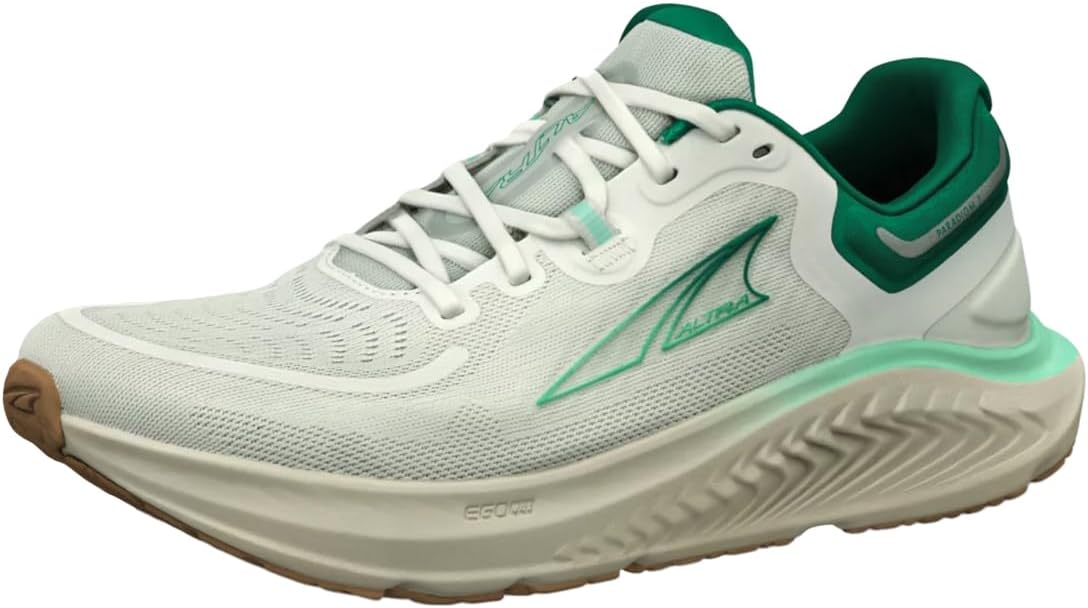
Altra Paradigm 7 Review
Disclosure: TrainingPlan has not hands-on tested this exact model. This research-based review uses exact-model Altra material and independent testing. As an Amazon Associate, we earn from qualifying purchases.
Check the verified Paradigm 7 listing on Amazon →
Quick Verdict
The Altra Paradigm 7 combines a 30mm zero-drop EGO MAX platform with a medial GuideRail and a broad forefoot. It is a cushioned guidance shoe, but the support is subtler than a traditional firm medial post. Independent testers generally found the GuideRail unobtrusive until the foot moved toward the medial side.
The former catalog overstated both reference weights and omitted the wide version. Doctors of Running weighed men's US 9 at 9.3 ounces and women's US 8 at 8.0 ounces, values TrainingPlan now uses with their sample context attached. Altra and other sources publish different weights, which can reflect size and measurement conventions rather than a product identity problem.
Key Specifications
| Spec | Verified value |
|---|---|
| Category | Zero-drop guidance daily trainer |
| Midsole / support | Altra EGO MAX / medial GuideRail |
| Heel-to-Toe Drop | 0mm |
| Weight (Men's/Women's) | 9.3oz men's US 9 / 8.0oz women's US 8 |
| Stack Height | 30mm heel / 30mm forefoot |
| Foot shape | Standard FootShape |
| Width Options | Standard, Wide |
| MSRP | MSRP: $170 |
RunRepeat lists a 9.8-ounce brand reference but measured 9.3 ounces in its laboratory pair, matching Doctors of Running's men's US 9 result. Believe in the Run measured a larger men's sample at 9.9 ounces and a women's sample at 8.0. These are useful contexts, not numbers to average together.
What Changed
Paradigm 7 reduced weight, revised the engineered mesh, and changed the GuideRail and upper fit from version 6. Altra retained the 30mm Balanced Cushioning platform and EGO MAX foam. Independent reviews describe a more streamlined shoe whose guidance is present without dominating every stride.
The catalog now calls the shoe stability-oriented because it has an intentional medial guidance structure. That is a construction classification, not a claim that it corrects overpronation or prevents injury. Paradigm 8 is the direct successor and is the current manufacturer model.
Ride and Intended Use
The 30mm EGO MAX platform provides substantial road cushioning without a heel-to-toe slope. The shoe works best for easy and steady daily running when a runner already prefers zero-drop geometry. Doctors of Running found a firmer heel and softer forefoot, with the rocker and toe spring helping the shoe move despite its level platform.
GuideRail support is conditional: it sits along the medial side and becomes more noticeable when the foot contacts it. Neutral runners may find it unobtrusive, while others may feel the structure more directly. Comfort is the deciding evidence; a gait label alone cannot predict whether the rail will help.
Changing abruptly from a higher-drop shoe can redistribute load. That is a reason for a gradual transition based on training history, not a reason to claim the Paradigm treats or causes a particular injury. The old shoe-specific weekly-mileage prescription has been removed.
Fit and Sizing
Standard FootShape is Altra's middle last. It allows more forefoot splay than many tapered road shoes, but it is less voluminous than the brand's Original FootShape. Doctors of Running reported true-to-size length, a roomy forefoot, and a more secure midfoot than some earlier Altras.
Start with your usual Altra size. Check that the GuideRail does not press uncomfortably and that the midfoot holds without overtightening. If toe width is correct but the upper feels constrained, compare the exact wide version rather than assuming all Paradigm 7 pairs fit identically.
What Works Well
- Corrected low weight: Reference-size independent samples are much lighter than the former catalog entry.
- Mild guidance: The GuideRail can add medial structure without the blocky feel of a dense post.
- Forefoot and width choice: Standard FootShape plus a separate wide version provides meaningful fit options.
Tradeoffs
- Zero-drop transition: Runners accustomed to a large offset may need time to adapt.
- Firm heel for some: High stack does not guarantee a uniformly soft sensation.
- Superseded generation: Paradigm 8 is the current model.
Who Should Consider This Shoe
- Runners already comfortable with level heel-and-forefoot geometry.
- Athletes wanting cushioned road mileage with mild medial guidance.
- Altra users who need more structure than a neutral Torin but still value toe room.
Who Should Look Elsewhere
- Runners who strongly prefer a conventional heel-to-toe drop.
- Athletes irritated by a medial rail or firmer heel.
- Buyers who cannot get secure midfoot hold in either available width.
Cross-Brand Comparison
The New Balance Fresh Foam X Vongo v6 also uses mild geometric guidance, but with a 6mm drop and softer upper layer. The ASICS Gel-Kayano 31 is heavier and uses a broader high-stack guidance system. The Saucony Tempus is lighter and more performance-oriented, with an 8mm drop and a firmer support frame.
Same-Brand Comparison
Paradigm 8 is the direct current successor. The Altra Torin 7 is the neutral cushioned alternative, while the Altra Provision 8 offers a lower, lighter guidance platform. Paradigm 7 is the more protective older option when its fit and price are favorable.
Value
The MSRP: $170 launch price placed Paradigm 7 at the premium end of daily trainers. As a superseded model, it becomes attractive only with a useful discount and a secure return policy. Compare the price with Paradigm 8 rather than treating old inventory as automatically valuable.
TrainingPlan's Amazon destination is attached only to a dated exact-generation title and ASIN match. Availability, color, width, and seller can still change, so verify those details at checkout.
Final Verdict
The corrected Paradigm 7 is lighter and more accommodating than the old record suggested. It offers a 30mm zero-drop platform, mild GuideRail support, Standard FootShape toe room, and actual standard-and-wide availability.
It should not be marketed as a pain solution or gait correction device. For runners who already enjoy Altra geometry and want modest guidance, it remains a credible discounted option; everyone else should decide from fit and ride, with Paradigm 8 as the current comparison.
Key Takeaway
Paradigm 7 is a relatively light, zero-drop cushioned trainer with mild medial guidance and real width choice; select it for the ride and fit, not for unsupported promises about pain, injury, or gait correction.
Frequently Asked Questions
Is the Altra Paradigm 7 a stability shoe?
Does the Paradigm 7 run true to size?
Is the Altra Paradigm 7 discontinued?
References
- https://www.altrarunning.com/en-ca/pages/paradigm-7
- https://www.doctorsofrunning.com/altra-paradigm-7-review-2023/
- https://believeintherun.com/shoe-reviews/altra-paradigm-7-review/
- https://runrepeat.com/altra-paradigm-7
- https://www.altrarunning.com/en-us/road/mens-paradigm-8/AL0A85RT.html