
Contents
Saucony Tempus Review: Lightweight Structured Support, Carefully Framed
Research-based Saucony Tempus review covering verified 8mm geometry, PWRRUN PB core and frame construction, fit, stability, limitations, successor status, and value.

What changed: Corrected stack, weights, MSRP, support framing, and lifecycle; removed unsupported severe-overpronation, pain, mileage, and unverified affiliate claims.
Quick Hits
- •Saucony lists 36.5/28.5mm geometry, an 8mm drop, and 8.9oz men's and 7.9oz women's weights.
- •A PWRRUN PB core sits inside a firmer PWRRUN support frame rather than a traditional medial post.
- •Tempus 2 superseded this model; support preference should be confirmed by comfort, not pain promises.
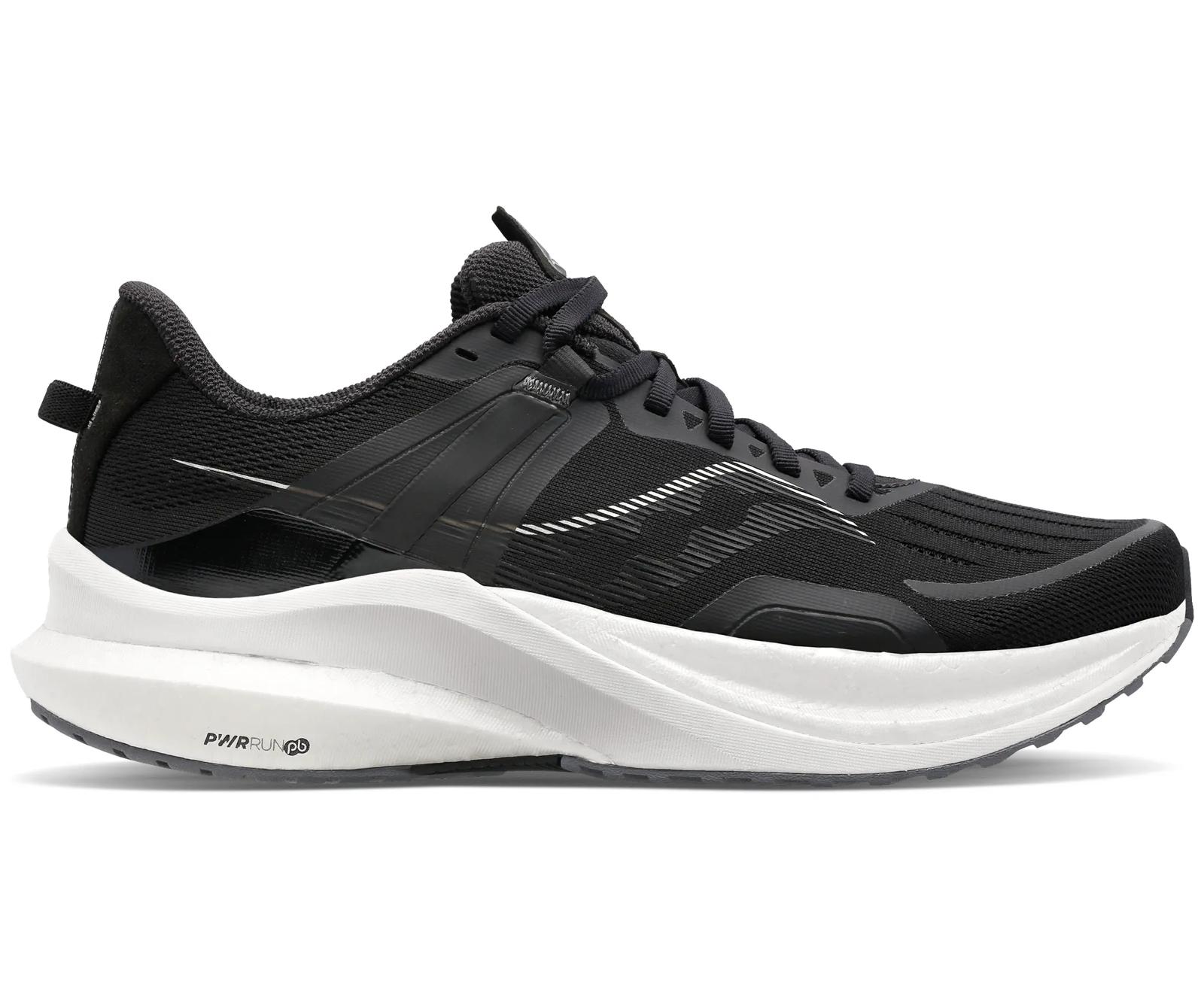
Saucony Tempus Review: Lightweight Structured Support, Carefully Framed
Disclosure: TrainingPlan has not hands-on tested this exact model. This research-based review uses manufacturer and independent exact-model evidence. Running shoes do not diagnose, treat, or prevent injury. No Amazon listing is currently verified for publication.
Quick Verdict
The original Saucony Tempus combined a responsive PWRRUN PB core with a firmer PWRRUN frame intended to guide the foot through the platform. Saucony lists an 8mm drop, 36.5/28.5mm geometry, and notably low 8.9-ounce men's and 7.9-ounce women's reference weights.
That makes it an uncommon structured trainer: lighter and livelier than many traditional stability shoes. It does not establish that the shoe “corrects” a gait, treats knee or hip pain, or is required for a particular degree of pronation. Comfort, fit, and movement remain individual. Tempus 2 has superseded this generation.
Key Specifications
| Specification | Verified catalog value |
|---|---|
| Category | Structured road daily trainer |
| Midsole | PWRRUN PB core within PWRRUN frame |
| Heel-to-Toe Drop | 8mm |
| Weight (Men's/Women's) | 8.9oz / 7.9oz brand references |
| Stack Height | 36.5mm heel / 28.5mm forefoot |
| Width Options | Standard, wide |
| MSRP | MSRP: $160 launch reference |
Saucony's standard product page and wide product page support the specifications, construction, and width availability. The “structured” catalog label describes geometry, not a clinical outcome.
What Changed
Tempus debuted in 2022 as a lighter approach to support, using a contoured frame rather than relying solely on a dense medial post. The earlier database record overstated its role as “maximum stability,” inflated weights to 10.5/9.3 ounces, rounded the stack incorrectly, understated MSRP, and made claims about severe overpronation and pain.
This audit removes those unsupported medical implications and the arbitrary mileage range. It also quarantines an Amazon URL without documented exact-model verification and records the Tempus 2 successor.
Ride and Intended Use
The inner PWRRUN PB section supplies rebound while the surrounding frame creates a more directed, stable-feeling path. Believe in the Run found the shoe lighter and more energetic than conventional stability options. Doctors of Running explains how the sidewalls and geometry influence motion while emphasizing that runners respond differently.
The evidence supports daily road running and selected uptempo use for people who prefer its structure. It does not support a prescribed weekly range. Our best stability running shoes compares current options, while the running-shoe selection guide helps separate training roles.
Fit and Sizing
Reviews describe a secure midfoot with a somewhat performance-oriented shape. The separate wide version broadens access, but width and volume are not interchangeable. A runner can need more toe shape, instep room, or heel security regardless of the printed width.
Test the shoe at an easy run before assigning it a longer role. If pain changes gait or persists, shoe marketing is not a substitute for evaluation by a qualified clinician.
What Works Well
- Low brand-listed weight distinguishes it from many structured trainers.
- PWRRUN PB adds resilience without a plate.
- The frame and sidewalls create noticeable guidance without an old-style blocky build.
- Standard and wide versions improve fit access.
Tradeoffs
- The structured arch and frame can feel intrusive to runners who do not prefer them.
- The ride is not uniformly soft despite premium foam.
- The original model is superseded, limiting reliable inventory.
- No construction feature proves injury prevention or pain relief.
Who Should Consider This Shoe
Consider the Tempus if you prefer a guided platform, want less mass than a traditional stability trainer, and find the contoured frame comfortable. It may suit daily running with some steady or moderate efforts, subject to individual fit and recovery.
Who Should Look Elsewhere
Look elsewhere if sidewalls or arch structure feel intrusive, you want a neutral flexible platform, or you need very soft cushioning. See the best daily trainers and best cushioned running shoes for other priorities.
Cross-Brand Comparison
Compared with traditional posted stability shoes, the Tempus is lighter and uses a premium-foam core inside a shaped frame. Compared with neutral trainers, it offers more directed sidewall geometry. Neither category predicts comfort on its own; an in-person comparison is more informative than a pronation label.
Same-Brand Comparison
Tempus provides more structure than Saucony's Ride 17, while the Guide family offers another stability-oriented geometry. Tempus 2 is the direct current-generation comparison and should be checked whenever legacy pricing is close.
Value
The MSRP: $160 launch price reflected premium foam and unusually low weight for the category. A discounted original Tempus can still be rational, but only when its exact generation, fit, storage condition, and returns are clear. A generic “support” promise does not create value.
For runners who genuinely prefer its geometry, one versatile structured trainer can be more useful than purchasing separate heavy support and speed-oriented shoes. That remains a comfort judgment, not evidence that fewer shoes are medically safer. Compare the cost with Tempus 2 and current wide-size availability before accepting an old-stock discount.
Final Verdict
The corrected Tempus record describes a light, resilient, structured trainer—not a treatment for gait or pain. Its PWRRUN PB core and PWRRUN frame form a genuinely distinctive platform for daily road running. Choose it when that geometry feels natural and the legacy price is compelling, not because an algorithm makes a medical inference.
Key Takeaway
Consider the Tempus for a light, resilient, structured daily ride when its support geometry feels comfortable; do not select it from unsupported injury or pain claims.
Frequently Asked Questions
Is the Saucony Tempus a stability shoe?
What is the Saucony Tempus drop?
Does the original Tempus come in wide sizing?
References
- https://www.saucony.com/en/tempus/52000M.html?dwvar_52000M_color=S20720-20
- https://www.saucony.com/en/tempus-wide/52001M.html
- https://believeintherun.com/shoe-reviews/saucony-tempus-review/
- https://www.doctorsofrunning.com/saucony-tempus-review/