
Contents
Common Running Injuries: Prevention, Recognition, and Recovery
Learn about the most common running injuries, how to prevent them, recognize early warning signs, and recover properly when they occur.

Quick Hits
- •Most running injuries are overuse injuries—too much too soon is the #1 cause
- •The top five: IT band syndrome, runner's knee, shin splints, plantar fasciitis, Achilles tendinopathy
- •Strength training reduces injury risk by 50% according to research
- •Pain that worsens during a run or doesn't improve with rest needs attention
- •Prevention is always easier than treatment—address weaknesses before they become injuries
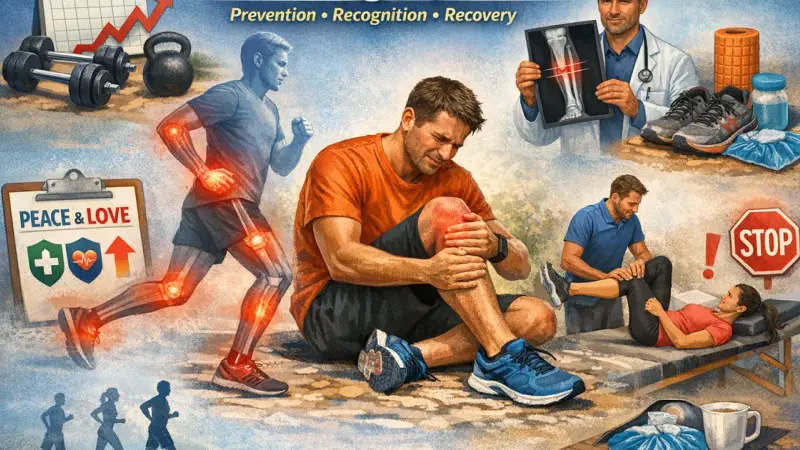
Injuries are running's inevitable challenge. The question isn't if you'll deal with them, but how you'll prevent, recognize, and recover from them.
Here's what every runner needs to know.
The Top Running Injuries
1. Runner's Knee (Patellofemoral Pain Syndrome)
What it is: Pain around or under the kneecap.
Symptoms:
- Aching pain around kneecap
- Worsens with stairs, squatting, sitting with bent knees
- May catch or grind
Causes:
- Weak hip muscles (allowing knee valgus)
- Overtraining
- Poor quadriceps/hamstring balance
- Running surface or shoe issues
Prevention:
- Hip and core strengthening
- Gradual mileage increases
- Avoid sudden changes in training surface
Treatment:
- Reduce running volume
- Strengthen hips and quads
- Ice and anti-inflammatories short-term
- Physical therapy if persistent
2. IT Band Syndrome
What it is: Pain on the outside of the knee (or hip) from iliotibial band irritation.
Symptoms:
- Sharp pain on outside of knee
- Often starts during runs and worsens
- May feel fine at rest, painful when running
Causes:
- Weak hip abductors (gluteus medius)
- Hip drop during running
- Rapid mileage increases
- Excessive downhill running
Prevention:
- Gluteus medius strengthening (clamshells, side-lying raises)
- Hip stability exercises
- Gradual training progression
Treatment:
- Reduce running volume/intensity
- Aggressive hip strengthening
- Foam rolling (controversial, may help some)
- Physical therapy for persistent cases
3. Shin Splints (Medial Tibial Stress Syndrome)
What it is: Pain along the inside edge of the shinbone.
Symptoms:
- Diffuse pain along inner shin
- Tender to touch along shinbone
- Worse at start of runs, may ease then return
Causes:
- Too much mileage too fast
- Running on hard surfaces
- Weak calf muscles
- Overpronation (sometimes)
Prevention:
- Gradual mileage progression
- Calf strengthening
- Varying running surfaces
- Appropriate footwear
Treatment:
- Reduce volume significantly
- Ice after activity
- Calf raises when pain allows
- Rule out stress fracture if persistent
4. Plantar Fasciitis
What it is: Pain in the heel/arch from plantar fascia inflammation.
Symptoms:
- Sharp heel pain, especially first steps in morning
- Pain at start of runs, may ease then return
- Tender spot on heel
Causes:
- Tight calves and Achilles
- Weak foot intrinsic muscles
- Sudden training increases
- Unsupportive footwear off-run
Prevention:
- Calf stretching and strengthening
- Foot strengthening (towel scrunches, marble pickups)
- Supportive footwear
- Gradual mileage progression
Treatment:
- Stretch calves and plantar fascia
- Roll frozen water bottle under foot
- Night splint (maintains stretch overnight)
- Temporary arch support
- Physical therapy if persistent
5. Achilles Tendinopathy
What it is: Pain and degeneration of the Achilles tendon.
Symptoms:
- Pain above heel at back of ankle
- Stiffness in morning
- Thickening of tendon
- Pain with running, especially hills
Causes:
- Sudden training increases (especially hills, speed)
- Weak and tight calf muscles
- Poor ankle mobility
- Sometimes heel drop changes
Prevention:
- Eccentric calf exercises
- Gradual hill and speed work introduction
- Calf flexibility
- Appropriate footwear transitions
Treatment:
- Reduce running volume
- Eccentric calf lowering exercises (key treatment)
- Heel lifts temporarily
- Avoid complete rest (controlled loading is better)
- Physical therapy recommended
6. Stress Fractures
What it is: Microscopic fractures in bone, usually shin, metatarsals, or pelvis.
Symptoms:
- Localized, pinpoint pain
- Pain worsens during and after running
- May hurt with walking
- Tender to touch at one spot
Causes:
- Too much volume/intensity too fast
- Low energy availability (underfueling)
- Low bone density
- Biomechanical issues
Prevention:
- Very gradual training progression
- Adequate nutrition and calcium/vitamin D
- Strength training (bone loading)
- Appropriate rest days
Treatment:
- STOP RUNNING
- See a doctor for imaging
- 6-12 weeks non-weight-bearing or limited
- Address underlying causes
- Gradual return-to-run protocol
Prevention Strategies
1. Gradual Progression
The 10% rule: Don't increase weekly mileage by more than 10% per week.
Even better: Include cutback weeks every 3-4 weeks.
2. Strength Training
Research shows strength training reduces injury risk by ~50%.
Key areas:
- Hip strength (most important)
- Core stability
- Calf strength
- Single-leg exercises
Frequency: 2 sessions per week.
3. Run Easy Most Days
80/20 polarization: 80% of miles should be easy.
Running too hard, too often increases injury risk without proportional fitness benefit.
4. Rest Days
Minimum: 1-2 rest days per week for most runners.
Cross-training: Can substitute for rest but doesn't provide same recovery.
5. Listen to Your Body
Warning signs to heed:
- Pain that appears mid-run
- Pain that worsens over runs
- Pain that doesn't resolve with rest
- Any limp or gait change
Early intervention prevents extended downtime.
6. Appropriate Footwear
Replace shoes: Every 300-500 miles.
Transitions: Gradually change shoe type (heel drop, cushion, etc.).
Fit: Proper size with toe room.
7. Address Biomechanics
Video yourself running. Look for:
- Excessive hip drop
- Knee cave
- Overstriding
- Asymmetry
Targeted exercises can address these issues.
Recognizing Warning Signs
Pain Categories
Green light (okay to run carefully):
- Slight tightness that resolves with warmup
- Minor soreness that doesn't worsen
- Familiar mild sensation in known "tight" area
Yellow light (proceed with caution):
- Discomfort that doesn't fully resolve
- Mild pain that stays the same throughout run
- New or unusual sensations
Red light (stop and address):
- Pain that worsens during run
- Sharp, acute pain
- Pain causing gait change
- Pain that persists or worsens after runs
- Swelling, significant tenderness
When to See a Professional
See a doctor or PT if:
- Pain persists more than 10-14 days despite rest
- You can't run without pain or limping
- Significant swelling or bruising
- Suspected stress fracture
- Numbness or tingling
- Pain is severe
Don't wait: Early treatment prevents longer layoffs.
Recovery Approaches
General Principles
Relative rest: Often better than complete rest. Maintain some activity.
Cross-training: Swimming, cycling, pool running can maintain fitness without impact.
Gradual return: Don't go from zero to full training. Build back progressively.
RICE Is Outdated
Modern approach: PEACE & LOVE
PEACE (initial phase):
- Protect - Avoid aggravating activities
- Elevate - Above heart when possible
- Avoid anti-inflammatories initially - May impair healing
- Compress - If swelling present
- Educate - Understand the injury
LOVE (recovery phase):
- Load - Gradually reintroduce activity
- Optimism - Positive mindset aids recovery
- Vascularization - Pain-free cardio to increase blood flow
- Exercise - Active rehabilitation
Return-to-Running Progression
Example protocol:
- Week 1: Walk 30 min, no pain
- Week 2: Walk/run 20 min (4 min walk, 1 min jog)
- Week 3: Walk/run 25 min (3 min walk, 2 min jog)
- Week 4: Walk/run 30 min (2 min walk, 3 min jog)
- Week 5-6: Gradual increase in running portion
- Week 7+: Resume easy running, rebuild gradually
Rules:
- No pain during or after activity
- If pain returns, step back
- Build volume before intensity
Injuries are part of running—but most are preventable, and all are manageable. Train smart, include strength work, listen to your body, and address issues early. When injuries happen, treat them seriously, and return to running gradually. The goal is a lifetime of running, not just the next workout.
For the comprehensive guide to injury prevention and recovery, see the Complete Running Injuries Guide.
Assess your injury risk with our Injury Risk Calculator.
Key Takeaway
Running injuries are usually preventable. Progress training gradually, include strength work, run easy most days, and address minor issues early. When injuries occur, don't ignore them—early intervention prevents weeks of lost training. Pain that worsens or persists needs professional attention.
Frequently Asked Questions
Should I run through pain?
How do I know if I need to see a doctor?
How can I prevent running injuries?
What's the most common running injury?
How long do running injuries take to heal?
References
- Sports medicine research
- Physical therapy literature
- Injury statistics