
Contents
HOKA Clifton 11 Review: Lighter Comfort for Daily Miles
The HOKA Clifton 11 trims weight and refines its upper while keeping a high-stack, neutral platform for easy daily mileage and steady long runs.

Quick Hits
- •The Clifton 11 keeps compression-molded EVA and an 8mm drop in a lighter package than the Clifton 10.
- •Independent testing found excellent heel cushioning and improved long-run forefoot protection, but little bounce.
- •Four cataloged widths and a true-to-size independent result make fit breadth a major strength.
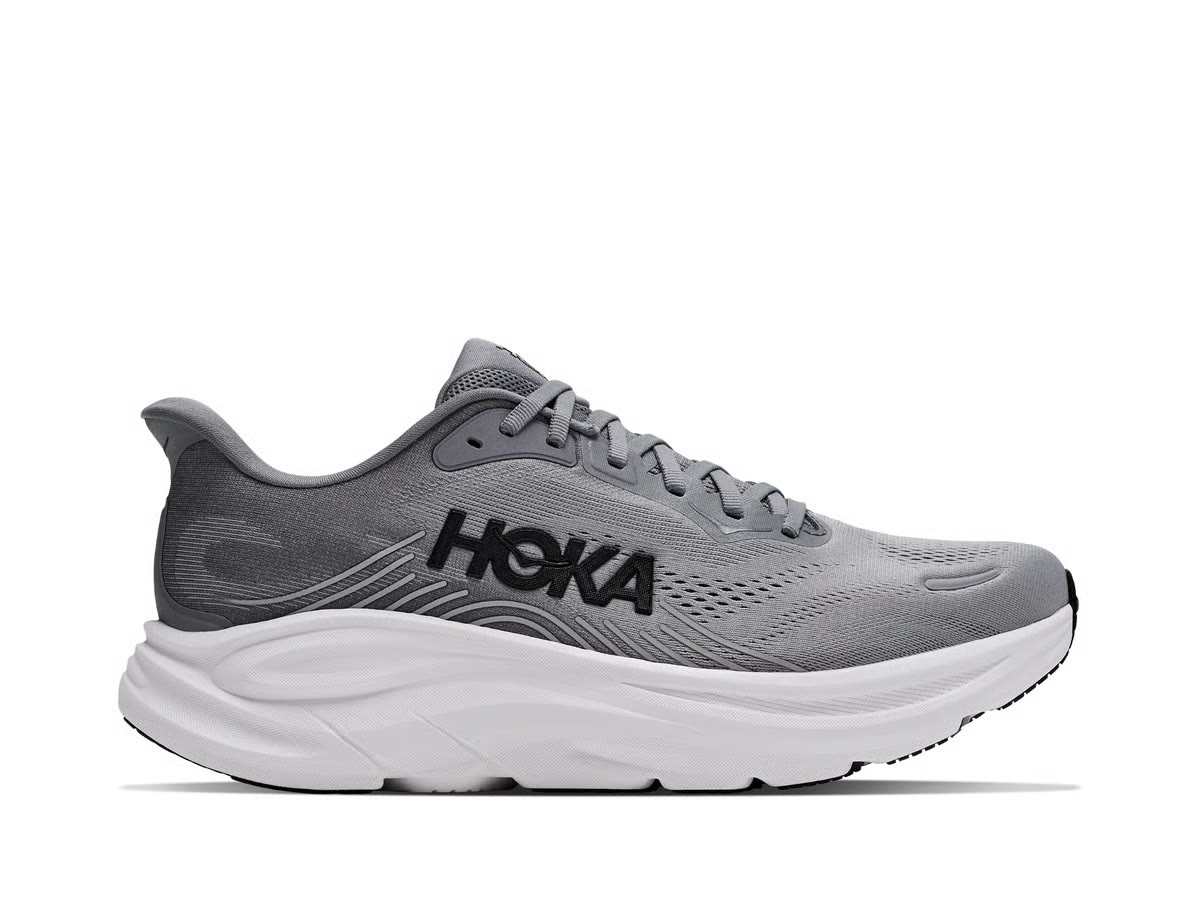
HOKA Clifton 11 Review
Disclosure: As an Amazon Associate, we earn from qualifying purchases. This helps support TrainingPlan at no extra cost to you.
Affiliate link - we may earn a commission
This review draws on HOKA's product details, the audited TrainingPlan catalog, and RTINGS laboratory testing. It does not represent first-person testing by TrainingPlan.
Quick Verdict
The HOKA Clifton 11 is a neutral, maximum-cushion road trainer for easy, recovery, and long-run use. Its 43mm heel and 35mm forefoot preserve the high-stack shape introduced by the prior generation, while the 9.2oz men's catalog weight is meaningfully lighter than the Clifton 10 sample measured by RTINGS.
HOKA describes an effortless ride built on compression-molded EVA and a Smooth MetaRocker. Independent testing confirms strong impact protection, especially at the heel, but finds poor energy return. The Clifton 11 is therefore better understood as a comfortable cruiser than as an energetic all-purpose trainer. Runners wanting more pace range should compare it with the ASICS Novablast 6.
Key Specifications
| Spec | Value |
|---|---|
| Category | Daily Trainer, Long Run, Recovery |
| Cushion Level | Maximum |
| Heel-to-Toe Drop | 8mm |
| Weight (Men's/Women's) | 9.2oz / 8.0oz |
| Stack Height | 43mm heel / 35mm forefoot |
| Pronation Support | Neutral |
| Width Options | Narrow, Standard, Wide, and Extra-Wide |
| MSRP | MSRP: $155 |
| Surface | Road |
The specification table follows the runtime catalog. RTINGS measured slightly different stack and drop values in its test pair, which is expected when laboratory methods differ from manufacturer or standardized catalog geometry.
What Changed
Version 11 refines rather than reinvents the Clifton 10 platform. HOKA retains compression-molded EVA and adds an elevated engineered-mesh upper, reflective details, silicone touchpoints, and a double-lace lock intended to reduce tongue movement. The feature list also includes a rearfoot-focused Active Foot Frame, abrasion rubber, and Smooth MetaRocker geometry.
RTINGS found the Clifton 11 lighter than the 10, with a softer heel, improved forefoot cushioning retention over longer efforts, and more room above the toes. It also found the new shoe slightly less stable overall, partly because the tongue is no longer semi-gusseted. Those changes create a more comfortable, lighter update without turning the model into a faster shoe.
Readers coming from the older Clifton 9 should note that the current catalog geometry uses an 8mm drop and substantially more stack than that version.
Ride and Intended Use
The Clifton 11's best evidence-backed use is ordinary road mileage at easy to steady paces. RTINGS found excellent heel cushioning and good protection under lighter and moderate forefoot loads. The forefoot result declined under higher forces, and the midsole produced limited measured rebound. That distinction matters: the shoe absorbs impact but does not return much of that energy as bounce.
The MetaRocker geometry helps the shoe roll through toe-off, but independent testing describes the rocker as too compliant to create strong propulsion. This reinforces the catalog categories. Daily, long-run, and recovery use all fit; speed and racing do not.
Although the broad base tested as stable for a neutral shoe, the catalog does not classify it as a stability model. A controlled feel is not the same as a corrective support system, and no injury-prevention inference should be made from the platform width.
Fit and Sizing
RTINGS found the Clifton 11 true to size in length, forefoot width, arch width, and forefoot height. Its test also found that version 11 corrects the low vertical toe space of the Clifton 10. Standard flat laces held the midfoot securely, despite the non-gusseted tongue.
The catalog lists narrow, standard, wide, and extra-wide options, an unusually broad range for a modern max-cushion trainer. Runners should select the width that matches their actual foot volume rather than sizing up solely to create width.
What Works Well
- Deep heel protection: Independent testing found the rearfoot cushioning effective across a range of loads.
- Long-run consistency: Forefoot cushioning held up better over repeated distance than in the Clifton 10 test.
- Lower weight: The update removes mass without abandoning the high-stack daily-trainer shape.
- Fit breadth: Four cataloged widths and a true-to-size result make the model accessible to a wide range of feet.
Tradeoffs
- Low energy return: Compression-molded EVA prioritizes absorption over a lively toe-off.
- Not built for speed: The compliant rocker and weight work better at steady paces.
- Less stable than version 10 in testing: A softer heel and non-gusseted tongue reduce some of the predecessor's control.
- Limited ground feel: The 43/35mm stack keeps the runner well separated from the road.
Who Should Consider This Shoe
- Neutral runners prioritizing comfort over speed.
- Runners who want one shoe for easy, recovery, and steady long runs.
- Shoppers who need narrow, wide, or extra-wide sizing.
- Readers comparing options in our best cushioned running shoes guide.
Who Should Look Elsewhere
- Runners seeking a lively tempo shoe.
- Athletes who prefer low stack and direct road feel.
- Buyers who need a cataloged stability model.
- Anyone satisfied with the Clifton 10 who does not value the lighter upper or improved toe space.
Cross-Brand Comparison
The ASICS Gel-Nimbus 28 costs MSRP: $15 more and uses FF BLAST PLUS with PureGEL for a firmer, controlled max-cushion ride. The Nike Pegasus 42 has less stack and a more traditional daily-trainer identity. The New Balance 1080v15 is another comfort-focused road alternative. The Clifton's main advantage across that group is its four-width catalog range.
Same-Brand Comparison
The HOKA Bondi 8 represents the heavier, more protective end of HOKA's legacy lineup, while the HOKA Mach 6 is the faster daily option. Our Clifton versus Bondi comparison explains the broader line distinction. The Clifton 11 remains the middle choice: more cushioned than a speed trainer, less bulky than the most protective model.
Value
At MSRP: $155, the Clifton 11's value comes from frequency of use and fit coverage. It can cover three related training categories, and its width range reduces the need to compromise on fit. It is less convincing for a runner who expects one shoe to handle hard workouts, because independent evidence does not support that pace range.
Final Verdict
The Clifton 11 improves comfort and fit details while keeping the model's purpose recognizable. It is lighter, offers more room over the toes, and retains excellent heel cushioning. Its softer rearfoot and compliant rocker also mean it remains a steady cruiser rather than an energetic trainer.
Choose it for protected road mileage, broad sizing, and predictable comfort. Choose a different model if quick turnover or substantial ground feel is central to the run.
Disclosure: As an Amazon Associate, we earn from qualifying purchases.
Affiliate link - we may earn a commission
Key Takeaway
The Clifton 11 is a lighter, well-cushioned daily and long-run cruiser with unusually broad sizing, but its compression-molded EVA ride favors comfort and control over energy return.
Frequently Asked Questions
Who is the HOKA Clifton 11 best for?
How does the HOKA Clifton 11 fit?
Is the HOKA Clifton 11 worth its MSRP?
References
- https://au.hoka.com/products/clifton-11-1176572-gctc-gctc
- https://www.rtings.com/running-shoes/reviews/hoka/clifton-11