
Contents
Nike Pegasus 42 Review: A Familiar Daily Trainer, Reworked
The Nike Pegasus 42 adds full-length Air Zoom and a roomier forefoot, but remains a firm, dependable road trainer rather than a speed specialist.

Quick Hits
- •Full-length Air Zoom replaces the separate heel and forefoot units used in the Pegasus 41.
- •The catalog positions it as a high-cushion neutral daily trainer, not a dedicated speed or racing shoe.
- •Nike added forefoot room, while independent measurements still found limited vertical space near the toes.
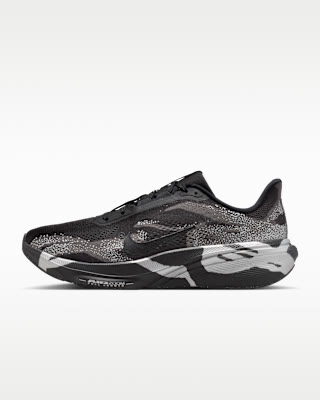
Nike Pegasus 42 Review
Disclosure: As an Amazon Associate, we earn from qualifying purchases. This helps support TrainingPlan at no extra cost to you.
Affiliate link - we may earn a commission
This review is based on Nike's published product details, the TrainingPlan catalog, and independent laboratory testing. It does not represent first-person testing by TrainingPlan.
Quick Verdict
The Nike Pegasus 42 is the conservative choice in a market full of highly specialized trainers. It combines a 10mm drop, a stable neutral platform, and high-abrasion outsole rubber in a shoe intended for repeatable road mileage. The major mechanical update—a curved, full-length Air Zoom unit—makes the cushioning system more continuous than the separate heel and forefoot units in the Pegasus 41.
That redesign does not turn the Pegasus into a super trainer. Nike describes the cushioning as responsive, but RTINGS measured limited energy return and found the forefoot relatively harsh under higher loads. The most defensible reading is that the 42 is a sturdy daily shoe for easy and steady running, rather than the shoe to choose for intervals, racing, or a particularly soft long-run experience.
Key Specifications
| Spec | Value |
|---|---|
| Category | Daily Trainer |
| Cushion Level | High |
| Heel-to-Toe Drop | 10mm |
| Weight (Men's/Women's) | 10.5oz / 8.6oz |
| Stack Height | 37mm heel / 27mm forefoot |
| Pronation Support | Neutral |
| Width Options | Narrow, Standard, Wide, and Extra-Wide |
| MSRP | MSRP: $145 |
| Surface | Road |
The table uses the audited catalog's standardized weights and geometry. Nike's product page lists an approximate 10.59oz weight for a men's US size 10, while independent samples use their own sizes and methods.
What Changed
Nike replaced the Pegasus 41's two discrete Air Zoom units with one curved, full-length unit. The brand also increased toe spring, moved to an updated last, and says the forefoot and toe box have more room. A softer, more breathable mesh and a revised Waffle outsole round out the visible changes.
The full-length unit is the meaningful difference. Independent analysis notes that a continuous unit is less dependent on a runner landing directly over one of two smaller pods. Editorially, that should make the cushioning layout more consistent across different foot strikes, although it does not establish that the complete shoe is more energetic. RTINGS found almost no gain in measured heel or forefoot energy return versus the 41, which is a useful counterweight to the manufacturer's performance language.
Ride and Intended Use
The runtime catalog classifies the Pegasus 42 only as a daily trainer. That narrow label fits the evidence. ReactX foam surrounds the Air Zoom unit, and the broad, firm forefoot gives the shoe a controlled base. Independent testing also found strong lateral stability, despite the shoe being neutral rather than a stability model.
For runners who like a traditional trainer, those traits are advantages. The shoe should make the most sense for short-to-medium easy runs and steady aerobic mileage. The high catalog cushion rating describes the amount of material and geometry; it should not be read as a promise of a soft ride. RTINGS found adequate heel protection but less forgiving forefoot cushioning and a relatively flat rocker.
The Pegasus 42 is therefore less compelling for runners seeking a bouncy tempo-day shoe. The ASICS Novablast 6 is cataloged for both daily training and speed, while the Pegasus remains the more conventional workhorse. Our best daily trainers guide provides broader context for that choice.
Fit and Sizing
Nike says the updated last provides more space at the toes and forefoot than the Pegasus 41. RTINGS found the length true to size and ample room from the arch through the ball of the foot, but also measured a taper and limited height near the toes. Those findings can coexist: the 42 may be roomier than its predecessor without being especially tall at the front.
The catalog records narrow, standard, wide, and extra-wide options across the line. That breadth is one of the Pegasus's clearest practical advantages. Runners with high-volume forefeet should still try the shoe on rather than assuming a wide size automatically solves vertical pressure.
What Works Well
- Stable daily geometry: A firm forefoot and broad landing base support a controlled ride without changing the shoe's neutral classification.
- More continuous cushioning layout: Full-length Air Zoom removes the segmented heel-and-forefoot arrangement used in the 41.
- Broad width selection: Four cataloged widths make the model more adaptable than many one-width performance trainers.
- Purpose is easy to understand: It is a road workhorse, not a disguised racer or highly specialized recovery shoe.
Tradeoffs
- Weight: The catalog's 10.5oz men's figure is substantial beside many current daily trainers.
- Limited liveliness: Independent testing did not validate the energetic ride implied by Nike's marketing.
- Forefoot protection is the weak point: The measured cushioning result was notably less convincing at the front than at the heel.
- Toe-box language needs context: More room than the 41 does not guarantee enough vertical space for every foot.
Who Should Consider This Shoe
- Runners who prefer a firm, stable, traditional daily trainer.
- Newer runners who want one straightforward road shoe with several widths.
- Existing Pegasus users interested in a full-length Air Zoom configuration.
- Heel strikers whose priority is a secure platform rather than maximum bounce.
Who Should Look Elsewhere
- Runners seeking a light shoe for intervals or racing.
- Forefoot strikers who want deep, forgiving cushioning under the toes.
- Anyone who equates a high cushion rating with a distinctly soft ride.
- Runners who want mechanical guidance; the Nike Structure 26 is the relevant stability-oriented sibling.
Cross-Brand Comparison
The HOKA Clifton 11 offers more cataloged stack and a comfort-first identity, but independent testing also characterizes it as restrained rather than lively. The Novablast 6 is the clearer choice when a daily shoe also needs to cover faster sessions. Runners deciding between Nike and a similarly traditional trainer can also start with our Nike Pegasus versus Brooks Ghost comparison.
Same-Brand Comparison
Within Nike, the Vomero 18 is the more cushioned long-run option. The Pegasus Plus trades the standard model's Air Zoom and ReactX construction for a lighter, ZoomX-based approach. The Pegasus 42 remains the simpler and less expensive everyday option between those more specialized siblings.
Value
At a MSRP: $145 catalog MSRP, the Pegasus 42 sits in the middle of the daily-trainer market. Its value argument is not exceptional performance in one category; it is the combination of a predictable purpose, multiple widths, and a design intended for regular road use. A runner buying for speed or maximum cushioning would be paying for versatility they may not use.
Final Verdict
The Pegasus 42 makes a real structural change without abandoning the line's identity. Full-length Air Zoom, added toe spring, and a revised fit improve the design brief on paper. Independent measurements, however, suggest the result is still firm, heavy, and only modestly responsive.
Choose it for stable daily mileage and fit flexibility. Skip it if the priority is a soft forefoot, low weight, or a propulsive ride. That bounded role is less exciting than Nike's marketing, but it is also what makes the Pegasus easy to understand.
Disclosure: As an Amazon Associate, we earn from qualifying purchases.
Affiliate link - we may earn a commission
Key Takeaway
The Pegasus 42 is a sensible, stable daily trainer with a more continuous Air Zoom setup, but its weight and restrained energy return keep it out of the performance-trainer tier.
Frequently Asked Questions
Who is the Nike Pegasus 42 best for?
How does the Nike Pegasus 42 fit?
Is the Nike Pegasus 42 worth its MSRP?
References
- https://www.nike.com/t/pegasus-42-mens-road-running-shoes-S1bYkOza/IQ3928-001
- https://www.rtings.com/running-shoes/reviews/nike/pegasus-42