
Contents
Nike Structure Plus Review: Deep Cushioning, Strong Guidance
Research-based Nike Structure Plus review covering official weight and drop, independent stack and fit testing, ZoomX and ReactX construction, guidance, tradeoffs, comparisons, and value.

What changed: Corrected weight, stack, price, width, and dual-foam construction; added exact independent ride and fit findings; removed unsupported medial-post, overpronation-control, pain-relief, mileage, adaptation, and neutral-runner claims.
Quick Hits
- •Nike lists 309g/10.9oz for men's US 10, a 10mm drop, and regular and extra-wide options.
- •Independent sources report a 42/32mm stack and roughly 8.8oz for women's US 8.
- •Guidance comes from ZoomX nested in ReactX, tall sidewalls, sole flare, outsole geometry, and a secure upper.
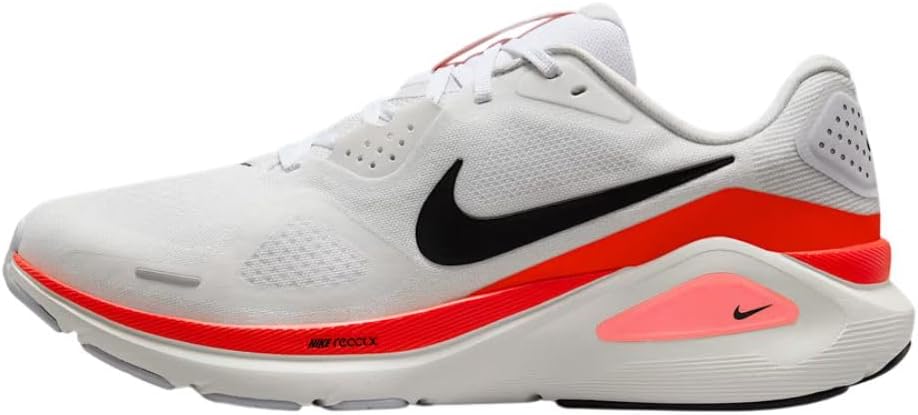
Nike Structure Plus Review
Quick Verdict
The Nike Structure Plus expands the Structure line with a tall dual-foam system: ZoomX sits above and within firmer ReactX, while high sidewalls, sole flare, an engineered upper, and outsole geometry guide the foot. It is more cushioned and more expensive than Structure 26. Independent testing confirms substantial rearfoot and midfoot guidance, but opinions diverge sharply on ride quality—RoadTrailRun found it smooth and lively, while Doctors of Running found the heel sharp and clunky.
That disagreement is useful. It means this is a current stability-oriented shoe that should be run-tested, not recommended categorically to every “overpronator.” TrainingPlan has not hands-on tested this pair; this assessment combines Nike's exact product and launch material with two independent exact-model wear tests.
Key Specifications
| Spec | Verified value |
|---|---|
| Category | Supportive maximum-stack road trainer |
| Midsole | ZoomX over / within ReactX |
| Heel-to-Toe Drop | 10mm |
| Weight (Men's/Women's) | 10.9oz / 8.8oz |
| Stack Height | 42mm / 32mm, independent measurement |
| Width Options | Regular and extra-wide |
| MSRP | MSRP: $170 |
| Surface | Road |
Nike lists 309g for men's US 10 and a 10mm drop but does not publish separate stack heights on the exact page reviewed. Doctors of Running reports 42/32mm, 10.4 ounces in men's US 9, and 8.8 ounces in women's US 8. RoadTrailRun measured about 10.45 ounces in men's US 9. The table combines Nike's men's reference with the independent women's reference and labels the stack provenance.
What Changed
Structure Plus is a new tier, not Structure 26 with a cosmetic upper. Structure 26 uses full-length ReactX and a midfoot support system; Plus adds a large ZoomX layer and raises the independent stack to 42/32mm. Nike's launch material positions the models as different ride choices rather than a replacement relationship.
The Plus also uses a dual-rubber outsole, engineered mesh with a midfoot band, tall medial and lateral walls, and a stiff internal heel structure. Those elements create support without a traditional dense medial post.
Ride and Intended Use
The shoe feels most coherent at easy and steady road paces. RoadTrailRun's testers found the cushioning deep and reactive enough to make the 10.4-ounce men's sample feel lighter than expected. Doctors of Running found the ReactX carrier more dominant, with a firm ride and abrupt centered heel bevel that worked better for midfoot or forefoot landings.
Both sources agree that the rearfoot and midfoot are highly guided and that the shoe is less suitable for quick pace changes. It can also work for walking and standing if comfortable. None of this supports claims that it corrects overpronation, treats knee or ankle issues, or prevents injury.
Fit and Sizing
Independent testers stayed true to size and found strong lockdown. Doctors of Running's testers differed at the forefoot: one found a tapered, lower-volume toe box and stiff heel counter, while another found normal width with slightly more forefoot room. The prominent sidewalls are noticeable around the rearfoot and arch.
Start true to size, compare extra-wide when width or volume is the issue, and check the heel counter plus sidewall pressure during a run. Do not solve toe taper by adding unnecessary length without checking heel security.
What Works Well
- Substantial guidance: Multiple geometric and upper elements stabilize the rearfoot and midfoot without a hard post.
- Deep cushioning: The 42/32mm independent stack is meaningfully taller than Structure 26.
- Extra-wide option: Nike lists regular and extra-wide, improving access for broader feet.
Tradeoffs
- Polarizing heel: The sharp bevel felt smooth to some testers and clunky to others.
- Noticeable weight: The official men's US 10 reference is 10.9 ounces.
- Not full ZoomX: ReactX supplies much of the carrier and can make the ride firmer than the branding suggests.
Who Should Consider This Shoe
- Runners who want clearly noticeable rearfoot and midfoot guidance with deep cushioning.
- Structure users seeking a taller, more premium alternative rather than a direct replacement.
- Buyers who can test the heel transition and sidewalls during an actual run.
Who Should Look Elsewhere
- Runners who dislike firm heel counters, arch-side pressure, or abrupt heel rockers.
- Athletes seeking a light tempo trainer or a fully flexible neutral shoe.
- Anyone expecting footwear to treat knee or ankle symptoms.
Cross-Brand Comparison
The New Balance Vongo v6 provides milder guidance through an EVA film and softer upper layer. The ASICS Gel-Kayano 31 uses broad 4D Guidance geometry, while the Brooks Glycerin GTS 21 applies GuideRails. Structure Plus feels more enclosed and tall than many mild-guidance alternatives.
Same-Brand Comparison
The Nike Structure 26 is lower, cheaper, and all ReactX. The Nike Vomero Plus is a neutral full-ZoomX max-cushion shoe, while the Nike Vomero Premium is much taller and heavier. The Nike Pegasus 41 is the simpler neutral daily option.
Value
At MSRP: $170, Structure Plus costs MSRP: $25 more than Structure 26 at current US pricing cited in Nike's launch context. The premium buys more stack and ZoomX, but not guaranteed softness or comfort. It is good value only when those additions improve the run for you.
No Amazon link is published. Nike and reputable specialty sellers offer the clearest route to the exact regular or extra-wide version and a usable return policy.
Final Verdict
The corrected Structure Plus is a 10mm-drop, 42/32mm-estimate, 10.9-ounce men's US 10 trainer with a ZoomX-and-ReactX chassis and strong geometric guidance. It is neither a simple softer Structure 26 nor a medical device.
Choose it if the sidewalls and heel transition feel smooth during a real run. If the rearfoot feels abrupt or intrusive, a milder or differently shaped stability option is the better choice.
Key Takeaway
Structure Plus is a genuinely new, highly guided max-stack option, but runners should test the rearfoot transition and sidewall pressure rather than buying it for medical claims or assuming ZoomX makes it universally soft.
Frequently Asked Questions
Does the Nike Structure Plus use a medial post?
Is the Structure Plus soft and bouncy?
Can neutral runners use the Structure Plus?
References
- https://about.nike.com/en/newsroom/releases/nike-structure-plus-official-images
- https://www.nike.com/gb/t/structure-plus-road-running-shoes-rdhfPpo2/HQ3048-111
- https://www.doctorsofrunning.com/nike-structure-plus-review-2026/
- https://www.roadtrailrun.com/2025/12/nike-structure-plus-review-gentle.html