
Contents
HOKA Arahi 7 Review: Corrected 5mm Stability Trainer
Research-based HOKA Arahi 7 review covering its 37/32mm men's stack, 5mm drop, 9.6/8.1oz weights, J-Frame guidance, fit, ride, and value.

What changed: Corrected the men's weight, documented gender and measurement differences, removed medical and mileage claims, and quarantined an unverified affiliate link.
Quick Hits
- •Men's brand geometry is 37/32mm; the women's reference is 35/30mm.
- •Reference weights are 9.6oz men and 8.1oz women.
- •The J-Frame provides structured guidance, but it is not medical treatment.
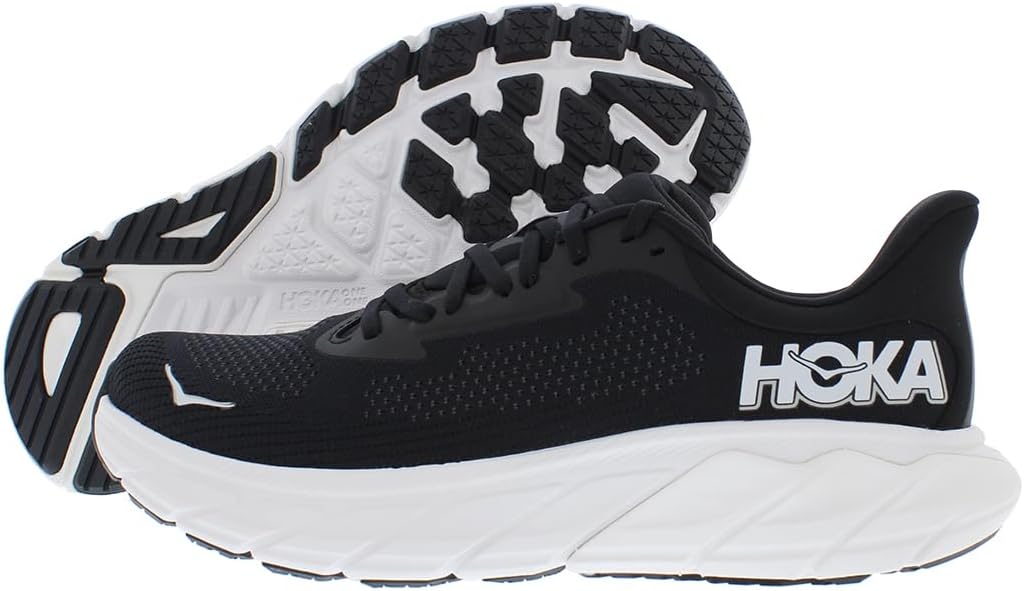
HOKA Arahi 7 Review: Corrected 5mm Stability Trainer
Disclosure: TrainingPlan has not hands-on tested this exact model. This research-based review uses HOKA exact-model materials and independent exact-model evaluations. No Amazon US listing is currently verified.
Quick Verdict
The HOKA Arahi 7 is a superseded stability road trainer built around a 5mm brand-specified drop, compression-molded EVA, and HOKA's firmer J-Frame. Exact-model references support 37mm heel and 32mm forefoot for men, 35/30mm for women, reference weights of 9.6 and 8.1 ounces, and a MSRP: $145 January 2024 launch.
Compared with many current stability shoes, the Arahi 7 is relatively light and direct. Its midsole is protective without being especially soft, while the J-Frame produces more obvious guidance than a neutral shoe with a merely broad platform. It works best as a steady daily trainer for runners who already know that this combination of lower drop, firmer foam, and structured support agrees with them.
Key Specifications
| Specification | Audited catalog value |
|---|---|
| Category | Light-stability road trainer |
| Heel-to-Toe Drop | 5mm |
| Weight (Men's/Women's) | 9.6oz / 8.1oz references |
| Stack Height | 37mm heel / 32mm forefoot (men) |
| Women's Stack | 35mm heel / 30mm forefoot |
| Midsole | Compression-molded EVA with J-Frame |
| Upper | Zonal flat-knit |
| Outsole | Zonal Durabrasion rubber |
| Width Options | Standard and wide |
| MSRP | MSRP: $145 at launch |
| Release | January 2024; superseded |
What Changed
The former record rounded the men's weight to 9.5 ounces. HOKA's exact-model page and seasonal catalog support 9.6 ounces for men, while the catalog gives 8.1 ounces for women. The audited runtime value now preserves those references.
Published stack figures require context. HOKA's spring catalog specifies 37/32mm for men and 35/30mm for women. Doctors of Running reports 34/29mm, while RunRepeat measured 34.2/27.9mm and a 6.3mm drop in its lab sample. Those figures are not interchangeable: brand specifications, shoe size, measurement location, and lab procedure can all affect the result. The catalog uses the men's brand geometry and this article records the conflict instead of blending the values.
We also removed unsupported mileage ranges, injury-oriented recommendations, and an Amazon link that was not documented as an exact-generation match. A stability classification describes shoe construction; it does not establish that the shoe treats knee pain or prevents injury.
Ride and Intended Use
The Arahi 7 feels firmer and more controlled than HOKA's softest neutral trainers. Its J-Frame wraps firmer foam along the medial side and around the heel, resisting excess inward movement without relying on an old-style plastic post. A rocker helps the relatively stiff platform move through toe-off.
That package is most natural at easy and steady daily paces. The shoe is light enough for occasional faster running, but its ordinary EVA does not supply the rebound of a modern plated workout shoe. The 5mm drop also shifts loading differently from a traditional 10–12mm stability model; runners changing drop should make that transition gradually rather than assuming one geometry is universally safer.
Fit and Sizing
The zonal flat-knit upper is more structured than the Arahi 6 upper, with a gusseted tongue and secure midfoot. Independent reviews generally describe true-to-size length, but some testers found the forefoot tapered or the midfoot snug. Standard and wide versions were offered, though a wide label does not guarantee that every foot shape will fit.
Start with normal running-shoe size and test toe clearance, instep pressure, heel security, and whether the medial structure feels intrusive. The running-shoe fit guide gives a repeatable evaluation process.
What Works Well
Arahi 7 combines a comparatively low weight, secure upper, consistent rocker, and clear guidance in a simple daily-training package. Zonal Durabrasion rubber protects higher-wear areas without covering the whole outsole, helping control mass. Runners who dislike very soft foam may appreciate its stable, predictable landing.
Tradeoffs
The ride can feel firm and flat, and the J-Frame may be too noticeable for runners who do not want guidance. Forefoot volume is not generous for every foot. The shoe is also less energetic than current super-trainers and less cushioned than HOKA's larger stability platform.
No exact-model evidence supports a universal retirement mileage. Monitor outsole wear, foam compression, upper stretch, and a meaningful change in comfort using the shoe replacement guide.
Who Should Consider This Shoe
Consider the Arahi 7 if you want a 5mm-drop road trainer, a firm-to-balanced ride, relatively low mass for the category, and more guidance than a neutral platform provides. Discounted old stock can make sense when the exact generation, width, condition, and return terms are clear.
Who Should Look Elsewhere
Look elsewhere if you prefer soft cushioning, flexible ground feel, a roomy forefoot, a high drop, or no corrective sensation. The New Balance 860v14 uses a softer dual-density stability approach, while the ASICS Gel-Kayano 31 provides a larger, more cushioned platform.
Cross-Brand Comparison
The 860v14 is heavier and has an 8mm drop, but its Stability Plane feels less like a traditional medial rail. Kayano 31 is heavier again, with a 10mm drop and 4D Guidance system. Both offer extra-wide options that Arahi 7 did not. Our stability-shoe guide compares the categories without treating support level as a medical prescription.
Same-Brand Comparison
The neutral HOKA Clifton 9 shares a 5mm drop but omits the J-Frame. The HOKA Gaviota 5 is broader, heavier, and more cushioned, using H-Frame geometry for guidance. Arahi 8 is the current successor and should be judged on its own fit and construction rather than assumed to ride identically.
Value
At its MSRP: $145 launch price, Arahi 7 sat near mainstream daily-trainer pricing. Its value now depends on clearance price, remaining sizes, storage history, and returns. A low price is not useful if the J-Frame or narrow fit does not suit the runner.
Final Verdict
HOKA Arahi 7 is a superseded 37/32mm men's stability trainer with a 5mm brand drop, 9.6/8.1-ounce reference weights, firm EVA, and noticeable J-Frame guidance. It remains a sensible steady-day option for runners who prefer that specific geometry, but it should not be represented as a treatment for pronation or pain.
Key Takeaway
Arahi 7 suits runners who want a relatively light, firm, low-drop trainer with noticeable J-Frame guidance, but its fit and support feel should be tried directly.
Frequently Asked Questions
What is the HOKA Arahi 7 drop?
Is the Arahi 7 a neutral shoe?
Is the Arahi 7 still current?
References
- https://au.hoka.com/products/m-arahi-7-1147850-bwht-bwht
- https://www.shoeroadsproductions.com/wp-content/uploads/2024/02/Hoka-SS24.pdf
- https://www.doctorsofrunning.com/hoka-one-one-arahi-5-multiple-tester/
- https://runrepeat.com/hoka-arahi-7
- https://believeintherun.com/shoe-reviews/hoka-arahi-7-review/