
Contents
Plantar Fasciitis for Runners: Prevention and Treatment
Plantar fasciitis is one of the most common running injuries. Learn what causes it, how to treat it, and how to prevent it from returning.

Quick Hits
- •Plantar fasciitis is inflammation/degeneration of the tissue connecting heel to toes
- •Classic symptom: sharp heel pain with first steps in the morning
- •Often caused by sudden training changes, tight calves, or inadequate support
- •Treatment: rest, stretching, strengthening, and addressing root causes
- •Recovery takes weeks to months—patience and consistency are key
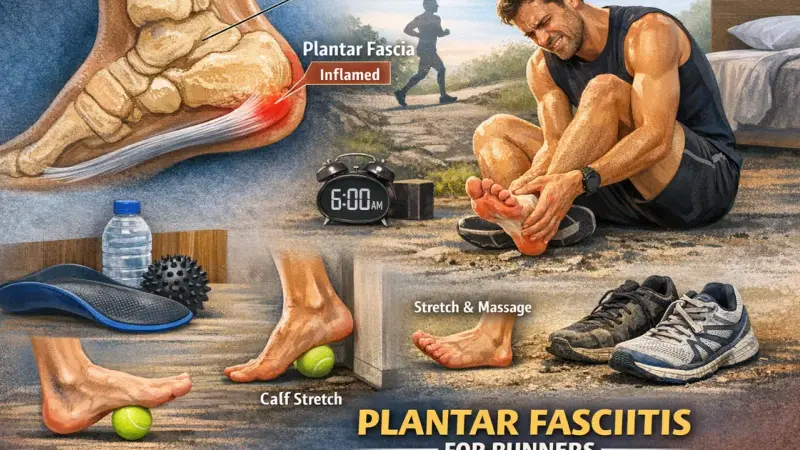
That stabbing heel pain with your first morning steps? You're not alone.
Here's everything runners need to know about plantar fasciitis.
What Is Plantar Fasciitis?
The Anatomy
The plantar fascia:
- Thick band of tissue on bottom of foot
- Connects heel bone to toes
- Supports arch
- Absorbs shock with each step
The Injury
- Inflammation or degeneration of the fascia
- Usually at the heel attachment
- Result of overuse or excessive stress
The Symptom Pattern
Classic presentation:
- Sharp heel pain with first steps in morning
- Pain decreases with movement (fascia "warms up")
- Returns after prolonged rest
- Worse after (not during) exercise
- Can be one or both feet
What Causes It
Primary Causes
Training errors:
- Too much volume too fast
- Sudden increase in intensity
- Running on hard surfaces
- Adding hill work rapidly
Biomechanical factors:
- Tight calf muscles
- Weak foot intrinsic muscles
- Flat feet or high arches
- Overpronation
Footwear:
- Worn-out shoes
- Inadequate support
- Sudden shoe changes
Risk Factors
More likely if:
- High weekly mileage
- Tight Achilles/calf complex
- Previous foot injuries
- Certain foot types
- Standing occupations
- Higher body weight
Treatment
Phase 1: Acute Management (First 1-2 Weeks)
Reduce inflammation:
- Ice (10-15 minutes, several times daily)
- Anti-inflammatories (if appropriate for you)
- Rest from running
Immediate relief:
- Arch support inserts
- Supportive shoes (avoid flat/flexible)
- Night splint (keeps fascia stretched overnight)
Phase 2: Active Treatment (Ongoing)
Stretching:
- Calf stretches (gastrocnemius and soleus)
- Plantar fascia stretch (pull toes back toward shin)
- Before getting out of bed
- Several times daily
Strengthening:
- Towel scrunches (grab towel with toes)
- Marble pickups
- Single-leg balance
- Calf raises (eccentric focus)
Self-massage:
- Roll foot on frozen water bottle
- Golf ball or tennis ball massage
- Foam roll calves
Phase 3: Advanced Treatment
If not improving:
- Physical therapy referral
- Custom orthotics assessment
- Shockwave therapy
- Cortisone injection (use cautiously)
In severe cases:
- Prolonged immobilization
- PRP injection
- Surgery (rare, last resort)
The Stretching Protocol
Calf Stretch (Gastrocnemius)
How:
- Face wall, hands on wall
- Back leg straight, heel on ground
- Lean forward until stretch felt in upper calf
- Hold 30 seconds, 3 times each leg
Calf Stretch (Soleus)
How:
- Same position as above
- But back knee bent
- Stretches deeper calf muscle
- Hold 30 seconds, 3 times each leg
Plantar Fascia Stretch
How:
- Sit, cross affected foot over opposite knee
- Grab toes and pull toward shin
- Feel stretch along arch
- Hold 30 seconds, 3 times
Do this before first steps in morning.
Achilles Eccentric Exercise
How:
- Stand on step, heels off edge
- Rise up on both feet
- Lower slowly on affected foot only
- 3 sets of 15, twice daily
Prevention
Training Practices
- Follow 10% rule for mileage increases
- Gradually introduce hill work
- Vary running surfaces
- Include rest days
Flexibility Maintenance
- Regular calf stretching
- Daily when in high-risk phases
- Part of post-run routine
Strength Work
- Foot intrinsic exercises
- Calf strengthening
- Single-leg balance
- 2-3 times per week
Footwear
- Replace shoes before worn out (300-500 miles)
- Appropriate support for your foot type
- Avoid sudden changes
- Consider supportive shoes for daily wear
Return to Running
When to Start
Green lights:
- Morning pain minimal or gone
- Walking without pain
- Can do stretches without significant discomfort
- Several days of improvement
The Return Protocol
Week 1:
- Short run/walk (10-15 min running)
- Flat, soft surfaces
- Assess response next morning
Week 2:
- Gradual increase if tolerated
- Still conservative
- Continue all treatment
Weeks 3-4:
- Progressive return to normal
- Add time and distance slowly
- Continue prevention practices
Warning Signs to Stop
- Morning pain returning
- Pain during running (not just after)
- Increasing rather than decreasing symptoms
- Any limping or gait changes
Long-Term Management
After return:
- Continue stretching (daily is ideal)
- Maintain foot strength
- Monitor training load
- Act immediately if symptoms return
What Doesn't Work
Common Mistakes
Just resting:
- Rest alone doesn't fix underlying issues
- Must address flexibility and strength
- Inactivity leads to loss of fitness
Pushing through:
- Running through pain extends injury
- Creates compensation patterns
- Can become chronic
Quick fixes:
- No instant cure exists
- Night splints, orthotics, injections help but aren't magic
- Consistent treatment over time is key
Plantar fasciitis is frustrating but solvable. The combination of rest from running, diligent stretching, progressive strengthening, and patience leads to recovery for most runners. Address it early, follow the protocol consistently, and build prevention habits into your routine to stay pain-free.
For more on injury prevention and recovery, see the Complete Running Injuries Guide.
Track your injury recovery on your dashboard.
Key Takeaway
Plantar fasciitis is frustrating but treatable. Address it early with rest from running, calf and plantar stretching, foot strengthening, and correction of training errors. Recovery requires patience—rushing back too soon almost always extends the injury. Consistent prevention habits keep it from returning.
Frequently Asked Questions
What does plantar fasciitis feel like?
Can I run with plantar fasciitis?
How long does plantar fasciitis take to heal?
Should I stretch or rest?
Will it come back?
References
- Sports medicine research
- Physical therapy protocols
- Running injury studies