
Contents
Salomon Speedcross vs HOKA Speedgoat: Which Trail Shoe Fits?
Compare the Salomon Speedcross 6 and HOKA Speedgoat 7 on traction, cushioning, fit, technical terrain, and long-run use.

What changed: Added an answer-first terrain decision table and verified the comparison against current manufacturer, catalog, and independent exact-model evidence.
Quick Hits
- •Speedcross 6 is a 10mm-drop soft-ground specialist with deep mud-focused traction.
- •Speedgoat 7 is lighter, higher-cushion, and cataloged for long runs across mixed trail terrain.
- •Both offer wide versions, but independent testing raises fit cautions for each.
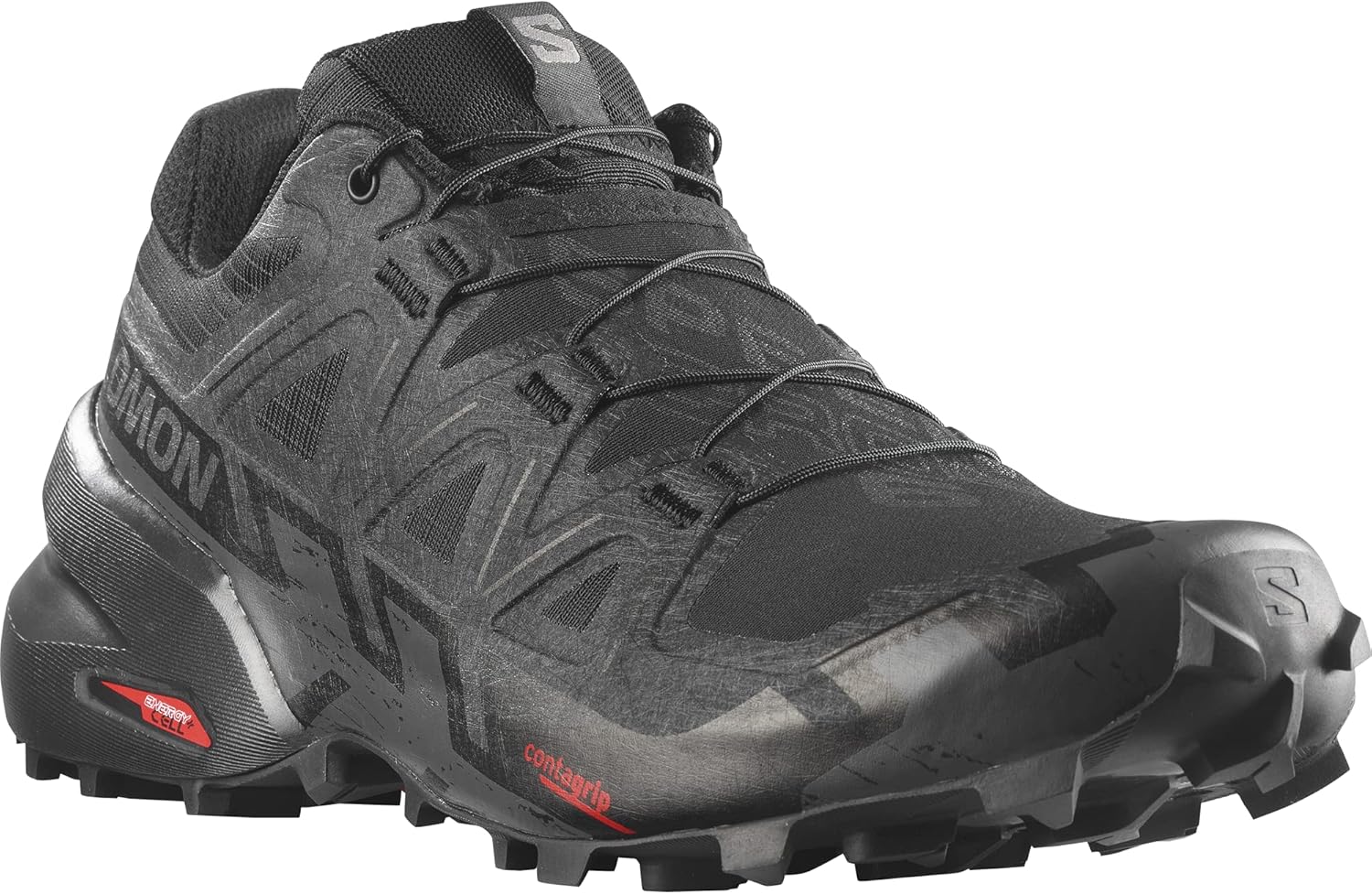
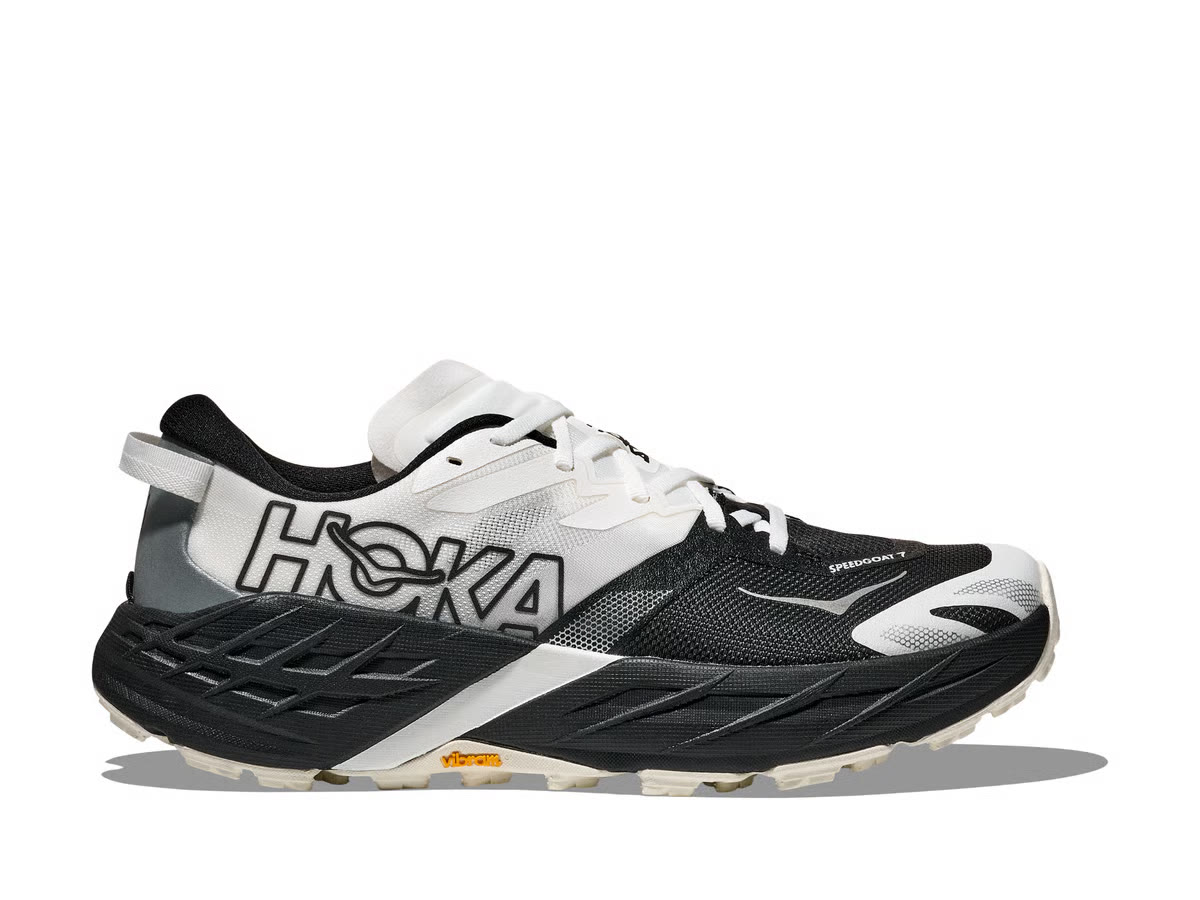
Head-to-head breakdown using our audited shoe database.
Salomon Speedcross vs HOKA Speedgoat
Decision Evidence
| Your main decision | Choose | Evidence and main limit |
|---|---|---|
| Mud and soft ground | Salomon Speedcross 6 | Deep Mud Contagrip excels on soft terrain; the lugs feel cleat-like on hardpack |
| Mixed-terrain long runs | HOKA Speedgoat 7 | 38/33mm, 9.6oz, and Vibram grip; high stack reduces ground feel |
| Fit remains the tiebreaker | Try each shoe in its standard and wide versions before committing | Speedcross uses Quicklace; Speedgoat's standard toe box tested narrow |
The current matchup is Salomon Speedcross 6 versus HOKA Speedgoat 7. This is primarily a terrain and fit decision, not a universal ranking.
If neither terrain profile matches your routes, use the curated running shoe comparison library to start from a different decision.
Specification Comparison
| Specification | Salomon Speedcross 6 | HOKA Speedgoat 7 |
|---|---|---|
| Categories | Trail | Trail, long run |
| Cushion | Low | High |
| Drop | 10mm | 5mm |
| Weight (men/women) | 10.6oz / 9.0oz | 9.6oz / 8.6oz |
| Stack | 32mm / 22mm | 38mm / 33mm |
| Support | Neutral | Neutral |
| Widths | Standard, Wide | Standard, Wide |
| MSRP | MSRP: $145 | MSRP: $165 |
Key Differences
OutdoorGearLab's 2026 Speedcross review found its Mud Contagrip and aggressive arrow-shaped lugs exceptional on soft dirt, mud, and wet ground. The same design felt cleat-like and dense on hardpack. That is specialization, not a universal traction win.
Speedgoat 7 uses supercritical EVA, Vibram Megagrip, and revised 5mm lugs. Independent testing supports a softer, more responsive ride with strong mixed-terrain grip and long-run protection. Its higher stack reduces ground feel and may not suit runners who prioritize precision.
Speedgoat is a full ounce lighter for men despite much more stack. Speedcross costs MSRP: $20 less and offers double the heel-to-toe drop.
Fit and Sizing
Both list standard and wide options. OutdoorGearLab found the Speedcross upper secure and comfortable, while noting fit and warmth variables. Quicklace makes adjustment fast but creates a different pressure pattern from conventional laces.
HOKA recommends considering a half-size up in Speedgoat 7, and independent testing found the standard toe box narrow. That is a fit caution, not a universal sizing command. Try normal and adjusted sizes with trail socks and test downhill clearance.
Ride and Best Uses
Speedcross belongs on soft, loose, or muddy routes where lug penetration matters more than smooth hard-surface transition. It suits wet climates, fell-style terrain, and steep soft descents. On dry hardpack, the aggressive outsole can feel disconnected.
Speedgoat suits daily trail mileage, long runs, ultras, and varied routes where cushioning and consistent grip matter. It handles firm terrain better but does not displace Speedcross in deep mud. See our best trail shoes and best ultra shoes.
Who Should Choose the Salomon Speedcross 6
- Runners whose local trails are frequently muddy, soft, or loose.
- Athletes preferring a 10mm drop and locked-in Quicklace upper.
- Buyers wanting the lower MSRP and less underfoot stack.
Who Should Choose the HOKA Speedgoat 7
- Runners covering long distances across mixed terrain.
- Athletes seeking high cushioning and a 5mm drop.
- Buyers who prioritize lower weight despite a taller platform.
Tradeoffs
Speedcross can feel harsh and cleat-like on firm ground, and its warm upper may be uncomfortable in heat. Speedgoat costs more, offers less ground feel, and has a standard-fit toe-box caution. Neither has a guaranteed service life.
For route selection, read trail running basics and trail versus road running.
Value and Rotation Context
Speedcross is valuable as a conditions shoe even when it is not used every week. Runners in wet climates may reserve it for mud and soft-ground races while using a firmer-surface model elsewhere. Its MSRP: $145 MSRP buys specialization.
Speedgoat is more likely to become the primary trail shoe because it spans daily and long runs across varied terrain. The MSRP: $20 premium is easier to justify when that range replaces another pair. Owning both is reasonable only when local conditions regularly alternate between deep soft ground and longer mixed-surface routes.
Final Verdict
This is a terrain decision. Speedcross 6 is the better soft-ground specialist; Speedgoat 7 is the better cushioned long-distance generalist. Pick the outsole, fit, drop, and stack that match where you actually run.
Key Takeaway
Choose Speedcross 6 for soft ground, mud, and a 10mm-drop locked-in feel; choose Speedgoat 7 for cushioned long runs across varied trail terrain.
Frequently Asked Questions
Which is better for mud, Speedcross 6 or Speedgoat 7?
Which is better for long trail runs?
Can either shoe run on roads?
References
- https://www.salomon.com/en-us/product/speedcross-6-lg9212/L41738000
- https://www.outdoorgearlab.com/reviews/shoes-and-boots/trail-running-shoes-men/salomon-speedcross-6
- https://runrepeat.com/salomon-speedcross-6
- https://au.hoka.com/products/m-speedgoat-7-1171928-bwht-bwht
- https://www.outdoorgearlab.com/reviews/shoes-and-boots/trail-running-shoes-men/hoka-speedgoat-7