
Contents
Saucony Guide 19 Review: Flexible Guidance for Daily Miles
The Saucony Guide 19 blends CenterPath stability with flexible PWRRUN cushioning. See its ride, fit, tradeoffs, and value.

Quick Hits
- •CenterPath sidewalls and a very broad platform provide guidance without a traditional medial post.
- •The 37/31mm stack and 6mm drop target comfortable daily and recovery running rather than speed.
- •RunRepeat found a flexible, stable platform with a conventional toe fit, but measured a heavier-than-average sample.
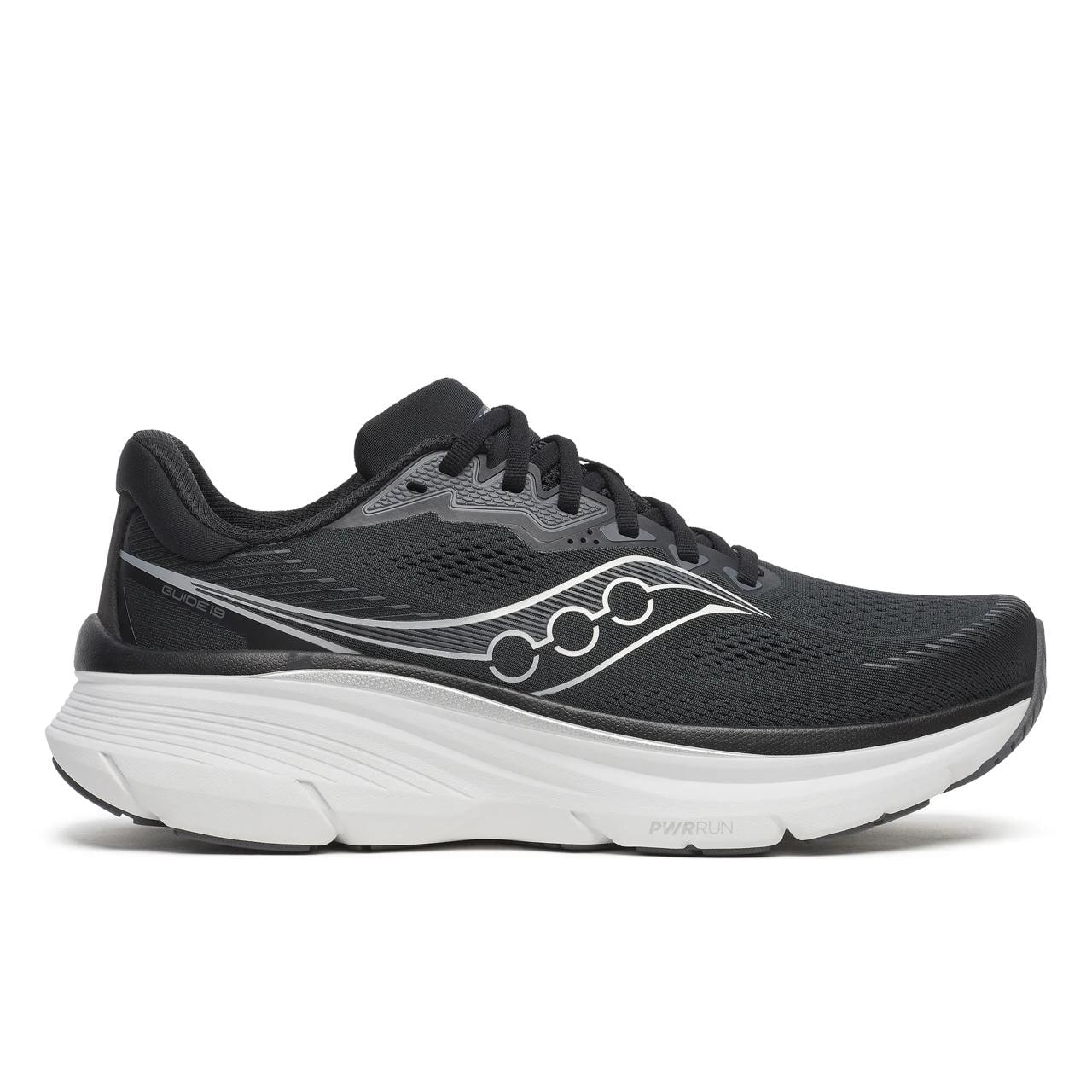
Saucony Guide 19 Review
Disclosure: As an Amazon Associate, we earn from qualifying purchases. This helps support TrainingPlan at no extra cost to you.
Affiliate link - we may earn a commission
Quick Verdict
The Saucony Guide 19 is a high-cushion stability trainer for daily and recovery mileage. Its CenterPath system uses raised sidewalls and broad geometry instead of relying on a traditional hard medial post. Saucony says the revised PWRRUN foam adds rebound and forefoot flexibility; RunRepeat independently found a softer-than-average lab sample, a flexible forefoot, and an exceptionally broad platform.
The tradeoff is mass. TrainingPlan's runtime catalog lists 10.3 ounces for men, and RunRepeat's tested sample was heavier still. That makes the Guide 19 better for easy and steady running than fast turnover. Our editorial verdict is that this is a comfortable, modern entry in the best stability running shoes, especially for runners who dislike rigid support devices but still want a visibly stable base.
Key Specifications
| Spec | Value |
|---|---|
| Category | Daily trainer, recovery |
| Cushion Level | High |
| Heel-to-Toe Drop | 6mm |
| Weight (Men's/Women's) | 10.3oz / 9.1oz |
| Stack Height | 37mm / 31mm |
| Pronation Support | Stability |
| Width Options | Standard, Wide |
| MSRP | MSRP: $150 |
| Surface | Road |
What Changed
Saucony refines rather than replaces the Guide's recent CenterPath formula. The PWRRUN cushioning is described as more responsive, the forefoot gains flexibility, and the rocker geometry becomes more pronounced. A flexible mesh upper is intended to adapt while preserving hold.
RunRepeat's lab work found a softer midsole than its database average and significantly more flexible bending than the typical daily trainer. It also measured an extremely wide forefoot and heel platform, explaining much of the shoe's stable character. Compared with the Guide 18, version 19 is a polish of the same modern guidance concept, not a return to a firm post.
Ride and Intended Use
The Guide 19 is built for easy daily mileage and recovery runs. Its 6mm offset is lower than many traditional stability shoes, while the rocker and wide base help organize transitions. RunRepeat found the foam comfortable and the outsole flexible, but its energy-return assessment was modest and its measured weight high.
Those results support a bounded role: relaxed mileage, steady aerobic runs, and days when stable geometry matters more than speed. The broad platform may feel reassuring to some runners and cumbersome to others. For a neutral recovery alternative, the New Balance 1080v15 supplies high cushioning without the Guide's stability classification.
Fit and Sizing
RunRepeat measured a near-average forefoot width and toe-box shape inside the shoe despite the very broad external platform. Its testers reported comfortable toe height and no pressure points. Saucony offers standard and wide options in the catalog, though the manufacturer page may show additional regional width availability.
Most runners can begin with their normal Saucony running size. Do not confuse the broad midsole footprint with an automatically wide interior. Feet needing extra room should choose the actual wide version, while lower-volume feet should check whether the adaptable mesh and lacing create secure midfoot hold.
What Works Well
- Broad, stable geometry: RunRepeat measured an unusually wide platform at both forefoot and heel.
- Flexible transition: Independent bending tests found the Guide 19 more flexible than the average daily trainer.
- Modern support feel: CenterPath supplies sidewall guidance without a dense traditional post.
Tradeoffs
- Substantial weight: Both catalog and independent measurements place it on the heavy side for daily training.
- Limited speed appeal: The wide base and modest energy return favor controlled mileage over workouts.
- Large footprint: Runners who prefer compact, nimble shoes may find the geometry excessive.
Who Should Consider This Shoe
- Runners who want stability through a broad base and sidewalls rather than an obvious post.
- Athletes seeking a comfortable shoe for easy and recovery days.
- Buyers who value standard and wide sizing in a predictable daily trainer.
Who Should Look Elsewhere
- Neutral runners who do not need the extra guidance and footprint.
- Athletes seeking a light trainer for intervals or racing.
- Runners wanting more traditional structure should compare the Saucony Omni 23 ST.
Cross-Brand Comparison
The ASICS Gel-Kayano 32 and New Balance 860v14 provide well-known cross-brand stability references. The Guide's identity is a flexible 6mm platform with broad CenterPath geometry. It is likely the better match for runners who resist a rigid support sensation, while fit, drop preference, and each brand's transition shape should drive the final decision.
Same-Brand Comparison
The Omni 23 ST pairs stronger framing with full-length PWRRUN PB for more pronounced support and rebound at a higher price. The Hurricane 26 increases cushioning and stack for long and recovery use. The Guide is the simpler middle ground: more guided than a neutral Ride, less structurally assertive than the Omni, and less massive than the Hurricane.
Value
At MSRP: $150, the Guide 19 is competitively placed for a current stability trainer. It offers modern geometry, useful cushioning, two catalog widths, and enough flexibility to avoid feeling like an old-style motion-control shoe. Value declines if the runner does not benefit from the broad guidance or wants a shoe to cover frequent speed sessions. In those cases, a lighter neutral trainer may provide more usable range.
Final Verdict
The Saucony Guide 19 succeeds by making stability feel broad and flexible rather than hard and corrective. Independent lab evidence supports its soft-enough foam, easy bending, conventional internal fit, and exceptionally wide footprint. Weight and limited energy are honest costs. For runners seeking comfortable guidance through daily and recovery mileage, it is a strong, fairly priced choice; faster or more neutral runners should look elsewhere.
Disclosure: As an Amazon Associate, we earn from qualifying purchases. This helps support TrainingPlan at no extra cost to you.
Affiliate link - we may earn a commission
Key Takeaway
The Guide 19 delivers broad, flexible and relatively unobtrusive stability for easy mileage, with weight and limited speed range as its main compromises.
Frequently Asked Questions
Who is the Saucony Guide 19 best for?
How does the Saucony Guide 19 fit?
Is the Saucony Guide 19 worth its $150 MSRP?
References
- https://www.saucony.com/en/guide-19/60838M.html
- https://runrepeat.com/saucony-guide-19
- https://www.solereview.com/release-date-calendar-for-running-shoes/