
Contents
Saucony Peregrine 16 Review: Technical Grip With a Firmer Ride
The Saucony Peregrine 16 adds full-length Vibram Megagrip and more cushion. See its trail performance, fit, and tradeoffs.

Quick Hits
- •Full-length Vibram Megagrip replaces PWRTRAC and is the Peregrine 16's defining technical upgrade.
- •More PWRRUN cushioning raises the catalog stack to 33/29mm while preserving a low 4mm drop.
- •Independent testers praised traction but found the ride workmanlike, and one reported substantially long sizing.
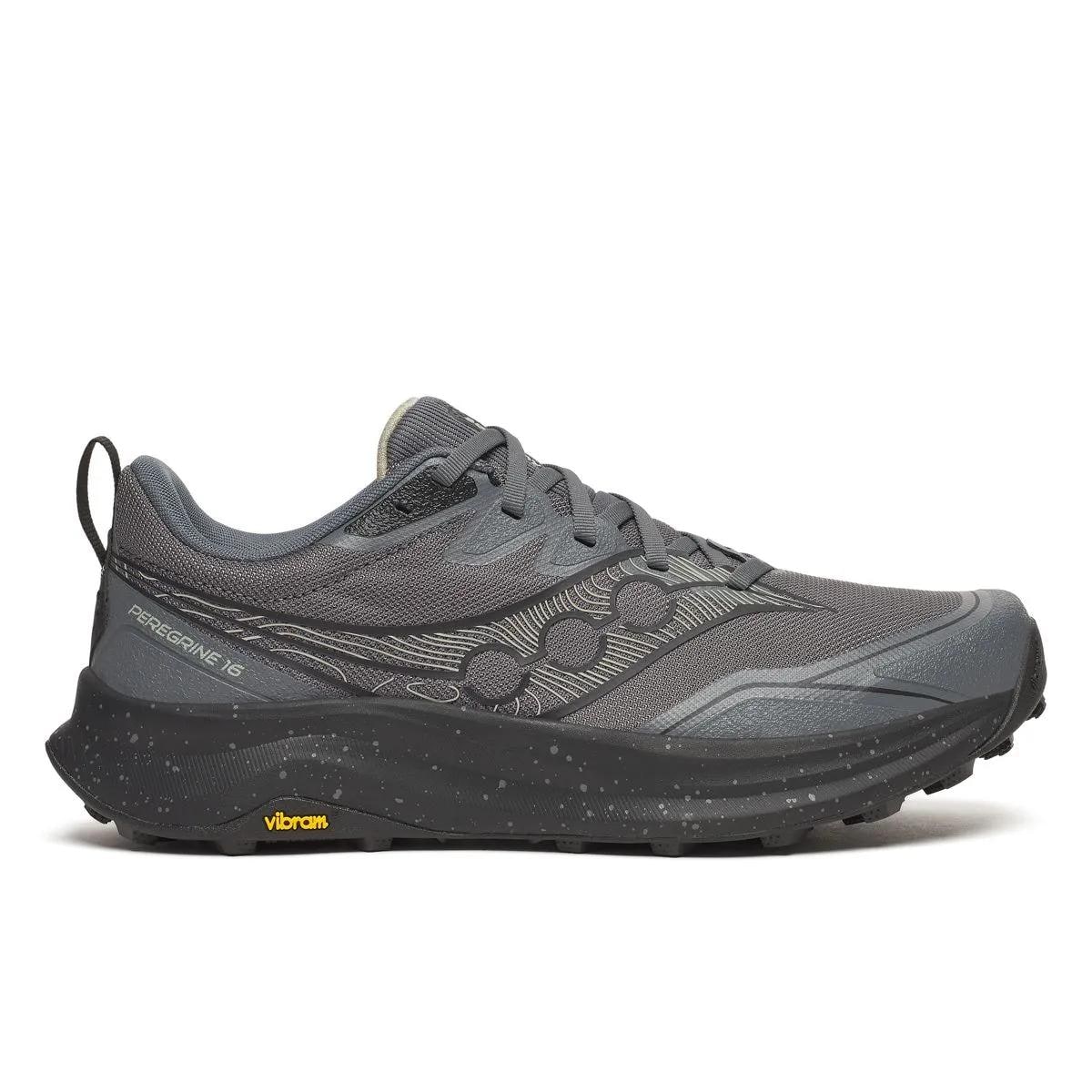
Saucony Peregrine 16 Review
Disclosure: As an Amazon Associate, we earn from qualifying purchases. This helps support TrainingPlan at no extra cost to you.
Affiliate link - we may earn a commission
Quick Verdict
The Saucony Peregrine 16 is a neutral trail shoe built around confident traction and technical protection. Saucony replaces its longstanding PWRTRAC outsole with full-length Vibram Megagrip, adds PWRRUN foam, and reinforces the toe and upper. Believe in the Run's testers praised the outsole on loose dirt, snow, roots, rocks, and wet boardwalks, making grip the clearest independently supported strength.
The ride is less universally exciting. Independent testers described the foam as medium-firm and workmanlike despite the additional stack, and one found the sample unusually long. Our editorial verdict is that the Peregrine 16 is for runners who put reliable trail contact and protection ahead of plushness or bounce. It deserves consideration in our best trail running shoes guide, but sizing needs more care than the specification sheet suggests.
Key Specifications
| Spec | Value |
|---|---|
| Category | Trail |
| Cushion Level | High |
| Heel-to-Toe Drop | 4mm |
| Weight (Men's/Women's) | 10.0oz / 8.9oz |
| Stack Height | 33mm / 29mm |
| Pronation Support | Neutral |
| Width Options | Standard, Wide |
| MSRP | MSRP: $150 |
| Surface | Trail |
What Changed
The outsole change is substantial. Saucony used its own PWRTRAC compound on the Peregrine for many years; version 16 adopts a full Vibram Megagrip soleplate with traction lugs. The upper also moves its protective material more selectively, combining a stronger toe guard with less extensive side overlays. Saucony says the PWRRUN layer is increased for a more cushioned experience.
Believe in the Run found the new upper more breathable than the plastic-heavy feel of the previous construction while preserving secure midfoot structure. Compared with the Peregrine 14, this is a more protected and more fully equipped outsole package. It is an evolution toward technical confidence rather than toward a lightweight, flexible trail-racing feel.
Ride and Intended Use
Saucony positions the Peregrine 16 for rugged terrain and variable conditions. The independent evidence strongly supports the traction claim: a tester reported no slippage across several wet, loose, and uneven surfaces. The 4mm lugs are not unusually deep, but compound and lug design matter as much as raw depth.
Underfoot, expectations should remain measured. Believe in the Run described the PWRRUN midsole as medium-firm, with a PWRRUN+ sockliner adding some immediate comfort. Both testers considered the ride effective rather than lively. The 4mm drop and 33/29mm stack should suit runners who want more trail feel than a maximum-stack cruiser while retaining meaningful cushioning. For more cushioned alternatives, see our best ultra running shoes.
Fit and Sizing
Independent feedback is mixed enough to make an in-person fit check valuable. One Believe in the Run tester found excellent midfoot lockdown but a forefoot that ran half to a full size long and wide, creating lateral movement on technical ground. The other valued the platform's nimble character without reporting the same degree of fit concern.
Sizing down is not an automatic solution because the first tester found the midfoot and heel correct at the usual size. Start with your normal trail size, check toe clearance on a decline, and test side-to-side hold before deciding. Saucony also offers a true wide version, so runners needing width should use that option rather than relying on excess length.
What Works Well
- Excellent independent traction result: Vibram Megagrip performed across wet, loose, rocky, and rooted terrain in one tester's runs.
- Technical protection: The reinforced toe, high-strength mesh, and gaiter compatibility prepare the shoe for rougher routes.
- Low-drop control: A 4mm offset and moderate stack avoid the detached feel of taller trail platforms.
Tradeoffs
- Workmanlike ride: Independent testers found the midsole firm and not especially energetic.
- Sizing uncertainty: One sample ran substantially long even though heel and midfoot hold were otherwise sound.
- Road crossover is limited: Full trail protection and aggressive rubber are unnecessary for primarily paved mileage.
Who Should Consider This Shoe
- Trail runners prioritizing traction and protection on technical, mixed-condition routes.
- Athletes who prefer a 4mm drop and a stable-feeling, medium-firm platform.
- Buyers wanting more grip than the older Peregrine formula supplied.
Who Should Look Elsewhere
- Runners who want a soft, bouncy trail cruiser for mellow paths.
- Athletes sensitive to fit uncertainty who cannot try the shoe before purchase.
- Anyone wanting maximum stack should compare the HOKA Speedgoat 7 or Saucony Xodus Ultra 3.
Cross-Brand Comparison
The Speedgoat 7 is the more maximum-cushioned option, with a taller platform and a more distance-oriented identity. The Salomon Speedcross 6 emphasizes aggressive soft-ground traction and a distinct fit. The Peregrine 16 lands between them: more versatile across varied technical surfaces than a mud specialist and more connected than a tall ultra shoe. Runners should decide whether outsole confidence, plushness, or ground feel is their first priority.
Same-Brand Comparison
Within Saucony, the Peregrine is the technical daily trail model. The Xodus Ultra 3 adds long-distance cushioning and is the better reference for slower ultra mileage. Compared with the Peregrine 14, version 16's Vibram coverage and additional foam are the reasons to upgrade; runners satisfied with older-model grip may not need the heavier-duty package.
Value
At MSRP: $150, the Peregrine 16 sits in the mainstream premium-trail range. Full-length Vibram rubber, a protective upper, wide sizing, and gaiter compatibility form a strong feature set. Its value is less convincing on smooth park paths, where simpler trail shoes can accomplish the job. The purchase makes the most sense when technical surfaces will regularly use the outsole and protection you are paying for.
Final Verdict
The Saucony Peregrine 16 makes a clear trade: it prioritizes grip and protection over a playful ride. Manufacturer construction claims are reinforced by independent traction results, while the same review supplies important cautions about firm cushioning and long sizing. Trail runners who want a low-drop technical workhorse should shortlist it, but should verify fit carefully. Those seeking plush long-distance comfort or effortless rebound should look elsewhere.
Disclosure: As an Amazon Associate, we earn from qualifying purchases. This helps support TrainingPlan at no extra cost to you.
Affiliate link - we may earn a commission
Key Takeaway
The Peregrine 16 is a grippy, protective technical trail shoe with broader cushioning than before, but its firm ride and inconsistent sizing feedback make fit testing important.
Frequently Asked Questions
Who is the Saucony Peregrine 16 best for?
How does the Saucony Peregrine 16 fit?
Is the Saucony Peregrine 16 worth its $150 MSRP?
References
- https://www.saucony.com/en/peregrine-16/60848M.html
- https://believeintherun.com/shoe-reviews/saucony-peregrine-16-review/
- https://www.solereview.com/release-date-calendar-for-running-shoes/