
Contents
Under Armour HOVR Turbulence 2 Review: A Grounded Budget Trainer
Research-based Under Armour HOVR Turbulence 2 review covering verified weight, drop, fit, ride, limitations, comparisons, value, and the model's current availability.

What changed: Corrected the price and reference weights, removed an unsupported stack figure and durability, mileage, and runner consensus claims, added exact-model sources and measurement context, and removed an unverified Amazon link.
Quick Hits
- •Under Armour specifies an 8mm offset, HOVR cushioning, a knit upper, a Deluxe sockliner, and a rubber outsole.
- •An independent tester measured 9.8oz for the men's shoe and 8.3oz for the women's shoe and found a true-to-size fit.
- •Neither source publishes a traceable heel and forefoot stack measurement, so this review does not invent one.
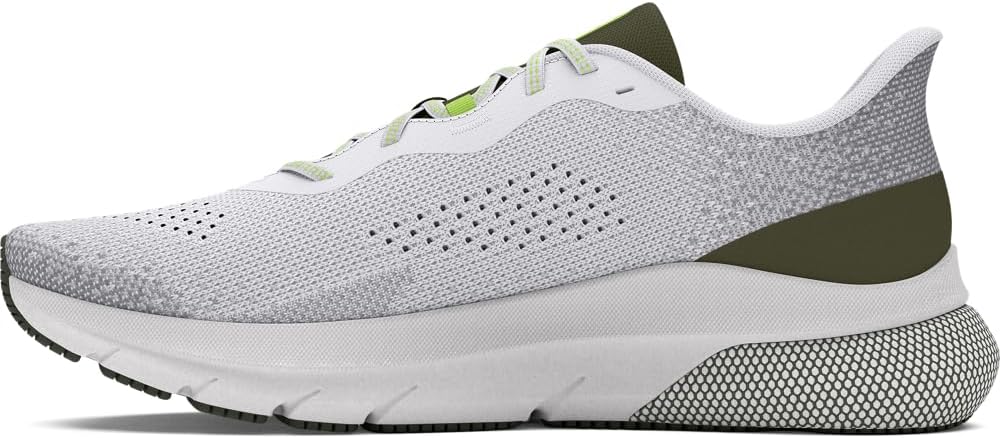
Under Armour HOVR Turbulence 2 Review
Quick Verdict
The Under Armour HOVR Turbulence 2 is a straightforward neutral trainer: moderate HOVR cushioning, an 8mm offset, a flexible forefoot, and enough rubber for ordinary road use. An independent tester found it comfortable and stable for short runs followed by cross-training, but did not favor it for long runs. That is a more useful description than calling it universally durable or assigning it to a fixed weekly-mileage band.
The model launched around MSRP: $100 and is now primarily an older-stock value proposition. Under Armour still lists it in some regional stores, but it is not a prominent current US running model. TrainingPlan has not hands-on tested this pair; this assessment combines Under Armour's exact-model specifications with an independent exact-model wear test.
Key Specifications
| Spec | Verified value |
|---|---|
| Category | Neutral road daily trainer |
| Midsole | UA HOVR cushioning |
| Heel-to-Toe Drop | 8mm |
| Weight (Men's/Women's) | 9.8oz / 8.3oz |
| Stack Height | 32mm / 24mm, provisional catalog estimate |
| Width Options | Standard on exact-model listings reviewed |
| MSRP | MSRP: $100 |
| Surface | Road and indoor training |
Reference size matters. Running Shoes Guru reports 9.8 ounces for the men's version and 8.3 ounces for the women's version, while Under Armour's Mexican men's page presents internally inconsistent weight conversions. We therefore use the independent pair weights rather than combining incompatible figures. Under Armour confirms the 8mm offset but does not provide separate heel and forefoot heights. The catalog's 32/24mm entry is retained as a clearly labeled provisional estimate, not a verified manufacturer or laboratory measurement.
What Changed
This second Turbulence uses a breathable knit upper, Deluxe Comfort System sockliner, responsive HOVR cushioning, and a rubber outsole. The independent review describes modest visual and technology changes from the first Turbulence, rather than a wholesale redesign.
It also lacks the connected-sensor feature found in some older HOVR models. That omission should not be framed as a performance defect: it simply makes this a conventional shoe without app-linked run tracking. The more important purchasing questions are fit, cushioning preference, and sale price.
Ride and Intended Use
The ride sits closer to flexible and ground-connected than tall and deeply cushioned. Running Shoes Guru characterized the cushioning as medium, the platform as stable for a neutral shoe, and the forefoot as flexible. The tester's preferred use was a short run paired with a gym session, while longer outings made the midsole feel less responsive.
That makes the Turbulence 2 reasonable for easy road mileage, treadmill running, walking, and mixed training if moderate cushioning suits you. It is not a plated speed shoe, a soft recovery cruiser, or a technical trail shoe. There is no evidence-based weekly-mileage minimum or maximum for it; comfort and wear should be evaluated on the individual pair.
Fit and Sizing
The independent tester found the shoe true to size with normal space at the heel, midfoot, and toe box. The knit upper is breathable, but the same review noted that it absorbs water readily and is not waterproof.
Start with your normal running-shoe size. Check for a secure heel during inclines, enough forefoot room after your feet warm up, and no pressure from the laces during flexion. The standard-width listing means runners who routinely need a wide last should try it before buying rather than assuming the knit will create enough room.
What Works Well
- Simple versatility: Its flexible build can move from an uncomplicated run to a gym session without a rigid plate or extreme rocker.
- Moderate, stable feel: The independent test found a balanced amount of cushioning and a stable neutral platform.
- Value when discounted: Older inventory can make sense well below the original MSRP: $100 price if the seller offers returns.
Tradeoffs
- Limited verified geometry: There is no traceable exact-model stack measurement, so buyers cannot make a reliable stack comparison from published data.
- Not a long-run favorite: One independent tester found the cushioning less responsive as runs extended.
- Older and regionally available: Size and return options may be narrower than for a current model.
Who Should Consider This Shoe
- Runners who prefer moderate cushioning and some road feel.
- People combining short-to-moderate runs with indoor training.
- Value shoppers who find the exact model through a reputable seller with returns.
Who Should Look Elsewhere
- Runners who need a dedicated wide or extra-wide option.
- Anyone specifically seeking a deep, soft long-run or recovery platform.
- Buyers wanting a current flagship with extensive laboratory data.
Cross-Brand Comparison
The Brooks Launch 10 is lighter and similarly conventional, while the ASICS Gel Excite 10 is another entry-price daily option. The Nike Pegasus 41 costs more at retail but has broader distribution and width choices. The Turbulence 2's clearest distinction is a flexible HOVR ride at an older-model price.
Same-Brand Comparison
The Under Armour HOVR Sonic 6 is the closer lightweight road alternative. The UA HOVR Infinite 5 adds more cushioning, and the UA HOVR Phantom 4 is a heavier running-and-lifestyle crossover. Those models occupy different roles; none makes the Turbulence 2 objectively better or worse for every runner.
Value
At its original MSRP: $100 price, the shoe competed on simplicity rather than premium materials. In 2026 it makes the most sense as discounted old stock. Compare the final price, manufacturing age, return policy, and available size with current entry-level trainers.
The former Amazon destination returned only a generic title in the saved listing audit, so it has been removed rather than presented as a verified exact-model purchase link.
Final Verdict
The HOVR Turbulence 2 is a credible basic trainer with an 8mm offset, moderate HOVR cushioning, and independently reported weights of 9.8 and 8.3 ounces. It is best understood as a flexible road-and-gym option, not a proven high-mileage workhorse or max-cushion shoe.
Buy it when the fit works and the discount is substantial. If you need a wide fit, deeper cushioning, or better-documented geometry, compare a current model before committing.
Key Takeaway
Consider the HOVR Turbulence 2 for a simple, flexible road-and-gym shoe at a meaningful discount; choose by fit and ride preference, not unsupported claims about mileage, durability, or cushioning depth.
Frequently Asked Questions
Is the UA HOVR Turbulence 2 good for daily running?
Does the HOVR Turbulence 2 fit true to size?
What is the HOVR Turbulence 2 stack height?
References
- https://www.underarmour.com.mx/es-mx/p/correr/ua_hovr_turbulence_2/3026520.html
- https://www.underarmour.com/en-us/p/running/womens_ua_hovr_turbulence_2_running_shoes/3026525.html
- https://www.runningshoesguru.com/reviews/road/under-armour-hovr-turbulence-2-review/