
Contents
ASICS GT-1000 15 Review: Affordable Stability, Firm Ride
The ASICS GT-1000 15 brings flexible guidance, a true-to-size fit, and a durable outsole to a budget stability trainer. See its ride, fit, value, and limits.

Quick Hits
- •The GT-1000 15 pairs FF BLAST cushioning with ASICS' 3D GUIDANCE SYSTEM in a flexible, budget-focused stability shoe.
- •RTINGS found excellent underfoot support and true-to-size length, but weak impact protection and energy return.
- •Standard and wide catalog options, a 36/28mm stack, and an 8mm drop make this a practical traditional daily trainer.
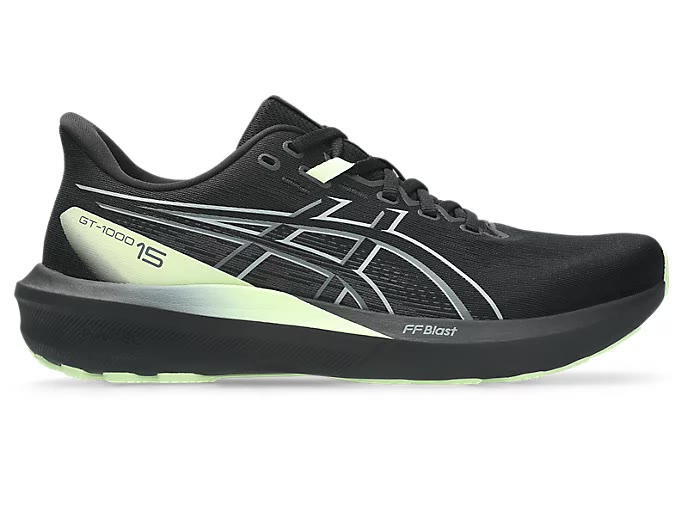
ASICS GT-1000 15 Review
Disclosure: As an Amazon Associate, we earn from qualifying purchases. This helps support TrainingPlan at no extra cost to you.
Affiliate link - we may earn a commission
Quick Verdict
The ASICS GT-1000 15 is a budget stability trainer with a straightforward purpose: provide guidance for daily road miles without the price or bulk of a flagship support shoe. Its audited 36/28mm stack, 8mm drop, and 9.5-ounce men's weight create a conventional platform. FF BLAST foam and ASICS' 3D GUIDANCE SYSTEM supply cushioning and structure, while standard and wide catalog options improve accessibility.
Independent evidence makes the tradeoff unusually clear. RTINGS rated its support highly and found true-to-size length, yet recorded weak impact protection and only 52.3% forefoot bending energy return. RunRepeat likewise found a flexible build and substantial outsole rubber. The result is a controlled, natural-moving shoe that favors dependable easy mileage over softness or propulsion. Our best stability running shoes guide covers more protective alternatives.
Key Specifications
| Spec | Value |
|---|---|
| Category | Daily Trainer |
| Cushion Level | High |
| Heel-to-Toe Drop | 8mm |
| Weight (Men's/Women's) | 9.5oz / 8.1oz |
| Stack Height | 36mm heel / 28mm forefoot |
| Pronation Support | Stability |
| Width Options | Standard, Wide |
| MSRP | MSRP: $100 |
| Surface | Road |
What Changed
ASICS modernized the upper with engineered mesh and retained FF BLAST cushioning, but the meaningful story is how the supporting geometry works without making the shoe rigid. The 3D GUIDANCE SYSTEM is intended to encourage a stable, balanced stride. RunRepeat measured below-average bending force and moderate torsional rigidity, suggesting the structure does not turn the forefoot into a stiff lever.
The outsole is another practical update. RunRepeat measured 4mm of rubber and reported a strong standardized wear result. That test supports the construction choice, although it cannot establish a universal mileage lifespan. The model remains a simpler sibling to the ASICS GT-2000 14, not a reduced-price Kayano.
Ride and Intended Use
This is a firm, grounded ride. RTINGS found low shock absorption in both heel and forefoot tests, while the moderate rocker helped transition without producing aggressive roll. Runners who dislike soft, compressive platforms may appreciate that directness. Those expecting the catalog's high cushion label to mean a plush sensation should recalibrate: cushion level describes the geometry, not an independent softness verdict.
Easy runs, short-to-moderate daily mileage, walking, and general fitness are the best assignments. The flexible forefoot allows natural movement, and the guidance makes the landing feel controlled. Fast sessions expose limited rebound, while long outings may expose the low impact-protection results. See choosing running shoes for a fit-and-use framework.
Fit and Sizing
RTINGS found true-to-size length with accommodating width through the forefoot and arch. Its main warning was vertical: the toe box measured low, so runners with taller toes can feel pressure even when horizontal width is adequate. The tongue is not gusseted, making careful lacing useful for centering it.
The catalog lists standard and wide versions. Begin with a normal ASICS size, then choose width based on foot volume rather than adding length. Because a wider option does not automatically create more toe-box height, a try-on remains worthwhile for high-volume forefeet.
What Works Well
- Guided flexibility: Strong support and a flexible forefoot avoid the blocky feel of some stability shoes.
- Accessible fit: True-to-size evidence and two catalog widths reduce sizing uncertainty.
- Practical construction: Substantial outsole coverage suits a shoe intended for frequent routine use.
Tradeoffs
- Limited protection: RTINGS recorded weak heel and forefoot shock absorption.
- Muted response: Low measured energy return makes faster running feel less rewarding.
- Low toe box: Runners needing vertical forefoot volume may feel crowded.
Who Should Consider This Shoe
- Runners who want budget-friendly guidance for easy road mileage.
- Walkers and runners who prefer a flexible rather than rigid stability platform.
- Athletes who value a planted, traditional ride more than soft rebound.
Who Should Look Elsewhere
- Runners seeking maximum protection for long runs.
- Athletes who want one shoe for tempo sessions and daily training.
- Anyone who needs generous vertical room above the toes.
Cross-Brand Comparison
The Brooks Adrenaline GTS 24 offers a more substantial, premium daily experience but costs more. The GT-1000 feels simpler and more flexible. Runners shopping by price can also compare our best budget running shoes, where neutral and stability options serve different movement preferences.
Same-Brand Comparison
The ASICS Gel-Kayano 32 provides deeper cushioning and a more premium upper for runners prioritizing long-run comfort. The GT-2000 sits between the two families. Choose the GT-1000 when low cost, clear guidance, and daily simplicity matter more than plushness.
Value
At the audited MSRP: $100 catalog MSRP, the GT-1000 15 occupies an increasingly rare budget-stability position. Its value comes from delivering actual guidance, multiple width options, and credible outsole construction rather than decorative upgrades. That is a strong proposition for short and moderate routine runs.
Value weakens if firm cushioning forces a second shoe for longer mileage. Runners who already know they want softness may save more by buying the right premium model once. Our best daily trainer running shoes guide helps frame that trade.
Final Verdict
The ASICS GT-1000 15 is an honest support shoe. Its 3D GUIDANCE SYSTEM, flexible forefoot, true-to-size length, and standard and wide catalog options make it approachable. Independent testing also prevents overselling it: impact protection and rebound are limited, and the low toe box will not fit every foot. For runners who enjoy a firm, controlled ride and want stability at a MSRP: $100 catalog benchmark, it is a credible daily workhorse. For plush long runs or lively workouts, spending more—or choosing a different category—makes sense.
Disclosure: As an Amazon Associate, we earn from qualifying purchases. This helps support TrainingPlan at no extra cost to you.
Affiliate link - we may earn a commission
Key Takeaway
The GT-1000 15 delivers flexible, dependable guidance and accessible sizing at a budget catalog price, but its firm, low-return ride is better suited to routine miles than long or fast sessions.
Frequently Asked Questions
Who is the ASICS GT-1000 15 best for?
How does the ASICS GT-1000 15 fit?
Is the ASICS GT-1000 15 good for long runs?
References
- https://www.asics.com/us/en-us/gt-1000-15/p/ANA_1011C230-003.html
- https://www.rtings.com/running-shoes/reviews/asics/gt-1000-15
- https://runrepeat.com/asics-gt-1000-15