
Contents
Brooks Catamount 3 Review: SkyVault Trail Racer, Not Carbon
Research-based Brooks Catamount 3 review covering its 6mm drop, corrected 9.4/8.4oz weights, SkyVault plate, DNA FLASH ride, fit, grip, and value.

What changed: Removed the false carbon-fiber claim, corrected weights and MSRP, explained midsole-versus-total-stack reporting, and quarantined the affiliate URL.
Quick Hits
- •Catalog geometry is 30/24mm with a 6mm drop.
- •References are 9.4oz men and 8.4oz women.
- •SkyVault is a flexible propulsion and rock-protection plate, not carbon.
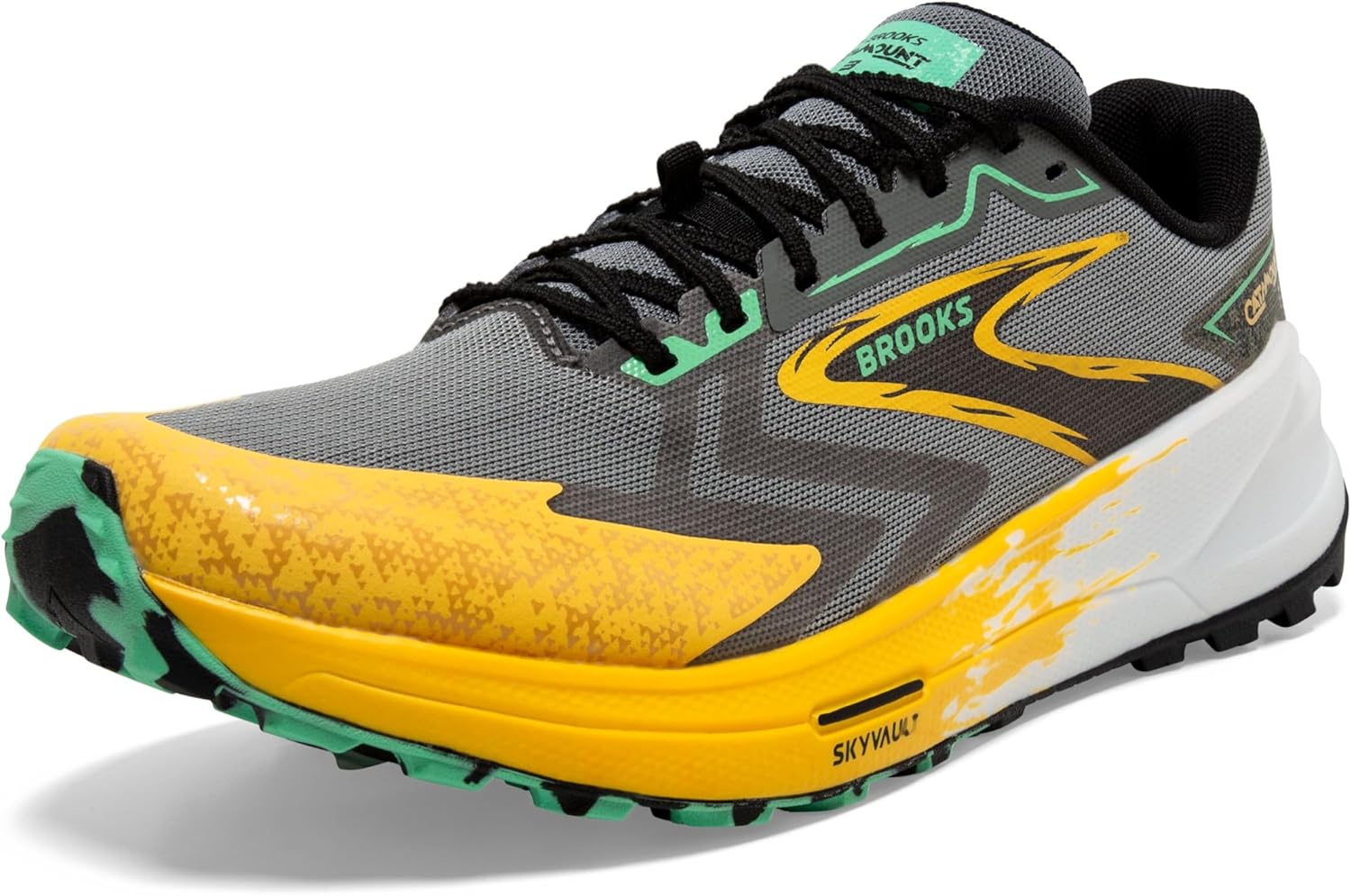
Brooks Catamount 3 Review: SkyVault Trail Racer, Not Carbon
Disclosure: TrainingPlan has not hands-on tested this exact model. This research-based review uses Brooks product information and independent exact-model evaluations. No Amazon US listing is currently verified.
Quick Verdict
Brooks Catamount 3 is a superseded neutral trail racer released in January 2024. Brooks specifies a 6mm drop, 9.4-ounce men's reference, DNA FLASH cushioning, SkyVault propulsion plate, TrailTack Green outsole, and MSRP: $170 launch price. Independent references list an 8.4-ounce women's sample and roughly 30/24mm total geometry.
The key correction is construction: Catamount 3 does not have a carbon-fiber plate. SkyVault is a flexible internal plate designed to add propulsion and rock protection. That distinction changes expectations. The ride is quick and protected without the rigid leverage or marketing premise of a carbon super shoe.
Key Specifications
| Specification | Audited catalog value |
|---|---|
| Category | Neutral trail speed / race shoe |
| Heel-to-Toe Drop | 6mm |
| Weight (Men's/Women's) | 9.4oz / 8.4oz |
| Stack Height | 30mm heel / 24mm forefoot total |
| Midsole | Nitrogen-infused DNA FLASH |
| Plate | Flexible SkyVault propulsion-and-rock plate |
| Outsole | TrailTack Green rubber |
| Width Options | Standard |
| MSRP | MSRP: $170 at launch |
| Release | January 2024; superseded |
What Changed
The previous record claimed carbon fiber, 8.7/7.5-ounce weights, and a MSRP: $180 MSRP. Brooks's exact-model page supports SkyVault, 9.4 ounces, and MSRP: $170. iRunFar and WearTesters report the 8.4-ounce women's figure.
The 30/24mm catalog stack remains appropriate, but some reviews quote 22mm heel and 16mm forefoot as the midsole thickness. These are not interchangeable measurements: total stack can include outsole and insole layers. The audit records 30/24mm as total geometry and explains the 22/16mm construction figure rather than presenting them as a contradiction.
The former Amazon URL is quarantined because it lacked a dated listing title and ASIN match. Catamount 4 and Catamount Agil are separate shoes.
What SkyVault Does
SkyVault sits inside the nitrogen-infused DNA FLASH platform. Brooks positions it for uphill propulsion and underfoot protection. It can distribute force from rocks and make the forefoot transition more deliberate while remaining more flexible than a thick carbon plate.
Calling it carbon overstated both the material and likely stiffness. The accurate expectation is a responsive trail shoe with a protective plate, not a road super-shoe sensation transplanted onto lugs.
Ride and Intended Use
The 30/24mm stack balances trail feedback with moderate protection. DNA FLASH is firmer and quicker than plush long-distance foam, and the 6mm drop creates a moderately offset transition. The shoe can handle tempo trail runs, shorter races, and faster long efforts for runners comfortable with a close platform.
TrailTack Green rubber provides useful mixed-surface grip. The plate helps on sharp objects, but Catamount 3 is still less cushioned than a high-stack ultra trainer. Its sweet spot is runnable singletrack, dry technical sections, and courses where climbing efficiency matters more than deep softness.
Fit and Sizing
Brooks sold the audited model in standard width. Independent reviews describe a secure performance fit with adequate length but less breadth than roomier trail shoes. Start true to size, then verify toe clearance downhill and midfoot comfort after swelling.
Standard width should not be treated as universal. Broad or high-volume feet may be better served by a model with an explicit wide version. Use the shoe fit guide rather than adding unnecessary length.
What Works Well
Catamount 3 combines a reasonably light build, flexible protection, responsive foam, and real trail rubber. It is less bulky than a maximum-cushion trail shoe and more protected than a minimal racer.
Tradeoffs
The firm ride can become demanding over very long distances. Standard-only width limits fit, and MSRP: $170 was a premium launch price. It also should not be purchased for carbon-plate expectations—the old description was simply wrong. Judge replacement by outsole loss, plate or foam changes, upper damage, and comfort, not a generic mileage promise.
Who Should Consider This Shoe
Consider Catamount 3 for faster trail training and racing on runnable-to-moderate terrain when a secure standard fit works. It can be the speed shoe beside a softer long-distance model selected with the shoe-selection guide.
Who Should Look Elsewhere
Look elsewhere for a wide last, deep plushness, mud-specific lugs, or a rigid carbon-racer sensation. Runners spending most time hiking or moving slowly may gain more from a softer flexible trainer; the trail-running basics guide explains how terrain changes that choice.
Cross-Brand Comparison
The Brooks Caldera 7 is taller, broader, softer, and better suited to slow long days. The Altra Lone Peak 8 is level, roomier, and flexible without a plate. Catamount 3 is the faster, closer, more structured option.
The Adidas Terrex Agravic Speed Ultra is much taller and more aggressively propelled. Catamount 3 offers better ground connection and a less dramatic rocker, while Adidas supplies more race-grade cushioning.
Same-Brand Comparison
The Brooks Caldera 7 is taller, broader, softer, and better suited to slow long days. Catamount 4 is the direct successor, while Catamount Agil is a distinct, more specialized race model.
Value
At MSRP: $170, Catamount 3 needed a specific trail-speed use to justify its price. Old-stock discounts can make sense when fit, condition, and exact generation are verified. A listing for Catamount Agil is not an upgraded Catamount 3; it is a different model.
Final Verdict
Brooks Catamount 3 is a 30/24mm, 6mm-drop trail racer with 9.4/8.4-ounce references, DNA FLASH, and a flexible SkyVault plate. Correcting the false carbon claim makes its actual strengths clearer: nimble trail response and moderate protection without excessive stack.
Key Takeaway
Catamount 3 is a quick, moderately protective trail shoe whose flexible plate and 30/24mm platform favor runnable terrain over plush ultra cushioning.
Frequently Asked Questions
Does Catamount 3 have a carbon plate?
What is the Catamount 3 stack height?
Is Catamount 3 current?
References
- https://www.brooksrunning.com/en_us/mens/shoes/trail-shoes/catamount-3/1104161D333.120.html
- https://www.irunfar.com/brooks-catamount-3-review
- https://weartesters.com/brooks-catamount-3-performance-review/
- https://believeintherun.com/shoe-reviews/brooks-catamount-3-review/