
Contents
HOKA Cielo X1 3.0 vs Puma Deviate Nitro Elite 4
Compare the HOKA Cielo X1 3.0 and Puma Deviate Nitro Elite 4 on stack, weight, carbon geometry, fit, race distances, tradeoffs, and value.

Quick Hits
- •The Cielo X1 3.0 is the taller, more rockered option; the Deviate Nitro Elite 4 is one ounce lighter.
- •Both are standard-width neutral carbon racers with demanding geometry rather than general training shoes.
- •HOKA leans toward protected half-marathon and marathon racing; Puma is sharpest from 5K through half marathon.
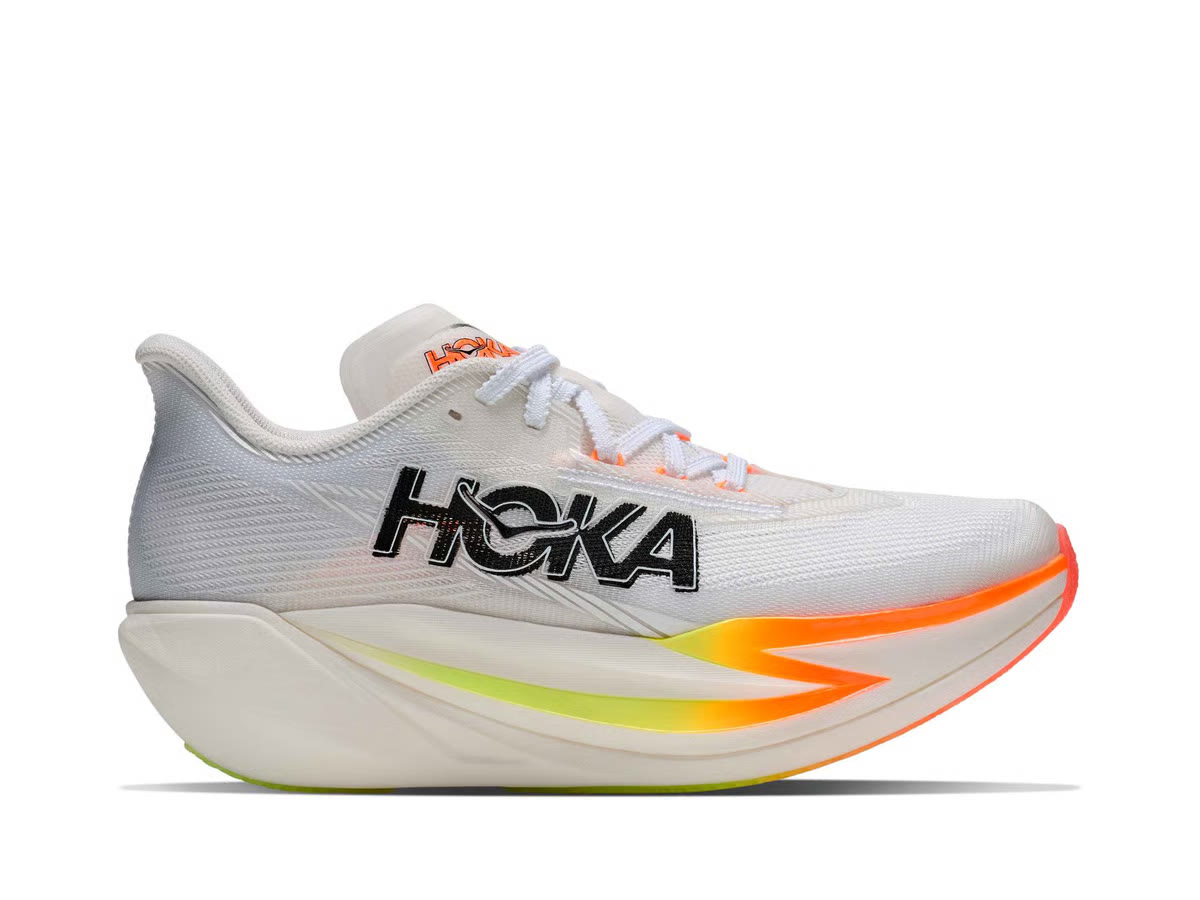
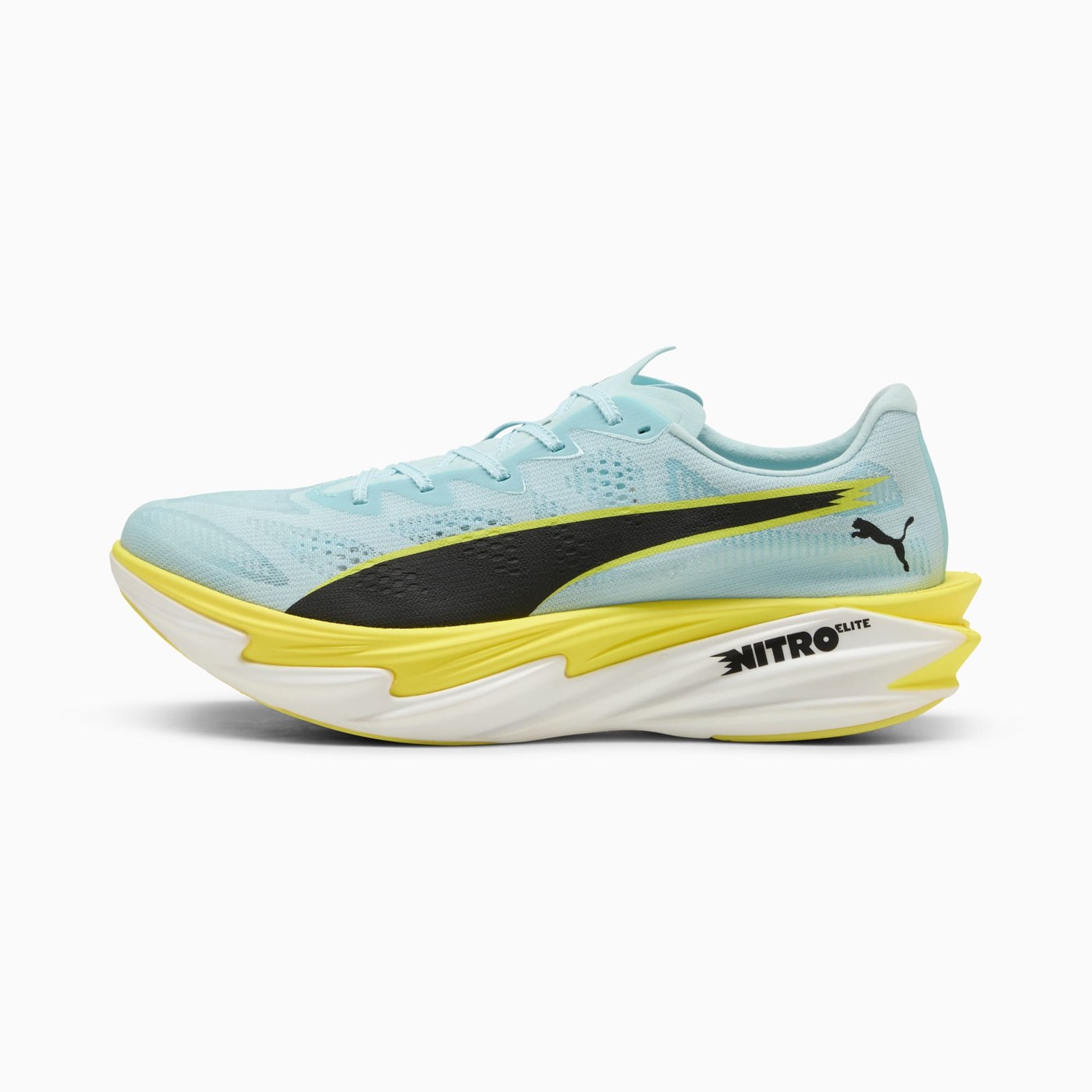
Head-to-head breakdown using our audited shoe database.
The HOKA Cielo X1 3.0 and Puma Deviate Nitro Elite 4 approach carbon racing from opposite ends of the silhouette. HOKA puts its plate inside a towering rockered platform; Puma strips its racer down to an exceptionally low catalog weight.
This comparison remains a draft until both component reviews are public.
Quick Verdict
Choose the HOKA Cielo X1 3.0 if you want maximum-stack protection and an aggressive rocker for half-marathon or marathon racing. Independent testing supports its low weight for the stack and strong forward transition, but also flags a close fit and narrow platform.
Choose the Puma Deviate Nitro Elite 4 if you want the lightest and sharper-feeling option. Doctors of Running found it particularly effective from 5K through half marathon for rearfoot and midfoot landings, with more demanding forefoot mechanics.
Current Comparison Table
| Specification | HOKA Cielo X1 3.0 | Puma Deviate Nitro Elite 4 |
|---|---|---|
| Primary use | Racing | Racing |
| Support | Neutral | Neutral |
| Cushion level | Maximum | High |
| Plate | Carbon | Full-length carbon |
| Heel-to-toe drop | 7mm | 8mm |
| Stack height | 48mm heel / 41mm forefoot | 40mm heel / 32mm forefoot |
| Weight (men/women) | 7.0oz / 7.0oz | 6.0oz / 5.2oz |
| Widths | Standard | Standard |
| Catalog MSRP | MSRP: $275 | MSRP: $250 |
| Surface | Road | Road |
Key Differences
The HOKA has 8mm more heel stack and 9mm more forefoot stack. It combines PEBA-based foam, a carbon plate, and a pronounced rocker in a shoe that still reaches a 7oz catalog weight. RunRepeat and RTINGS evidence support a fast, structured transition, while the tall and relatively narrow platform demands comfort with maximal geometry.
The Puma is one ounce lighter for men and 1.8oz lighter for women. It uses Nitrofoam Elite, a full-length carbon PWRPLATE, ULTRAWEAVE upper, and PumaGrip outsole. Doctors of Running describes a snappy, aggressive ride that works smoothly from the heel or midfoot but can feel awkward for pronounced forefoot landings.
Fit and Sizing
Both are standard-width only. Independent HOKA evidence points to a close, somewhat short-feeling interior. Start with normal size, then compare a half size up if toe clearance is insufficient, confirming that the heel remains secure.
The Puma's minimal ULTRAWEAVE upper is similarly race-close. Its light construction leaves less padding to mask a poor match. Try each with race socks and at the pace intended for competition; standing comfort alone cannot reveal how an aggressive plate will interact with a runner.
Ride and Intended Use
The Cielo's stack and rocker make half-marathon and marathon racing its clearest assignment. It may work at shorter distances for runners who prefer maximal race shoes, but the shoe's identity is built around protected forward motion.
The Puma's lower mass and sharper chassis align most naturally with 5K, 10K, and half-marathon racing. A marathon is plausible when its mechanics remain comfortable over long efforts. Compare more candidates in our best carbon-plate racing shoes, best 5K racers, and best half-marathon shoes.
Who Should Choose the Cielo X1 3.0
- Racers who want maximum stack with a forceful rocker.
- Half-marathon and marathon runners prioritizing underfoot protection.
- Those whose feet fit a close, standard-width HOKA upper.
- Runners willing to pay MSRP: $275 for a specialized long-race tool.
Who Should Choose the Deviate Nitro Elite 4
- Racers who prioritize minimum weight.
- Rearfoot or midfoot strikers who like stiff, aggressive plates.
- Athletes focused on 5K through half-marathon distances.
- Shoppers who prefer the lower MSRP: $250 catalog MSRP.
Tradeoffs
The HOKA provides more stack but costs MSRP: $25 more and places the runner on a taller, narrow platform. The Puma is lighter and cheaper, yet its forefoot mechanics are less universally accommodating. Both sacrifice width choice and easy-day versatility to specialize for racing.
Related Comparisons
For a less aggressive nylon-plated matchup, read Brooks Hyperion vs Saucony Endorphin Speed. For training shoes built around longer easy efforts, browse our best marathon training shoes.
Final Takeaway
The Cielo X1 3.0 is the maximal, protected, heavily rockered choice for longer races. The Deviate Nitro Elite 4 is the leaner, sharper option with a stronger 5K-to-half identity. Both reward compatibility; neither is a safe blind buy.
Key Takeaway
Choose the Cielo X1 3.0 for maximum-stack, rockered long-race protection; choose the Deviate Nitro Elite 4 for lower weight and a sharper 5K-to-half marathon personality.
Frequently Asked Questions
Which shoe is lighter?
Which shoe has more cushioning stack?
Are these suitable as daily trainers?
References
- https://au.hoka.com/products/cielo-x1-30-1171927-flck-flck
- https://runrepeat.com/hoka-cielo-x-1-3-0
- https://www.rtings.com/running-shoes/reviews/hoka/cielo-x1-3-0-carbon-fiber
- https://us.puma.com/us/en/pd/deviate-nitro-elite-4-mens-road-running-shoes/312127
- https://www.doctorsofrunning.com/puma-deviate-nitro-elite-4-review-2026/