
Contents
Puma Deviate Nitro Elite 4 Review: Lean, Aggressive Racer
The Puma Deviate Nitro Elite 4 is a 6oz carbon racer with an aggressive, snappy ride. See its fit, best distances, tradeoffs, comparisons, and value.

Quick Hits
- •Puma cuts the Elite 4 to a catalog weight of 6.0oz for men while retaining an 8mm drop and full-length carbon plate.
- •Doctors of Running found the ride snappy, aggressive, and best aligned with rearfoot or midfoot landings.
- •Its narrow purpose and $250 MSRP make it a race-day tool, not a broadly comfortable daily trainer.
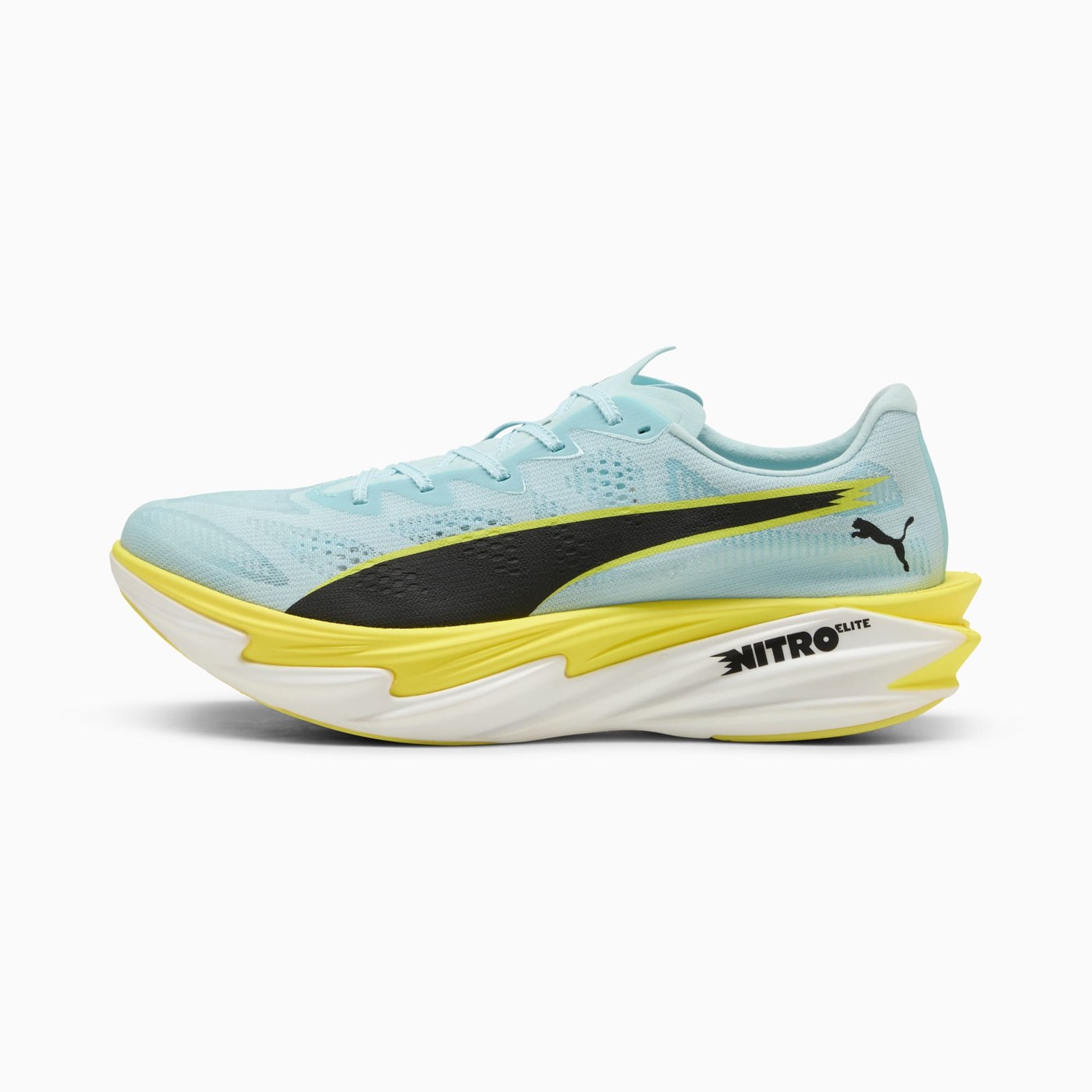
Puma Deviate Nitro Elite 4 Review
Disclosure: As an Amazon Associate, we earn from qualifying purchases. This helps support TrainingPlan at no extra cost to you.
Affiliate link - we may earn a commission
This review combines Puma's product information, TrainingPlan's current catalog, and Doctors of Running's published testing. It does not represent first-person testing by TrainingPlan.
Quick Verdict
The Puma Deviate Nitro Elite 4 is a stripped-down carbon racing shoe built for speed rather than broad versatility. The men's catalog weight is only 6.0oz, paired with a full-length PWRPLATE, Nitrofoam Elite, an 8mm drop, and PumaGrip rubber. Doctors of Running found it snappy, bouncy through the heel and midfoot, and noticeably more aggressive than its predecessor.
That aggression creates a clear fit between shoe and runner. Rearfoot and midfoot landings receive the smoothest transition in the independent test, while the stiff forefoot can feel awkward for runners who land far forward. For a race-day shortlist, see our best carbon-plate racing shoes.
Key Specifications
| Spec | Value |
|---|---|
| Category | Racing |
| Cushion Level | High |
| Heel-to-Toe Drop | 8mm |
| Weight (Men's/Women's) | 6.0oz / 5.2oz |
| Stack Height | 40mm heel / 32mm forefoot |
| Pronation Support | Neutral |
| Width Options | Standard |
| MSRP | MSRP: $250 |
| Surface | Road |
These are the exact current runtime catalog values. Doctors of Running reports the same reference weights and 38/30mm measured geometry. The table retains the catalog's standardized 40/32mm stack, while the source difference shows why measurement context matters.
What Changed
Puma says the Elite 4 is 12 percent lighter than version 3. The brand reengineered the full-length carbon PWRPLATE and combines it with Nitrofoam Elite, a minimal ULTRAWEAVE upper, and PWRTAPE reinforcement. Doctors of Running found the fourth version lighter, faster, and snappier, with an outsole that performed better on its sample.
This is not a comfort-led refinement. The changes sharpen the model's racing identity and make its mechanics more decisive. Runners who liked the friendlier feel of version 3 should not assume the new shoe is simply the same platform with less weight.
Ride and Intended Use
The foam gives the heel and midfoot a lively rebound, then the stiff plate and forefoot shape move the runner quickly toward toe-off. Doctors of Running describes that combination as effective when pace rises, particularly for rearfoot and midfoot strikers. It is less natural at relaxed speeds and can feel abrupt for a strong forefoot landing.
The low weight makes 5K and 10K racing obvious uses, while the cushioning extends its range to the half marathon. It can serve for a marathon when the fit and transition remain comfortable over long sessions. The best 5K racing shoes and best half-marathon shoes provide distance-specific alternatives.
Fit and Sizing
The ULTRAWEAVE upper minimizes material and uses PWRTAPE to support key areas. Doctors of Running found it airy and race-like rather than padded. The heel counter is thin, which keeps weight down but offers less structure than a trainer.
Only standard width is cataloged. Begin with normal running-shoe length, but confirm forefoot volume, heel security, and plate comfort at race pace. A super-shoe fit should be secure without forcing the toes against the taper.
What Works Well
- Exceptional weight: A 6.0oz men's reference is a meaningful advantage for short and medium-distance racing.
- Fast transition: Nitrofoam Elite and the carbon PWRPLATE create a crisp, decisive ride at speed.
- Improved racing focus: Independent testing found the fourth version lighter and snappier than version 3.
- Strong road grip: PumaGrip adds practical rubber coverage to the lean platform.
Tradeoffs
- Aggressive stiffness: The forefoot mechanics may feel awkward for forefoot strikers or at easy pace.
- Minimal structure: The thin heel counter and light upper provide less traditional support.
- Narrow use case: This is difficult to justify as an everyday shoe.
- Premium cost: The MSRP: $250 MSRP places it among expensive race-only options.
Who Should Consider This Shoe
- Rearfoot or midfoot strikers seeking a very light carbon racer.
- Runners targeting 5K, 10K, or half-marathon personal bests.
- Puma race-shoe users who want a sharper, lighter update.
Who Should Look Elsewhere
- Forefoot strikers who dislike a stiff, aggressive toe-off.
- Runners needing a wide option or a padded heel structure.
- Buyers seeking one shoe for easy running, workouts, and racing.
Cross-Brand Comparison
The Nike Vaporfly versus ASICS Metaspeed guide explains two established race geometries. The Puma joins that conversation with even lower catalog weight and a particularly aggressive transition. Runners wanting more protection for 26.2 miles should compare the broader best marathon training shoes field before choosing a race-specific platform.
Same-Brand Comparison
The Puma Deviate Nitro 4 is the more practical plated trainer, carrying more weight but covering training and racing more comfortably. The Puma Fast-R Nitro Elite 3 offers a more visually and mechanically radical race platform. The Elite 4 is the lean, direct choice between them.
Value
At MSRP: $250, value depends on racing specificity. The shoe makes a strong case for runners who can exploit its 6.0oz build and plate geometry across several goal races. It is harder to justify for occasional racing or for anyone uncertain about the forefoot transition, because its design does not naturally absorb daily-training duties.
Final Verdict
The Puma Deviate Nitro Elite 4 is a serious racing tool: light, snappy, and unapologetically aggressive. Its Nitrofoam Elite and carbon plate reward pace, especially for rearfoot and midfoot mechanics, and its low mass suits events from 5K through the half marathon.
The same qualities limit its universality. Forefoot strikers, wide-footed runners, and buyers seeking versatility should look elsewhere. When its fit and mechanics align, however, this is one of Puma's clearest pure-speed options.
Disclosure: As an Amazon Associate, we earn from qualifying purchases. This helps support TrainingPlan at no extra cost to you.
Affiliate link - we may earn a commission
Key Takeaway
The Deviate Nitro Elite 4 is an exceptionally light, aggressive carbon racer with strong appeal from 5K to half marathon, but its stiff forefoot dynamics and premium price narrow the audience.
Frequently Asked Questions
What distances suit the Puma Deviate Nitro Elite 4?
How does the Puma Deviate Nitro Elite 4 fit?
Is the Puma Deviate Nitro Elite 4 a daily trainer?
References
- https://us.puma.com/us/en/pd/deviate-nitro-elite-4-mens-road-running-shoes/312127
- https://www.doctorsofrunning.com/puma-deviate-nitro-elite-4-review-2026/