
Contents
HOKA Speedgoat 7 vs Saucony Peregrine 16: Trail Shoes Compared
Compare the HOKA Speedgoat 7 and Saucony Peregrine 16 on grip, cushioning, fit, technical terrain, long runs, and value.

Quick Hits
- •Speedgoat 7 is lighter, taller, and explicitly cataloged for long runs at a $165 MSRP.
- •Peregrine 16 costs $15 less and uses full-length Vibram Megagrip in a lower 33/29mm platform.
- •Both offer standard and wide sizes, but independent evidence raises length or toe-box cautions for each.
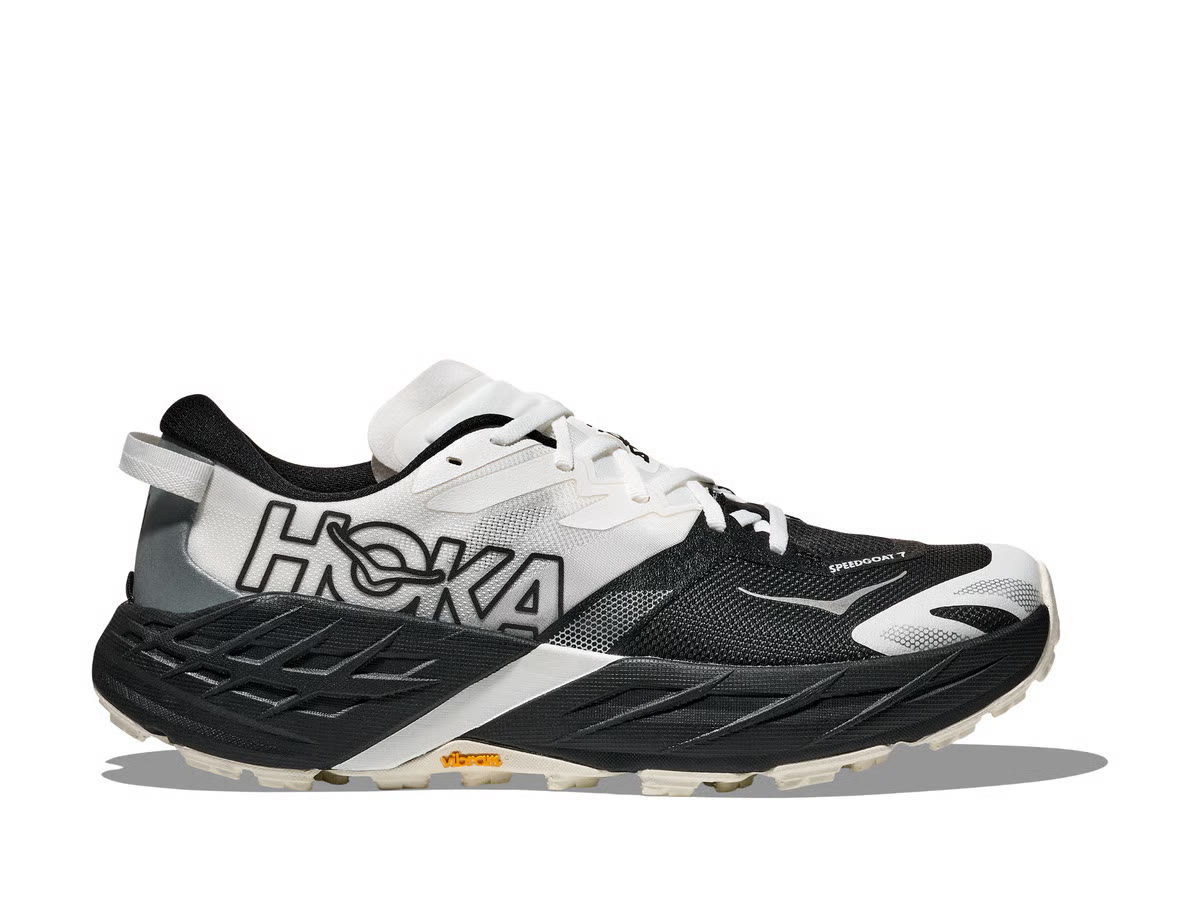
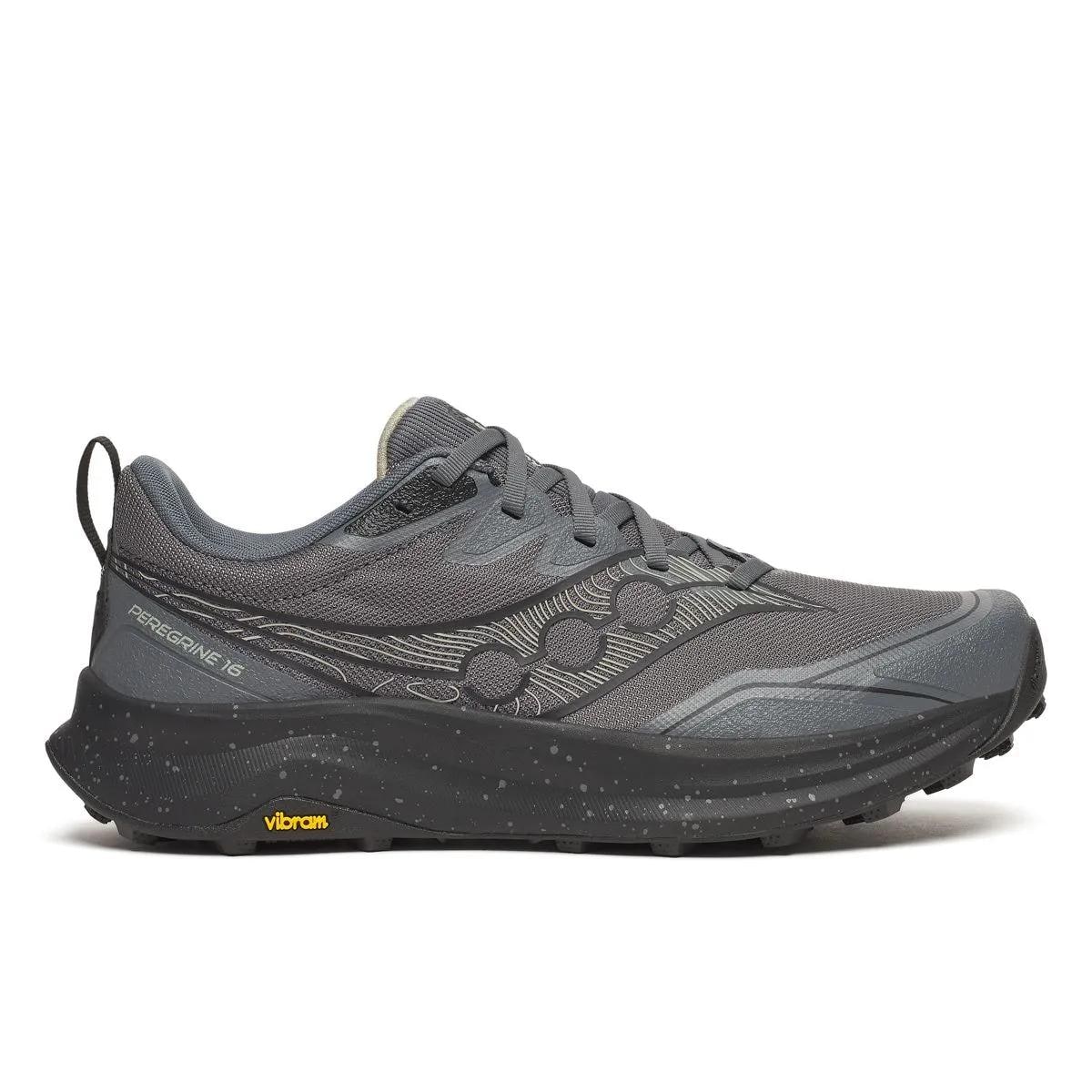
Head-to-head breakdown using our audited shoe database.
HOKA Speedgoat 7 vs Saucony Peregrine 16
Quick Verdict
HOKA Speedgoat 7 and Saucony Peregrine 16 are high-cushion neutral trail shoes with Vibram Megagrip and wide options. Speedgoat is taller, lighter, and long-run oriented. Peregrine is lower, firmer, and less expensive.
Choose the HOKA Speedgoat 7 for a 38/33mm platform, 9.6-ounce men's weight, and long-distance range. Choose the Saucony Peregrine 16 for full-length Vibram coverage, lower 33/29mm geometry, and a MSRP: $150 MSRP.
Specification Comparison
| Specification | HOKA Speedgoat 7 | Saucony Peregrine 16 |
|---|---|---|
| Categories | Trail, long run | Trail |
| Cushion | High | High |
| Drop | 5mm | 4mm |
| Weight (men/women) | 9.6oz / 8.6oz | 10.0oz / 8.9oz |
| Stack | 38mm / 33mm | 33mm / 29mm |
| Support | Neutral | Neutral |
| Widths | Standard, Wide | Standard, Wide |
| MSRP | MSRP: $165 | MSRP: $150 |
Key Differences
Speedgoat 7 replaces compression-molded foam with supercritical EVA and uses revised 5mm Vibram Megagrip lugs. OutdoorGearLab found it softer and more responsive, with strong protection and mixed-terrain grip. Its higher stack reduces ground feel.
Peregrine 16 replaces PWRTRAC with full-length Vibram Megagrip and increases PWRRUN cushioning. Believe in the Run testers praised the traction but found the ride workmanlike rather than lively. One tester reported substantially long sizing.
Speedgoat offers 5mm more heel and 4mm more forefoot stack while remaining 0.4 ounces lighter for men. Peregrine costs MSRP: $15 less and offers a more grounded platform.
Fit and Sizing
Both come in standard and wide. HOKA suggests considering a half-size up for Speedgoat 7, while independent testing found the standard toe box narrow. This supports trying sizes, not automatically changing length.
Peregrine feedback is inconsistent: some testers found secure fit while one found it long. Start with normal Saucony trail length and verify downhill clearance. Wide versions should be used for volume rather than gaining space through extra length.
Ride and Best Uses
Speedgoat suits long training runs, ultras, mixed technical terrain, and athletes who value cushioning over direct ground feel. Its lower weight broadens pace range, though it is not cataloged as a racer.
Peregrine suits daily technical trails, rocky routes, wet surfaces, and runners who prefer firmer control. The full outsole adds confidence but contributes weight. See our best trail shoes and best ultra shoes.
Who Should Choose the HOKA Speedgoat 7
- Long-distance runners wanting more stack at lower weight.
- Athletes who prefer a softer, more responsive trail ride.
- Runners comfortable with reduced ground feel.
Who Should Choose the Saucony Peregrine 16
- Runners wanting a lower, firmer technical platform.
- Athletes prioritizing full-length rubber coverage.
- Buyers seeking the MSRP: $15 lower MSRP.
Tradeoffs
Speedgoat costs more, feels taller, and has a narrow standard-toe-box caution. Peregrine is heavier, less lively in independent testing, and has inconsistent length feedback. Neither is a stability shoe or an injury-prevention device, and no service life is guaranteed.
For another terrain-specific comparison, read Speedcross versus Speedgoat.
Value and Rotation Context
Speedgoat can anchor a one-shoe trail rotation for runners who value long-distance cushioning across varied surfaces. Its MSRP: $165 MSRP is easier to justify when it handles daily training and long events.
Peregrine works as a lower technical option beside a more cushioned long-run shoe, or as the primary trail model for runners who prefer firm control. The MSRP: $15 savings matters less than choosing the correct terrain and fit. Owning both creates a useful contrast only when the runner genuinely uses both high-cushion and lower technical platforms.
Final Verdict
Speedgoat 7 is the more cushioned long-distance generalist. Peregrine 16 is the lower, firmer technical workhorse. Both have credible grip and width options; distance, terrain, fit, and desired ground feel should decide.
Key Takeaway
Choose Speedgoat 7 for lighter high-cushion long-distance versatility; choose Peregrine 16 for a lower, firmer, full-rubber technical trail platform at a lower MSRP.
Frequently Asked Questions
Which is better for long runs, Speedgoat 7 or Peregrine 16?
Which has better grip?
Which shoe is lower to the ground?
References
- https://au.hoka.com/products/m-speedgoat-7-1171928-bwht-bwht
- https://www.outdoorgearlab.com/reviews/shoes-and-boots/trail-running-shoes-men/hoka-speedgoat-7
- https://www.saucony.com/en/peregrine-16/60848M.html
- https://believeintherun.com/shoe-reviews/saucony-peregrine-16-review/