
Contents
Iron Deficiency in Runners: Testing Context and Appointment Questions
Understand why a ferritin result needs context, avoid self-prescribing iron, and prepare a useful symptom and training history for a clinical appointment.

Quick Hits
- •Unexplained fatigue is a reason to seek assessment, not proof of iron deficiency.
- •Ferritin needs interpretation alongside other findings; there is no self-treatment scale here.
- •Do not start iron supplements from symptoms or a lab number alone.
- •Bring a symptom timeline, training changes, dietary context and existing test reports.
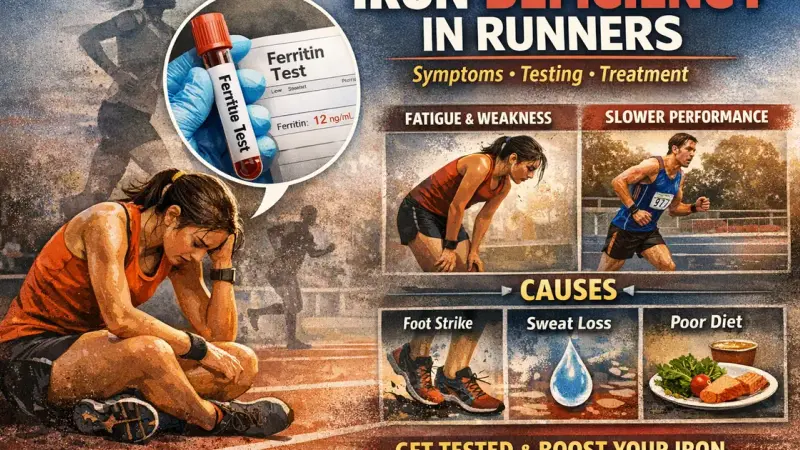
A run feeling unusually difficult can prompt a useful question: what has changed? It cannot identify the cause on its own. Do not self-prescribe iron from symptoms or a ferritin result. This guide helps you prepare a clinical conversation; it does not supply a diagnosis, dose or treatment schedule.
Why iron enters the conversation
Iron is part of hemoglobin, which carries oxygen. Iron-deficiency anemia can involve fatigue, weakness and concentration difficulties. Those symptoms do not identify iron deficiency by themselves. NIH Office of Dietary Supplements
The Australian Institute of Sport iron guidance is written for sport physicians, sports dietitians and physiologists working in high-performance sport. Its clinical-management context matters: it is not a set of lab-number targets for recreational runners to apply on their own.
Instead of asking “Does my mileage mean I need iron?”, prepare concrete observations: when the change started, whether it appears outside running, and what changed in training and daily life. Avoid diagnosing yourself from a watch's performance estimate.
Keep other explanations in view
Fatigue can relate to sleep, stress, illness, medicines and medical conditions. The NHS advises seeing a GP for unexplained tiredness lasting a few weeks or affecting daily life, and cautions against self-diagnosis. Assessment may include blood tests for several possible causes, rather than iron alone. NHS: tiredness and fatigue
Bring your actual training record, including recent changes, rather than only a description such as “training normally.” The weekly mileage comparison can summarize recorded distances; it cannot explain fatigue or clear you to train. Likewise, the sleep-opportunity worksheet can organize your observations without diagnosing a sleep problem.
What evaluation may include
Ferritin reflects iron stores but can rise with inflammation. Clinicians may use several measurements, including hemoglobin and ferritin, alongside dietary and supplement history. Iron depletion can precede anemia, so a hemoglobin result alone does not describe every stage of iron status. NIH: assessing iron status
Ask how the results fit your circumstances. This article intentionally provides no “deficient / suboptimal / ideal runner” ferritin bands. Nor does it turn a result into a supplement trigger. Share the original report with its units and laboratory reference range; avoid comparing isolated numbers from different reports or online posts.
Useful questions include: What does each result tell us? What remains uncertain? Do you need other information or tests? What possible causes are being considered? If treatment is recommended, what is its purpose and how will we judge the response?
Put food in context
Meat and seafood provide heme iron; beans, nuts, vegetables and fortified grains provide nonheme iron. Vitamin C can increase nonheme iron absorption. Food composition and the overall diet matter; these examples are not a treatment plan. NIH: food sources of iron
For your appointment, note what you actually eat and any restrictions or practical barriers. Bring product labels for supplements already used, including multivitamins. Mention blood donation and menstrual history where relevant: frequent donation and heavy menstrual bleeding are recognized risk contexts. Supplemental iron can cause gastrointestinal problems, and excessive iron can be harmful. NIH: risk groups and excessive iron
A meal record is more useful than labeling a whole diet “good” or “bad.” You might note a usual breakfast, lunch, dinner and snack, what changes on long-run days, and questions about affordable or preferred foods. Ask whether a registered sports dietitian would help you review that pattern. This is information gathering, not a nutrient score.
Printable appointment discussion sheet
Open the printable discussion sheet. It contains questions and blank spaces, with no symptom score or supplement calculation. Print it from your browser, or copy the prompts below into a private note. Do not post personal health details in a public training log.
- What changed? Describe symptoms in your own words, when they began, and their effect on running and daily activities.
- What was happening around that time? Note training changes, sleep, illness, life demands and anything else you want to discuss.
- What is my dietary context? Record typical meals, restrictions, access difficulties and recent changes.
- What information can I bring? Existing laboratory reports, medicines and supplement labels; relevant donation or menstrual history if you wish to discuss it.
- What do I want to ask? What else could explain this? Which tests, if any, are appropriate? How should my results be interpreted together?
- What is the agreed next step? Record who to contact, the follow-up plan and any training guidance your clinician gives you.
Leave space to write the clinician's explanation rather than arriving with a treatment selected from the internet. If a supplement is prescribed, ask about its use, side effects, interactions and follow-up. This page does not rank formulations or set a recovery deadline.
Key Takeaway
Use the discussion sheet to explain what changed and ask how results fit your clinical context. Do not diagnose iron deficiency or select a supplement from fatigue, running pace or a ferritin number alone.
Frequently Asked Questions
Does feeling tired while running mean I need iron?
What ferritin level should a runner aim for?
Should I start an iron supplement before my appointment?
When should I repeat tests or expect to feel better?
References
- https://ods.od.nih.gov/factsheets/Iron-HealthProfessional/
- https://www.nhs.uk/symptoms/tiredness-and-fatigue/
- https://www.ausport.gov.au/ais/position_statements/iron-deficiency