
Contents
Puma Deviate Pure Nitro Review: Flexible, Plated-Free Speed
The Puma Deviate Pure Nitro is a flexible, plate-free speed shoe with an 8mm drop and PumaGrip outsole. See its ride, fit, tradeoffs, and value.

Quick Hits
- •The Deviate Pure Nitro removes the plate but retains Nitrofoam, an 8mm drop, and extensive PumaGrip rubber.
- •Doctors of Running found a balanced ride that is neither especially soft nor firm, with useful flexibility for speed training.
- •Its low-volume, tapered forefoot best suits normal-to-narrow feet and may feel restrictive to wider runners.
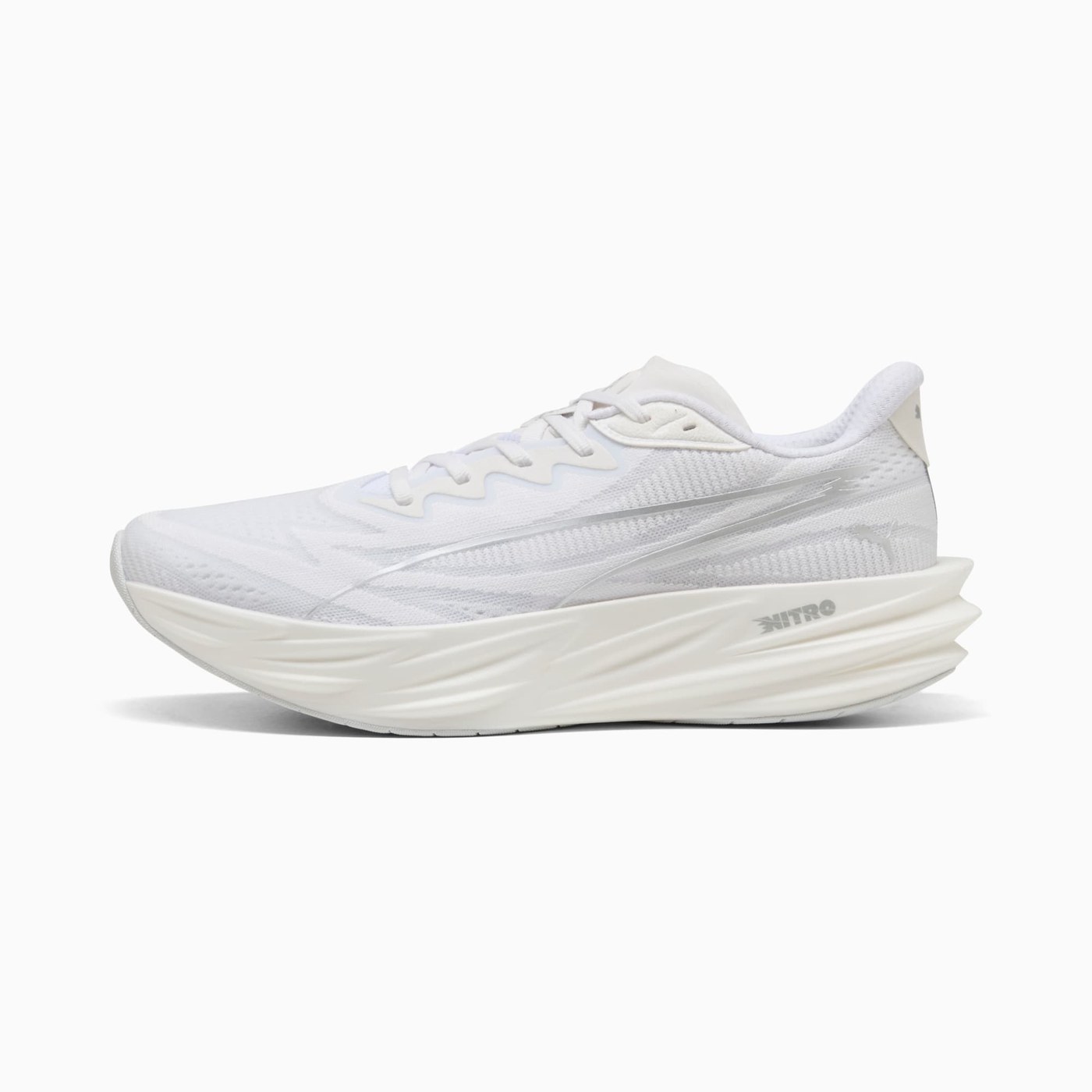
Puma Deviate Pure Nitro Review
Disclosure: As an Amazon Associate, we earn from qualifying purchases. This helps support TrainingPlan at no extra cost to you.
Affiliate link - we may earn a commission
This review combines Puma's product information, TrainingPlan's current catalog, and Doctors of Running's published testing. It does not represent first-person testing by TrainingPlan.
Quick Verdict
The Puma Deviate Pure Nitro is a plate-free speed shoe for runners who want lightness and flexibility without the rigid mechanics of a super shoe. Its 38/30mm catalog stack, 8mm drop, Nitrofoam midsole, and PumaGrip outsole create a familiar road-shoe shape at a low 7.5oz men's weight.
Doctors of Running found the ride balanced rather than dramatically soft or firm. The less-rockered, flexible forefoot gives the foot more influence over transition than Puma's plated Deviate models. Its secure, tapered upper best suits normal-to-narrow feet. This is a compelling best lightweight running shoes candidate, but not a wide-foot recommendation.
Key Specifications
| Spec | Value |
|---|---|
| Category | Speed / Racing |
| Cushion Level | High |
| Heel-to-Toe Drop | 8mm |
| Weight (Men's/Women's) | 7.5oz / 6.3oz |
| Stack Height | 38mm heel / 30mm forefoot |
| Pronation Support | Neutral |
| Width Options | Standard |
| MSRP | MSRP: $150 |
| Surface | Road |
These are the exact current runtime catalog values. Puma cites 220g in a men's UK 8, while Doctors of Running measured 7.5oz for men's size 9 and 6.6oz for women's size 8. Its measured 37/29mm geometry also differs slightly from the catalog standard.
What Changed
The Pure is a different branch of the Deviate family rather than a stripped colorway. Puma removes the plate and allows the Nitrofoam platform to flex, while keeping the Deviate name, 8mm geometry, and PumaGrip road outsole.
That design choice shifts the emphasis from mechanically assisted propulsion to low weight and natural forefoot movement. It fills the space between a traditional racing flat and a plated trainer without pretending to deliver the same ride as either.
Ride and Intended Use
Doctors of Running found the cushioning balanced, with neither an overly soft sink nor a hard snap. The shoe is less rockered than many modern speed trainers, so the ankle and forefoot do more work through toe-off. Early stiffness eased in the test sample; that observation describes one test experience, not a guarantee about every pair.
Intervals, tempo runs, strides, and shorter races are natural uses. The cushioning can also support daily running for athletes who prefer a leaner platform. Our best 5K racing shoes includes more propulsive plated options, while the best daily trainer guide offers roomier and softer choices.
Fit and Sizing
Doctors of Running found a secure, low-volume upper with a tapered forefoot. The design best suits normal-to-narrow feet and runners who want close lockdown for faster running. Standard width is the only cataloged option.
Begin with normal length, but do not use extra length as a substitute for needed width. Wide forefeet and high-volume toes may experience pressure at the taper, especially after the foot swells during longer sessions.
What Works Well
- Plate-free flexibility: The forefoot moves more naturally than a rigid carbon platform.
- Low weight: A 7.5oz men's reference supports fast turnover.
- Balanced cushioning: Independent testing found a usable middle ground between soft and firm.
- Road grip: PumaGrip gives the speed-focused shoe substantial outsole traction.
Tradeoffs
- Narrow fit profile: The tapered, low-volume forefoot excludes many wider feet.
- Less mechanical assistance: Runners seeking maximum plate propulsion will find the ride restrained.
- Lower rocker dependence: Athletes who prefer an automatic rolling transition may need more forefoot work.
- Standard width only: There is no cataloged fit alternative.
Who Should Consider This Shoe
- Normal-to-narrow feet seeking a light plate-free workout shoe.
- Runners who prefer flexibility to aggressive carbon stiffness.
- Athletes wanting one shoe for speed sessions and occasional short racing.
Who Should Look Elsewhere
- Wide or high-volume feet.
- Runners wanting a plush easy-day or long-run shoe.
- Racers who specifically perform best in a rigid, highly rockered platform.
Cross-Brand Comparison
The Brooks Hyperion versus Saucony Endorphin Speed guide captures the Pure's middle ground. It shares the Hyperion's direct, lightweight intent but offers more stack, while avoiding the Endorphin Speed's plated transition. The best half-marathon shoes guide includes more protective distance options.
Same-Brand Comparison
The Puma Deviate Nitro 4 uses a plate and carries a broader training identity. The Puma Deviate Nitro Elite 4 is far lighter and more aggressive for racing. The Pure is the flexible, lower-cost choice for runners who do not want plate mechanics.
Value
At MSRP: $150, the Deviate Pure Nitro competes with premium daily trainers while undercutting carbon racers. The combination of low weight, Nitrofoam, and PumaGrip provides strong value for frequent workout use. The equation changes if its narrow fit requires another shoe or if the buyer specifically wants carbon-assisted racing performance.
Final Verdict
The Puma Deviate Pure Nitro has a clear and welcome identity: a modern speed shoe that achieves performance through weight, foam, grip, and flexibility rather than a plate. Its balanced ride can cover workouts, short races, and lean daily mileage.
Fit is the main restriction. Normal-to-narrow feet receive secure lockdown; wide feet should look elsewhere. For compatible runners who want a natural toe-off and a MSRP: $150 alternative to carbon shoes, the Pure makes a persuasive case.
Disclosure: As an Amazon Associate, we earn from qualifying purchases. This helps support TrainingPlan at no extra cost to you.
Affiliate link - we may earn a commission
Key Takeaway
The Deviate Pure Nitro is a light, flexible speed shoe with a balanced ride and reliable road grip, but its low-volume forefoot limits its audience and its plate-free design prioritizes natural movement over maximum propulsion.
Frequently Asked Questions
Does the Puma Deviate Pure Nitro have a plate?
How does the Puma Deviate Pure Nitro fit?
What runs suit the Puma Deviate Pure Nitro?
References
- https://us.puma.com/us/en/pd/deviate-pure-nitro-mens-road-running-shoes/313904
- https://www.doctorsofrunning.com/2026/06/puma-deviate-pure-nitro-review-2026.html