
Contents
Puma Velocity Nitro Trail Review: Road-to-Trail Daily Grip
The Puma Velocity Nitro Trail combines an 8mm road-shoe geometry with trail grip and a protective upper. See its fit, uses, tradeoffs, and value.

Quick Hits
- •The Velocity Nitro Trail adapts an 8mm, 36/28mm daily-trainer geometry for mixed pavement and dirt.
- •Nitrofoam provides road-friendly cushioning while a full-rubber outsole and protective mesh add trail utility.
- •Its 9.0oz men's weight and moderate trail focus suit door-to-trail routes better than deep mud or highly technical racing.
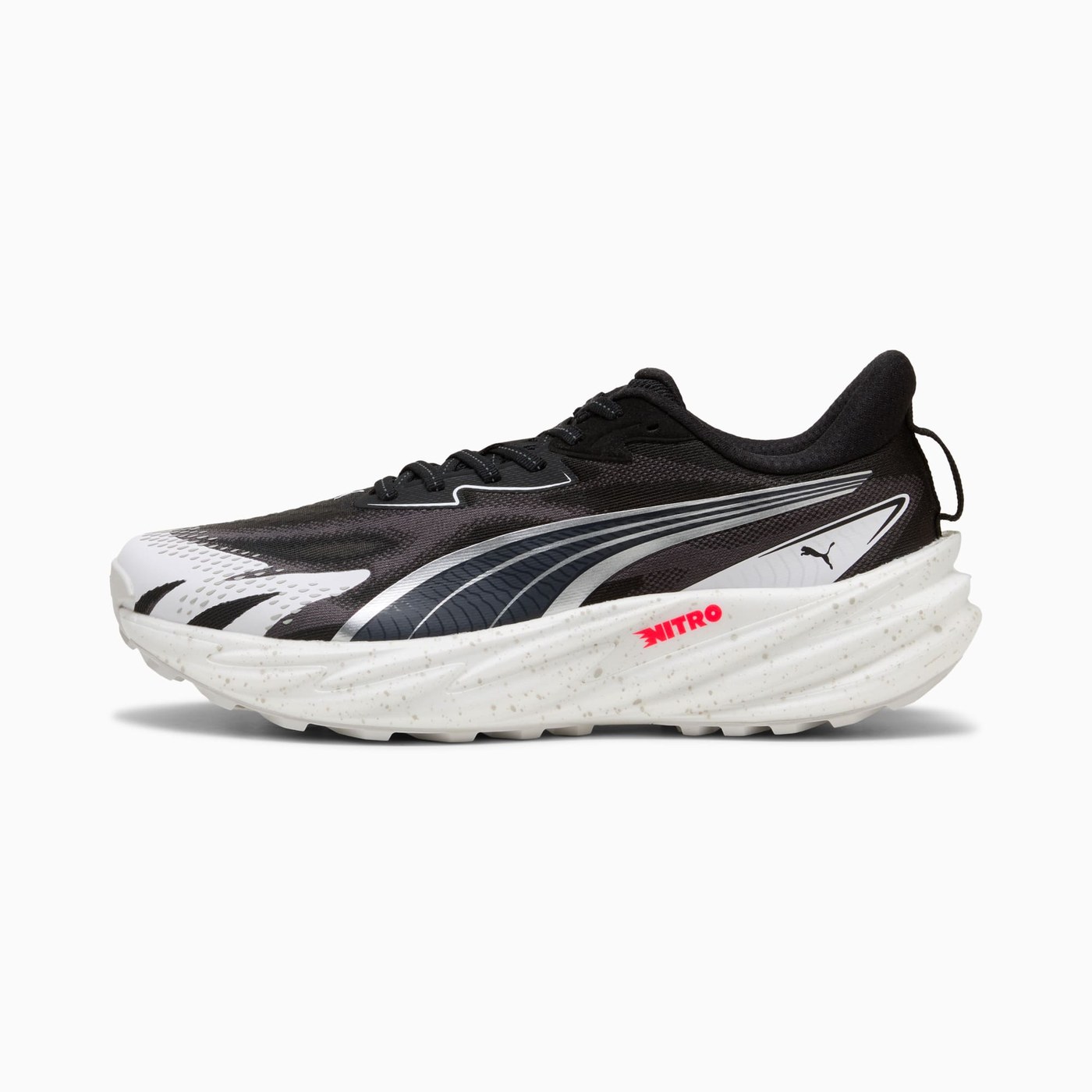
Puma Velocity Nitro Trail Review
This review combines Puma's product information, TrainingPlan's current catalog, and i-Run's published product specifications. It does not represent first-person testing by TrainingPlan. The editorial manifest does not contain a verified exact-model Amazon listing, so this draft includes no affiliate purchase link.
Quick Verdict
The Puma Velocity Nitro Trail translates the brand's accessible road-trainer formula to mixed surfaces. Its 36/28mm platform, 8mm drop, Nitrofoam midsole, and 9.0oz men's catalog weight look familiar to road runners. A protective mesh upper and full-rubber trail outsole add the coverage needed for gravel, park paths, and packed dirt.
Puma explicitly positions the shoe for moving from asphalt to trail, while i-Run's specifications support the same 8mm geometry and standard fit. The result is an approachable daily option rather than a technical specialist. Runners spending most of a route on moderate ground get the clearest value. See more terrain-focused models in our best trail running shoes.
Key Specifications
| Spec | Value |
|---|---|
| Category | Trail / Daily Trainer |
| Cushion Level | High |
| Heel-to-Toe Drop | 8mm |
| Weight (Men's/Women's) | 9.0oz / 7.9oz |
| Stack Height | 36mm heel / 28mm forefoot |
| Pronation Support | Neutral |
| Width Options | Standard |
| MSRP | MSRP: $150 |
| Surface | Mixed |
These are the exact current runtime catalog values. Puma lists 255g in a men's UK 8 and the same 36/28mm geometry. i-Run cites 238g in a women's EU 40, showing why weight must remain tied to gender and reference size.
What Changed
The Trail branch starts with the road-oriented Velocity concept and adds a protective mesh shell plus an outsole intended for off-road traction. The Nitrofoam and 8mm offset preserve a familiar daily-trainer transition.
This is not simply a road outsole with deeper grooves, nor is it a highly armored mountain shoe. The upper, rubber, and mixed-surface positioning work together to create a practical middle ground for runners whose routes cross multiple surfaces.
Ride and Intended Use
Puma describes Nitrofoam as nitrogen-injected cushioning designed to balance low weight and response. At 36mm in the heel, the platform has enough material for daily roads, while the 8mm drop creates a conventional rear-to-front transition. Full-rubber ground contact adds trail confidence but also separates the feel from the smoother road Velocity.
Door-to-trail runs, gravel, canal paths, park loops, and easy dirt are the clearest use cases. The trail versus road running guide explains how surface demands differ. Deep mud, steep technical descents, and short trail races favor more aggressive lugs and lower or more protected platforms.
Fit and Sizing
Puma lists a regular fit and conventional lace closure. Protective mesh will typically feel more structured than the road version's engineered mesh, which helps containment but can reduce accommodation.
Only standard width is cataloged. Begin with normal running-shoe length and confirm forefoot room during descents, when toes move toward the front. Wide feet have no separate cataloged option, making try-on more important.
What Works Well
- Familiar geometry: An 8mm drop eases the move from road trainers to moderate trails.
- Mixed-route cushioning: Nitrofoam provides a road-friendly daily base.
- Protective construction: The mesh shell adds coverage against dirt and light debris.
- Full-rubber outsole: Complete ground contact supports varied surfaces.
Tradeoffs
- Not highly technical: The road-derived platform is less specialized for deep mud and rugged mountain terrain.
- Standard width only: Broad feet have no dedicated option.
- More outsole sensation: Full trail rubber changes flexibility and smoothness compared with the road shoe.
- Limited independent testing: Available third-party information is specification-led rather than a full long-term field review.
Who Should Consider This Shoe
- Road runners adding gravel and moderate trails to regular routes.
- Beginners wanting conventional geometry in a trail-capable shoe.
- Neutral runners seeking one model for pavement connectors and packed dirt.
Who Should Look Elsewhere
- Runners frequently using mud, wet rock, or highly technical descents.
- Wide feet that need a dedicated width.
- Trail racers prioritizing low weight and aggressive ground feel.
Cross-Brand Comparison
The Salomon Speedcross versus Hoka Speedgoat guide shows two more specialized trail identities. The Velocity Nitro Trail is less aggressive than the Speedcross and more road-like than the Speedgoat. The best shoes for beginners offers road alternatives with similarly familiar geometry.
Same-Brand Comparison
The Puma Velocity Nitro 5 is the smoother, lighter road choice. The Puma Velocity Nitro 3 provides an established road-series reference. Choose the Trail when outsole grip and upper protection matter more than pure pavement efficiency.
Value
At MSRP: $150, the Velocity Nitro Trail costs a premium over basic road-to-trail shoes. Its case depends on using the mixed-surface versatility frequently: one shoe can cover pavement, gravel, and moderate dirt. Dedicated road and technical trail runners may get better performance from separate models.
Final Verdict
The Puma Velocity Nitro Trail fills a practical middle ground. Its conventional 8mm geometry, cushioned Nitrofoam, protective mesh, and full-rubber outsole make the move from pavement to packed trail straightforward.
It should not be mistaken for a mountain-race specialist. Standard-width fit and moderate trail focus set clear limits. For everyday mixed routes and road-to-trail beginners, however, the approachable design makes sense.
Key Takeaway
The Velocity Nitro Trail is an approachable road-to-trail daily trainer with familiar 8mm geometry, cushioned foam, and useful outsole coverage, but it is less specialized for technical terrain and only comes in standard width.
Frequently Asked Questions
Is the Puma Velocity Nitro Trail a road shoe or trail shoe?
How does the Puma Velocity Nitro Trail fit?
What terrain suits the Puma Velocity Nitro Trail?
References
- https://us.puma.com/us/es/pd/velocity-nitro-trail-running-shoes-men-mens-trail-running-shoes/312950
- https://www.i-run.com/woman/shoes/trail-running/puma/Velocity-Nitro-Trail_fiche_147900.html