
Contents
Adidas Adizero Evo SL ATR Review: Road Speed with All-Terrain Grip
The Adidas Adizero Evo SL ATR adds a weather-ready upper and stronger grip to a fast road platform. See its fit, ride, and tradeoffs.

Quick Hits
- •The 40/33mm, 7mm-drop platform keeps a road-oriented geometry while the outsole and upper target wet, wintry routes.
- •Independent reviews found strong grip and a more stable feel, but also more weight and stiffness than the road Evo SL.
- •The ATR works best on pavement, gravel, and light trails rather than deep mud or highly technical terrain.
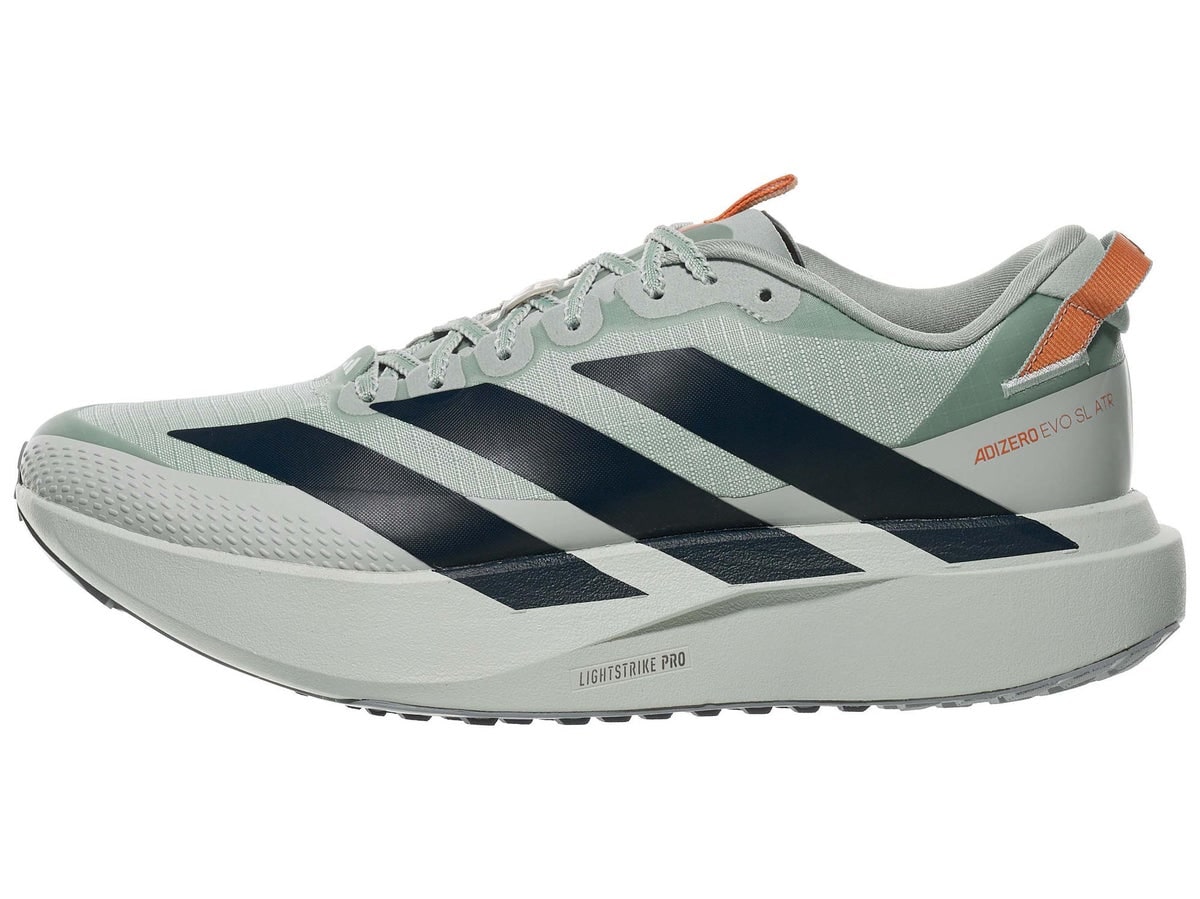
Adidas Adizero Evo SL ATR Review
Disclosure: As an Amazon Associate, we earn from qualifying purchases. This helps support TrainingPlan at no extra cost to you.
Affiliate link - we may earn a commission
Quick Verdict
The Adidas Adizero Evo SL ATR adapts a quick road-shoe idea for wet pavement, gravel, and light trail connectors. Its 40/33mm stack, 7mm drop, and high-cushion classification preserve a tall road-oriented platform, while the reinforced upper and more assertive Continental outsole expand its usable conditions.
RunRepeat found that the Lightstrike Pro character remained energetic and that the upgraded outsole produced excellent traction, but measured costs in weight, stiffness, and ventilation. Tom's Guide similarly praised wet-road and light-trail grip while calling the ATR firmer, heavier, and less springy than the road Evo SL. Our conclusion: it is a useful bad-weather hybrid, not a substitute for a technical trail shoe. See trail versus road running for the surface distinction.
Key Specifications
| Spec | Value |
|---|---|
| Category | Speed, long run, trail |
| Cushion Level | High |
| Heel-to-Toe Drop | 7mm |
| Weight (Men's/Women's) | 9.6oz / 8.5oz |
| Stack Height | 40mm heel / 33mm forefoot |
| Pronation Support | Neutral |
| Width Options | Standard |
| MSRP | MSRP: $160 |
| Surface | Mixed |
What Changed
ATR means more than a cosmetic outsole swap. Adidas adds a water-repellent upper and upgraded Continental rubber to broaden the Evo SL idea beyond dry roads. The current catalog also lists a 9.6-ounce men's weight, meaning this version carries substantially more material than a stripped-down road speed shoe.
Independent reviewers agree on the trade: RunRepeat found more traction and stability with less flexibility and airflow, while Tom's Guide described the ride as firmer and less lively than the standard model. The core Lightstrike Pro platform remains, but the ATR's protective components change how it should be used. It is a seasonal and surface-specific branch, not a pure replacement.
Ride and Intended Use
The catalog spans speed, long-run, and trail roles, but “mixed surface” is the important qualifier. Published testing supports steady runs, tempo work, and longer outings that combine pavement with park paths, packed dirt, or modest gravel. The cushioning remains energetic enough to vary pace, and the added structure can make landings feel more controlled.
The model's limits appear when terrain becomes genuinely technical. Tom's Guide did not treat it as a deep-mud trail shoe, and the road-derived stack is less protective than a purpose-built mountain model around rocks and roots. Runners staying entirely on asphalt may prefer a lighter option from our best lightweight shoes; trail-first runners should use our best trail shoes.
Fit and Sizing
Tom's Guide found the shoe true to normal running-shoe length and roomier around the toes than the road Evo SL. That is encouraging, but the catalog lists only a standard width, and a weather-resistant upper may flex differently from airy road mesh. RunRepeat also found the winterized construction notably less breathable.
Begin with your normal Adidas running size, then check toe movement and midfoot hold in the socks you will actually use in cold or wet weather. Make sure the upper does not crease against the forefoot and that the heel stays secure on descents. Runners needing a formal wide option should not assume the roomier toe feel solves the full fit problem.
What Works Well
- Mixed-surface traction: Independent testing supports grip on wet pavement, gravel, and uncomplicated trails.
- Weather-oriented upper: The added coverage is useful in light rain and cold conditions.
- Broad pace range: The Lightstrike Pro base remains capable of easy-to-tempo running.
Tradeoffs
- Heavier and stiffer: Protection changes the light, flexible character associated with the road Evo SL.
- Low ventilation: RunRepeat found the upper poorly suited to hot conditions.
- Not a technical trail model: The geometry and coverage target moderate mixed routes, not harsh mountain terrain.
Who Should Consider This Shoe
- Neutral runners whose winter routes combine wet roads, gravel, and light trails.
- Athletes who want one shoe for long mixed-surface outings and occasional faster sections.
- Evo SL fans willing to exchange some lightness for grip and coverage.
Who Should Look Elsewhere
- Runners training almost entirely in hot, dry road conditions.
- Trail runners who need deep lugs, a rock plate, or substantial toe protection.
- Anyone needing wide sizing or a soft, flexible upper.
Cross-Brand Comparison
The Saucony Peregrine 16 is a more trail-specific option, while the HOKA Speedgoat 7 emphasizes protection for longer technical outings. The Evo SL ATR stays closer to road-shoe speed and transition. Choose it when pavement remains a meaningful part of the route; choose the trail models when footing and protection dominate.
Same-Brand Comparison
The Adizero SL2 is a road-only daily-speed option with a more conventional purpose. The Terrex Agravic Speed Ultra moves decisively toward trail racing. The Evo SL ATR bridges those lines, which is valuable for mixed routes but inevitably less specialized at either extreme.
Value
At MSRP: $160, the ATR costs what many premium daily trainers do. Its value is good when poor-weather grip and mixed-surface versatility eliminate the need for a separate winter road shoe and light-trail shoe. If routes are consistently dry pavement, the extra structure offers less benefit. If routes are technical trails, a similarly priced Terrex model is the more logical investment.
Final Verdict
The Adidas Adizero Evo SL ATR is a credible all-terrain adaptation, provided “all terrain” is interpreted realistically. Independent evidence supports energetic cushioning, excellent wet-surface grip, and improved stability, while consistently identifying extra weight, stiffness, and warmth. It is best for winter roads and moderate surface changes—not deep mud, hot-weather racing, or technical mountain use.
Disclosure: As an Amazon Associate, we earn from qualifying purchases. This helps support TrainingPlan at no extra cost to you.
Affiliate link - we may earn a commission
Key Takeaway
The Evo SL ATR successfully broadens the Evo platform for poor weather and mixed surfaces, though runners pay for the grip and protection with extra weight, stiffness, and reduced ventilation.
Frequently Asked Questions
Who is the Adidas Adizero Evo SL ATR best for?
How does the Adidas Adizero Evo SL ATR fit?
Is the Adidas Adizero Evo SL ATR a technical trail shoe?
References
- https://www.adidas.com/us/adizero-evo-sl-atr-shoes/KK2680.html
- https://www.runningwarehouse.com/adidas_adizero_Evo_SL_ATR/descpage-ADESM1.html
- https://runrepeat.com/adidas-adizero-evo-sl-atr
- https://www.tomsguide.com/wellness/running/adidas-evo-sl-atr-review