
Contents
Brooks Trace 3 Review: Corrected 12mm Budget Trainer
Research-based Brooks Trace 3 review covering its corrected 12mm drop, 34/22mm stack, DNA LOFT cushioning, fit, wet grip, and $100 launch value.

What changed: Corrected the drop from 8mm to 12mm, stack from 30/22mm to 34/22mm, both weights, release status, materials, and unsupported purchase guidance.
Quick Hits
- •Brooks specifies 12mm drop, 9.0oz men, and 8.0oz women.
- •Brand geometry is 34/22mm and lab measurement closely confirms it.
- •The durable outsole returned weak wet-concrete traction in lab testing.
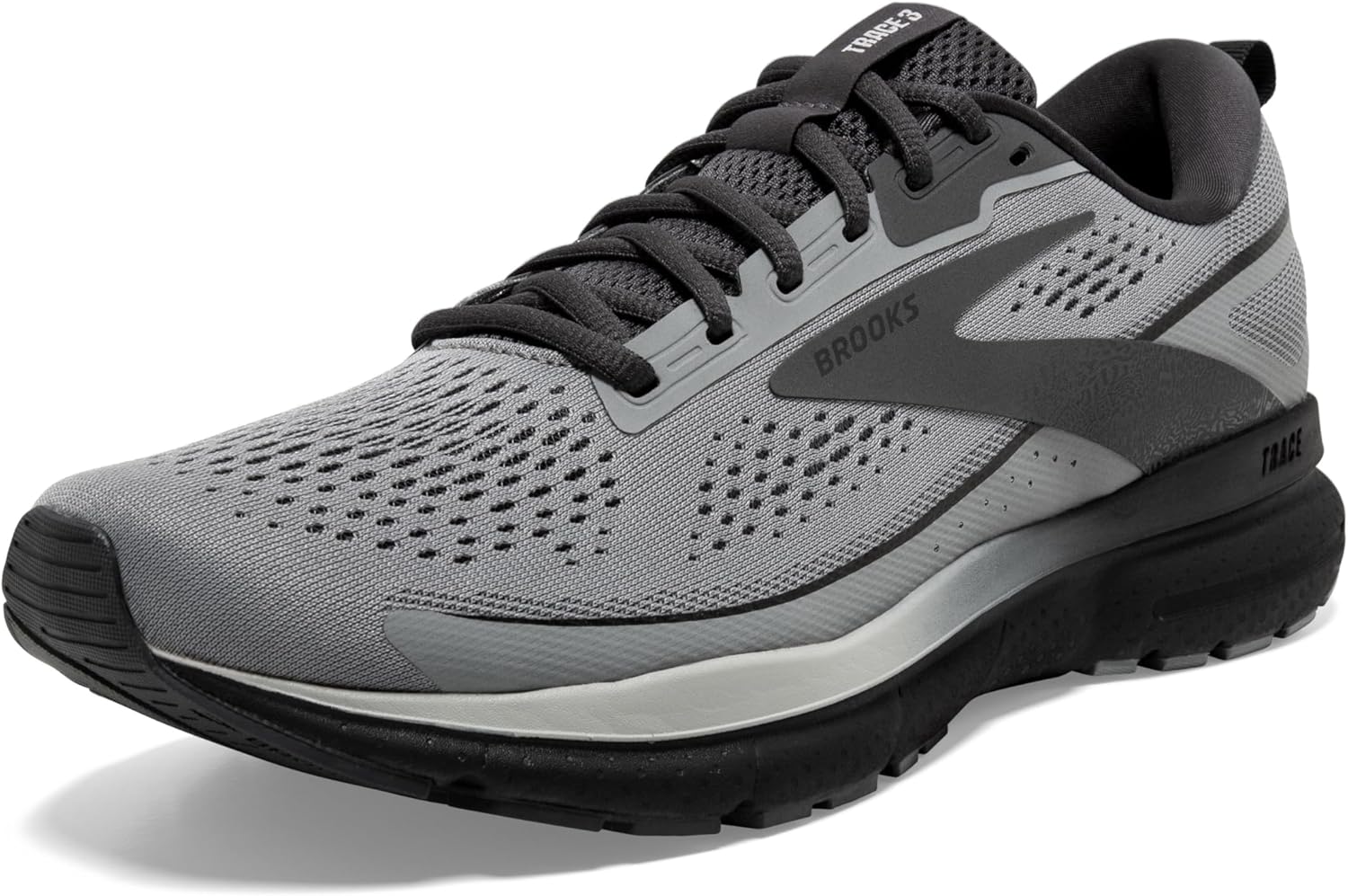
Brooks Trace 3 Review: Corrected 12mm Budget Trainer
Disclosure: TrainingPlan has not hands-on tested this exact model. This research-based review uses Brooks product pages and independent exact-model laboratory testing. No Amazon US listing is currently verified.
Quick Verdict
The Brooks Trace 3 is a superseded neutral road trainer designed to deliver uncomplicated daily comfort at a MSRP: $100 launch price. The accurate specification is a 12mm drop—not 8mm—with a 34mm heel, 22mm forefoot, 9.0-ounce men's reference, and 8.0-ounce women's reference. DNA LOFT cushioning, an engineered air-mesh upper, a Segmented Crash Pad, and extensive rubber make up the basic package.
Trace 3 makes the most sense for a heel-first runner who wants a conventional, flexible trainer and prioritizes price and outsole life. It is less attractive for forefoot-dominant runners, wet-weather use, or anyone wanting a soft, high-energy ride.
Key Specifications
| Specification | Audited catalog value |
|---|---|
| Category | Neutral budget daily trainer |
| Heel-to-Toe Drop | 12mm |
| Weight (Men's/Women's) | 9.0oz / 8.0oz |
| Stack Height | 34mm heel / 22mm forefoot |
| Midsole | DNA LOFT |
| Plate | None |
| Upper | Engineered air mesh |
| Outsole | Segmented rubber with flex cutouts |
| Width Options | Standard and wide |
| MSRP | MSRP: $100 at launch |
| Release | May 2024; superseded by Trace 4 |
What Changed
The old article listed an 8mm drop, 30/22mm geometry, and 9.4/8.2-ounce weights. Brooks' exact-model pages specify 12mm and 9.0/8.0 ounces. RunRepeat records the brand stack as 34/22mm and independently measured 34.1/22.2mm with an 11.9mm difference. That is unusually close confirmation of the published geometry.
We also replaced vague “lightweight trainer” language with the model's actual construction and limitations. Brooks now sells Trace 4, establishing Trace 3 as superseded. The prior Amazon URL was quarantined because an ASIN alone is not evidence: we do not have a dated exact title, seller context, and generation match proving that listing is Trace 3 rather than another Trace version.
Ride and Intended Use
DNA LOFT gives the shoe a balanced rather than plush ride. The 34mm heel provides reasonable protection for rearfoot landings, but the 22mm forefoot is lean by current standards. The 12mm offset further concentrates the shoe's geometry toward heel-first transitions. Flexible outsole cutouts and the Segmented Crash Pad let it move more naturally than a plated or heavily rockered shoe.
Easy runs, short steady runs, walking, and beginner run-walk sessions are logical uses. It can handle occasional faster running, but its energy return is modest and wet traction is a concern. The practical way to decide is to use choosing running shoes and evaluate fit, comfort, and purpose rather than assuming every beginner needs the same drop.
Fit and Sizing
Brooks sold Trace 3 in standard and wide widths. RunRepeat's owner data and lab observations indicate true-to-size length and an average-width forefoot, though vertical toe-box space measured below average. Start at normal running-shoe length, then verify that toes can lift and spread without upper pressure.
The engineered upper is padded and secure but tested only moderately breathable. A wide label helps horizontal room; it does not guarantee sufficient instep or toe height. Compare with the Brooks Ghost 16 if a more refined upper and deeper daily cushioning justify the higher price.
What Works Well
Value and durability are the strongest case. The MSRP: $100 MSRP undercut most mainstream trainers, while laboratory abrasion testing found good heel-lining and outsole durability. The removable insole makes alternative footbeds easier to try, and the high drop closely matches its stated specification.
At about nine ounces, the men's reference is reasonable for a budget trainer with substantial rubber. The platform is flexible, predictable, and free of a plate. Those traits can be more useful to a new runner than an aggressive rocker or unstable soft foam.
Tradeoffs
RunRepeat measured weak wet-concrete forefoot friction. That does not mean every wet surface will produce a slip, but it is credible reason to slow down on paint, smooth concrete, turns, and descents. The upper also sacrifices ventilation, and forefoot cushioning is limited for runners who land forward or want deep long-run protection.
The Trace 3 is not an injury treatment. A high drop changes load distribution but does not diagnose or resolve symptoms. Retire a pair when grip, structure, or ride degrades; the shoe replacement guide is more useful than a fixed mileage claim.
Who Should Consider This Shoe
Consider Trace 3 if a discounted exact-generation pair has a sound return policy, you prefer a 12mm drop, heel cushioning matters more than forefoot depth, and standard or wide sizing works. It is most defensible as a low-cost everyday shoe for uncomplicated mileage.
Who Should Look Elsewhere
Look elsewhere for soft max cushioning, strong wet grip, a low drop, or a lively tempo ride. The Saucony Ride 17 offers a more modern midsole, while the Puma Velocity Nitro 3 is the stronger wet-road choice because of PUMAGRIP.
Cross-Brand Comparison
Ride 17 is softer and more protective through the forefoot but costs more. Velocity Nitro 3 feels livelier and grips better, though its fit and lower drop differ. Trace 3 wins mainly on original price, high-drop familiarity, and straightforward construction.
Same-Brand Comparison
The Brooks Glycerin 21 is substantially plusher and more expensive. Ghost 16 is the balanced mainstream trainer. Trace 4 is the direct successor, retaining a MSRP: $100 price while updating cushioning and breathability. Those current or newer options are easier to replace consistently.
Value
At launch, MSRP: $100 was excellent for a complete road trainer. Old-stock value depends on the discount, storage age, exact width, and return policy. A small saving is not enough if the upper has aged, the model cannot be exchanged, or wet roads dominate your running.
Final Verdict
Brooks Trace 3 is accurately an 8.0/9.0-ounce, 34/22mm neutral trainer with a 12mm drop and MSRP: $100 launch price. It offers durable, flexible, heel-oriented value. Its corrected limitations—weak measured wet grip, modest forefoot stack, and warm upper—matter just as much as the price.
Key Takeaway
Trace 3 is credible low-cost old stock for heel-first runners who prefer a 12mm drop, but its wet grip and shallow forefoot require clear expectations.
Frequently Asked Questions
What is the Brooks Trace 3 heel-to-toe drop?
Is the Brooks Trace 3 good for beginners?
Is the Brooks Trace 3 current?
References
- https://www.brooksrunning.com/en_us/mens/shoes/road-running-shoes/trace-3/1104121D071.125.html
- https://www.brooksrunning.com/en_us/womens/shoes/trace-3/1204011B270.120.html
- https://runrepeat.com/brooks-trace-3
- https://www.brooksrunning.com/en_us/trace-4/1104521D079.150.html