
Contents
HOKA Mach 7 Review: A Light Daily Trainer That Still Likes Speed
The HOKA Mach 7 combines a light build, responsive EVA, and improved road grip. See its ride, fit, specifications, and training role.

Quick Hits
- •The Mach 7 is a light, neutral daily trainer with a 37/32mm catalog stack and 5mm drop.
- •Its firm-responsive foam and stronger forefoot rebound suit daily miles, steady runs, and tempo work.
- •The secure standard-width fit runs narrow through the forefoot in independent testing.
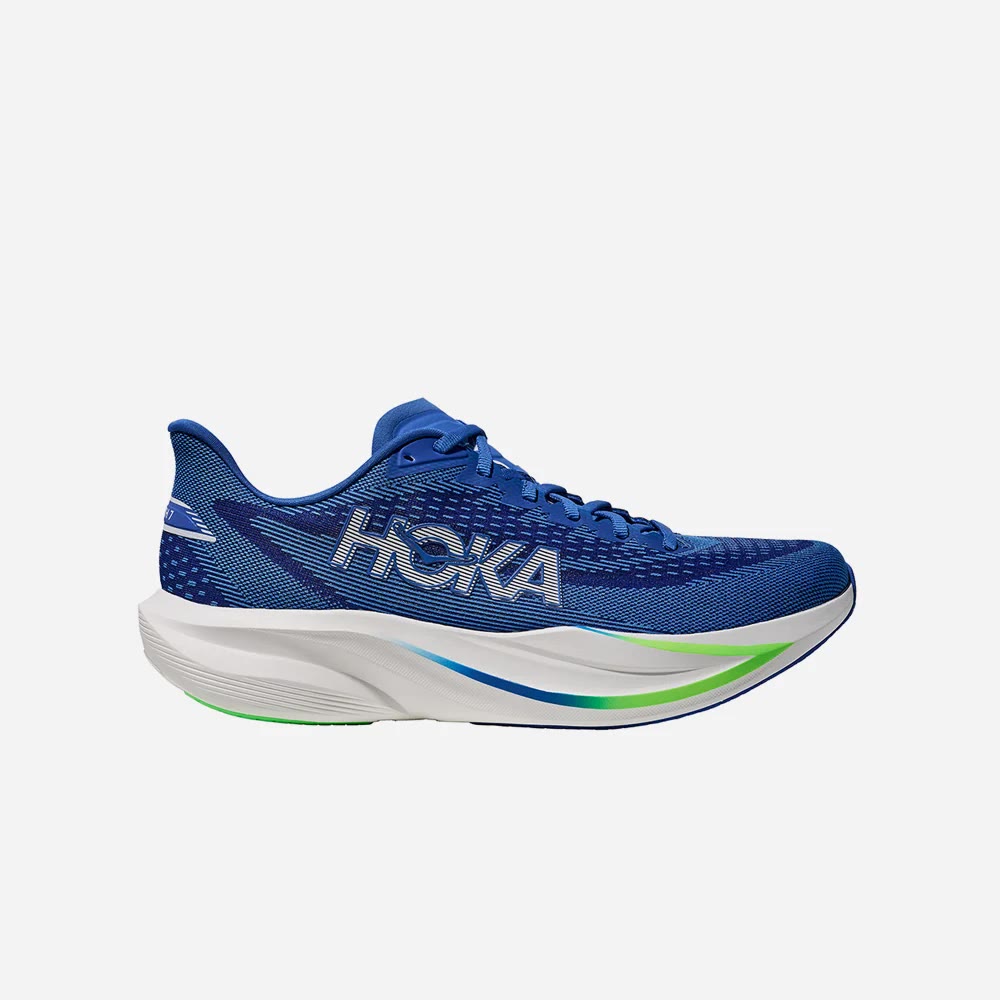
HOKA Mach 7 Review
Disclosure: As an Amazon Associate, we earn from qualifying purchases. This helps support TrainingPlan at no extra cost to you.
Affiliate link - we may earn a commission
Quick Verdict
The HOKA Mach 7 is a neutral road trainer that keeps weight and complexity under control. Its audited 37/32mm stack, 5mm drop, and 8.5-ounce men's catalog weight create enough cushioning for daily use without obscuring the road. The ride is firm-responsive rather than soft, giving the shoe a clear advantage for steady runs and light workouts.
OutdoorGearLab found the Mach unusually versatile across easy, moderate, and tempo efforts, while RTINGS measured stronger rebound at the forefoot than at the heel. Both sources place limits around longer, slower work: cushioning remains protective for routine mileage but is not the most forgiving choice once duration or force increases. The result is a strong lightweight daily trainer for runners who enjoy ground connection, not a replacement for every recovery shoe. See our best daily trainer running shoes for the wider category.
Key Specifications
| Spec | Value |
|---|---|
| Category | Daily Trainer, Speed |
| Cushion Level | High |
| Heel-to-Toe Drop | 5mm |
| Weight (Men's/Women's) | 8.5oz / 7.1oz |
| Stack Height | 37mm heel / 32mm forefoot |
| Pronation Support | Neutral |
| Width Options | Standard |
| MSRP | MSRP: $145 |
| Surface | Road |
What Changed
The Mach 7 refines the Mach 6 formula with a lightweight creel jacquard upper and a dual-compound outsole. Sticky rubber at the forefoot supports toe-off traction, while harder rubber at the heel addresses the higher-impact zone. OutdoorGearLab found the new arrangement dependable on wet and dry pavement during its test period.
The supercritical EVA midsole retains a controlled character, and the rocker remains subtle enough that the shoe does not dictate an exaggerated roll. This is an evolutionary update focused on fit, airflow, and road contact rather than a wholesale conversion to softer premium foam.
Ride and Intended Use
RTINGS measured 77% forefoot and 74.7% heel energy return. Laboratory percentages do not guarantee a pace response, but the front-to-back difference matches reviewer impressions: the Mach feels better when the runner loads the forefoot and increases turnover. The platform remains flexible enough for easy running and structured enough for tempo work.
Daily runs, moderate progression sessions, strides, and shorter tempos are its best assignments. OutdoorGearLab was comfortable recommending it for typical five-to-ten-mile training and found more cushioned shoes preferable beyond roughly 90 minutes. That time boundary is tester-specific, not a universal limit, but it captures the tradeoff. Our best lightweight running shoes includes similar pace-flexible options.
Fit and Sizing
The upper is light, breathable, and secure, with a partial tongue gusset and effective lockdown in independent testing. The forefoot is the concern: OutdoorGearLab found it narrow, while the audited runtime catalog lists standard width only. We therefore do not treat it as a broad-foot recommendation.
Start with your regular HOKA size and check lateral pressure at the forefoot while standing and running. Sizing up can add length but may compromise heel security, so it is not a substitute for the right shape. The thin upper also provides less insulation in cold conditions, which can be managed with socks if the fit allows.
What Works Well
- Low-bulk versatility: The Mach transitions from easy running to controlled faster work without a plate.
- Responsive forefoot: Independent measurements support the shoe's stronger toe-off character.
- Road traction: Strategic outsole rubber improves confidence on damp pavement.
Tradeoffs
- Narrow forefoot: The standard-only fit will exclude some runners.
- Limited recovery softness: The firm platform is not designed for plush, slow-day comfort.
- Less long-run protection: Independent testing found the cushioning less forgiving as runs extended.
Who Should Consider This Shoe
- Neutral runners who want one light trainer for daily miles and tempo work.
- Athletes who prefer firm-responsive cushioning and road feel over softness.
- HOKA users who like rocker assistance without an extreme geometry.
Who Should Look Elsewhere
- Runners who require more forefoot width than the standard catalog option provides.
- Athletes seeking maximum cushioning for long recovery outings.
- Heel strikers wanting equal rebound from the back and front of the shoe.
Cross-Brand Comparison
The New Balance FuelCell Rebel v4 offers another lightweight, flexible training option with a softer personality. The ASICS Novablast 6 adds more stack and bounce for broader long-run use. Runners choosing between speed-capable trainers can also read our tempo runs guide.
Same-Brand Comparison
The Mach 7 is lighter and more workout-friendly than the HOKA Clifton 11, while the Clifton provides more relaxed cushioning for everyday distance. Existing Mach 6 owners should prioritize the seventh version if the updated upper and outsole solve real needs. The familiar ride category means an automatic upgrade is unnecessary.
Value
At MSRP: $145, the Mach 7 is competitively priced for a lightweight trainer that can cover multiple paces. It does not require a plate or flagship foam to feel purposeful, and frequent use across daily runs and workouts strengthens the value case. Pairing it with a softer recovery shoe can also extend its useful role without asking it to handle every session.
Fit is the main value risk. A narrow standard shoe that sits unused is more expensive than a slightly heavier alternative that fits properly. Runners near the edge of the shape should make the purchasing decision after a run-capable try-on rather than from weight alone.
Final Verdict
The HOKA Mach 7 succeeds by remaining focused: light enough to disappear at pace, cushioned enough for routine mileage, and firm enough to preserve road connection. Independent tests support its breathable upper, useful wet-road traction, and stronger forefoot response. They also reinforce the limitations—narrow fit, modest recovery comfort, and less protection for extended slow runs. For neutral runners whose feet match the standard shape, the Mach 7 is a versatile MSRP: $145 daily-and-speed trainer. It works best alongside a softer long-run shoe, not as a forced one-shoe solution.
Disclosure: As an Amazon Associate, we earn from qualifying purchases. This helps support TrainingPlan at no extra cost to you.
Affiliate link - we may earn a commission
Key Takeaway
The Mach 7 is a nimble, breathable road trainer that covers daily and faster running with a controlled ride, but its narrow standard fit and limited long-run softness keep it from being universal.
Frequently Asked Questions
What is the HOKA Mach 7 best for?
Does the HOKA Mach 7 fit true to size?
Is the HOKA Mach 7 good for long runs?
References
- https://vn.hoka.com/en/products/giay-chay-bo-nam-hoka-mach-7-1171904-cbltb-cobalt-blu
- https://www.outdoorgearlab.com/reviews/shoes-and-boots/running-shoes-men/hoka-mach-7
- https://www.rtings.com/running-shoes/reviews/hoka/mach-7