
Contents
Nike ACG Ultrafly Trail 2 Review: A Carbon Trail Racer With Range
The Nike ACG Ultrafly Trail 2 combines ZoomX foam, a revised carbon plate, and Vibram grip. See its ride, fit, specifications, and tradeoffs.

Quick Hits
- •The Ultrafly Trail 2 pairs ZoomX foam with a more flexible carbon plate for long, runnable trail efforts.
- •A Vibram Megagrip outsole and 3mm lugs favor mixed and smoother terrain over deeply muddy routes.
- •Its $260 MSRP and 10.6-ounce men's catalog weight make it a specialized choice rather than a universal trail shoe.
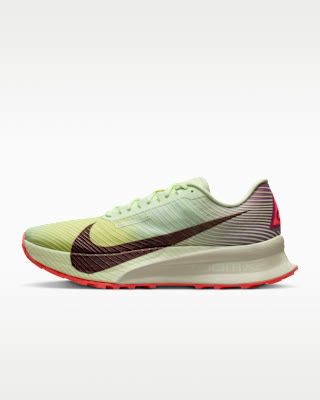
Nike ACG Ultrafly Trail 2 Review
Disclosure: As an Amazon Associate, we earn from qualifying purchases. This helps support TrainingPlan at no extra cost to you.
Affiliate link - we may earn a commission
Quick Verdict
The Nike ACG Ultrafly Trail 2 is a premium neutral trail racer built around ZoomX foam, a carbon plate, and a Vibram outsole. Its 38.5/30mm catalog stack, 8.5mm drop, and 10.6-ounce men's catalog weight produce a different proposition from an ultralight road supershoe: substantial cushioning and efficient rolling for long, runnable trail miles.
Nike revised the plate to make the second generation more adaptable underfoot. That matters on uneven terrain, where complete rigidity can work against natural foot placement. iRunFar's long-term reviewer found the shoe stiff at first but more convincing over time, including outings beyond 30 miles. The strongest case is therefore for committed trail racers covering gravel, packed dirt, and moderate technical sections—not for runners expecting one shoe to be equally adept in deep mud and slow hiking. Start with our best trail running shoes for the larger category.
Key Specifications
| Spec | Value |
|---|---|
| Category | Trail, Racing |
| Cushion Level | High |
| Heel-to-Toe Drop | 8.5mm |
| Weight (Men's/Women's) | 10.6oz / 8.8oz |
| Stack Height | 38.5mm heel / 30mm forefoot |
| Pronation Support | Neutral |
| Width Options | Standard |
| MSRP | MSRP: $260 |
| Surface | Trail |
What Changed
The defining update is a carbon plate designed to bend and twist more readily than the original version. Nike retains responsive ZoomX foam but softens the relationship between plate and terrain, aiming for a smoother transition and better adaptability. The outsole still uses Vibram Litebase with Megagrip rubber and 3mm lugs.
iRunFar found the difference noticeable in hand, though subtler once moving on trail. Its test shoe also weighed less than TrainingPlan's standardized catalog value, illustrating why review samples and published specifications can differ by size and method. The table above uses the audited catalog consistently. The change is best understood as refinement: the Ultrafly remains a plated, high-stack racer, now with less resistance to uneven surfaces.
Ride and Intended Use
The ride combines soft, responsive foam with a rolling plate rather than an aggressive spike-like sensation. iRunFar reported that the shoe needed some running before feeling natural, then became useful for longer efforts without creating obvious stability concerns for that reviewer. One runner's experience does not guarantee the same result, but it supports Nike's long-distance positioning.
The 3mm lugs point toward smoother trail races, dry singletrack, forest roads, and mixed routes. Vibram Megagrip adds credible wet-surface traction, while the shallow pattern is less appropriate for soft mud than a more aggressive outsole. For all-day race choices, compare our best ultramarathon running shoes. Runners building trail experience should also read our trail running basics.
Fit and Sizing
The Ultrafly Trail 2 is offered in standard width in the audited catalog. Independent observations describe a secure, performance-oriented fit rather than an expansive trail last. That can help control movement on descents, but feet that swell significantly during ultras may need more room.
Begin with your usual Nike trail size and assess the shoe late in the day, ideally with the socks used for racing. Check heel hold on an incline and leave enough space ahead of the toes for descents. A locked-down upper cannot compensate for the wrong size, and a premium plate does not make cramped forefoot volume acceptable.
What Works Well
- Long-distance cushioning: The 38.5mm heel stack provides substantial material for extended runnable trails.
- Adaptable plate design: The revised carbon element reduces some of the original shoe's rigidity.
- Surface versatility: Megagrip rubber and moderate lugs cover gravel, hardpack, rock, and mixed trail conditions.
Tradeoffs
- Premium price: The MSRP: $260 MSRP requires frequent race use to justify.
- Not especially light: At 10.6 ounces in the men's catalog specification, it carries more shoe than many racers.
- Limited mud specialization: A 3mm lug pattern cannot match deep, widely spaced lugs in soft ground.
Who Should Consider This Shoe
- Neutral runners targeting ultras or long trail races on predominantly runnable courses.
- Athletes who want plate-assisted efficiency without an extremely rigid underfoot feel.
- Nike users seeking more race focus than the Pegasus Trail 5.
Who Should Look Elsewhere
- Runners who need an economical everyday trail trainer.
- Athletes racing frequently in deep mud or highly technical, low-speed terrain.
- Anyone who prefers strong ground feel over maximum cushioning should compare lighter trail options.
Cross-Brand Comparison
The HOKA Speedgoat 7 emphasizes cushioned trail versatility without the Ultrafly's carbon-race premise. The Salomon Genesis is another long-distance trail option with a more conventional construction. Runners deciding whether a plate is useful at all can use our best carbon-plated running shoes to understand the broader category.
Same-Brand Comparison
Choose the Ultrafly Trail 2 over the Pegasus Trail 5 when racing efficiency, premium foam, and long-course performance justify the price. The Nike Zegama 2 offers substantial cushioning and Vibram grip without the carbon plate, making it a more straightforward long-run alternative. The Ultrafly is the specialized option rather than the automatic upgrade.
Value
At MSRP: $260, the Ultrafly Trail 2 belongs in the premium race-day tier. The materials support that positioning, but value depends on route and frequency. A runner entering several long, runnable events can use the cushioning, plate, and outsole together. Someone running relaxed local trails may receive almost the same practical utility from a less expensive trainer.
The second version is most persuasive for runners who found the original too rigid. Owners already comfortable in the first shoe should view improved adaptability as an incremental reason to switch, not proof that the older model has become unusable.
Final Verdict
The Nike ACG Ultrafly Trail 2 is a thoughtful update to a distinctive trail racer. Its revised carbon plate works with ZoomX cushioning to target long, efficient movement, while Vibram rubber gives it credible mixed-terrain footing. It remains heavier than many road racers, shallow-lugged for mud, and expensive for casual use. On the right course, however, those are coherent compromises. Runners seeking a premium tool for long, runnable trail races now have a more adaptable Ultrafly.
Disclosure: As an Amazon Associate, we earn from qualifying purchases. This helps support TrainingPlan at no extra cost to you.
Affiliate link - we may earn a commission
Key Takeaway
The Ultrafly Trail 2 is a cushioned carbon trail racer for long, runnable courses, with credible grip and a less rigid ride than its predecessor, but its price and weight limit its appeal.
Frequently Asked Questions
What is the Nike ACG Ultrafly Trail 2 best for?
Is the Nike ACG Ultrafly Trail 2 a stable trail shoe?
Is the Nike ACG Ultrafly Trail 2 worth $260?
References
- https://www.nike.com/t/nike-acg-ultrafly-trail-uNHxL3GA/HF5668-700
- https://www.irunfar.com/nike-acg-ultrafly-trail-review
- https://runrepeat.com/nike-acg-ultrafly-trail