
Contents
Adidas Supernova Rise 3 Review: A Balanced Everyday Workhorse
The Adidas Supernova Rise 3 is a stable-neutral daily trainer with an 8mm drop. See its fit, ride, tradeoffs, and best uses.

Quick Hits
- •The 36/28mm platform and 8mm drop target everyday road mileage rather than aggressive speed sessions.
- •Independent testing describes a slightly soft, protective ride with a broad, stable-neutral base.
- •Standard and wide options help, but the low-volume forefoot may still feel restrictive over the toes.
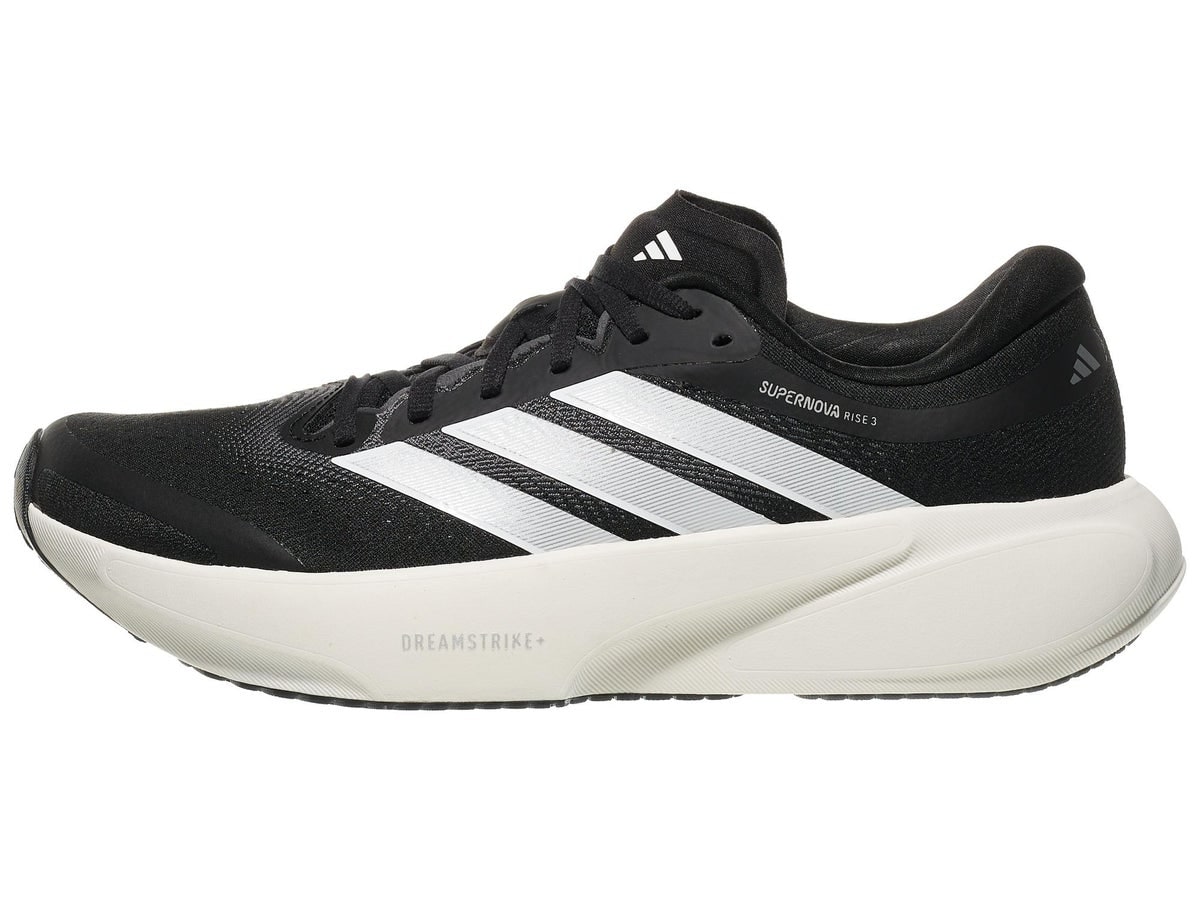
Adidas Supernova Rise 3 Review
Disclosure: As an Amazon Associate, we earn from qualifying purchases. This helps support TrainingPlan at no extra cost to you.
Affiliate link - we may earn a commission
Quick Verdict
The Adidas Supernova Rise 3 is a neutral road trainer built for repeatable daily mileage. Its 36mm heel, 8mm drop, high cushion classification, and 9.4-ounce men's catalog weight put it in the practical middle of the market: protective enough for long outings, yet not so tall or heavy that ordinary runs become cumbersome.
Doctors of Running described the Dreamstrike+ ride as slightly soft, protective, and mildly rockered, with a wide platform that behaves like a stable-neutral shoe. That supports Adidas's everyday positioning without turning the Rise 3 into a stability model or speed specialist. Our editorial conclusion is that it suits runners who value consistency more than excitement. See our best daily trainers for the wider category.
Key Specifications
| Spec | Value |
|---|---|
| Category | Daily trainer, long run |
| Cushion Level | High |
| Heel-to-Toe Drop | 8mm |
| Weight (Men's/Women's) | 9.4oz / 8.4oz |
| Stack Height | 36mm heel / 28mm forefoot |
| Pronation Support | Neutral |
| Width Options | Standard, Wide |
| MSRP | MSRP: $140 |
| Surface | Road |
What Changed
The third Rise continues Adidas's comfort-oriented Supernova line with a full-length Dreamstrike+ midsole and a Primeweave upper. Independent measurements broadly align with the current catalog's 36/28mm platform and approximately mid-nine-ounce men's weight. The update's practical identity is not radical reinvention; it is a refinement of a conventional daily trainer.
Doctors of Running found the shoe relatively light compared with older, bulkier Adidas trainers and noted that the midsole felt easier to roll once broken in. Those are reviewer observations, not a promise that every runner will experience a break-in period. Compared with the faster Adizero SL2, the Rise 3 prioritizes a broader base and steady protection.
Ride and Intended Use
The Rise 3 is designed for daily and long runs, and its specifications support that assignment. An 8mm drop provides familiar heel-to-forefoot geometry, while the 36mm heel offers meaningful cushioning without entering the tallest max-cushion class. Doctors of Running reported a slightly soft but non-mushy feel and a mild rocker that keeps transitions moving.
That evidence points to easy runs, aerobic mileage, and moderate long runs as the best uses. It can handle strides or a short progression when needed, but runners planning frequent tempo sessions will find more purpose-built choices in our best lightweight running shoes. For weekly mileage planning, our long-run shoe guide explains when a dedicated second shoe may help.
Fit and Sizing
Doctors of Running found the length true to size in a men's sample, with a secure, low-volume upper. The forefoot was described as slightly wide at its base but tapered and low over the toes, and the laces were considered short. Those details matter more than the simple standard-or-wide label.
Starting at your usual running-shoe size is reasonable, but runners with high-volume feet should try the wide version or compare both widths. Check toe clearance, pressure across the forefoot, and whether the laces allow secure heel hold without over-tightening. A wide option does not automatically create more vertical toe-box space.
What Works Well
- Balanced protection: The high-cushion 36/28mm platform is substantial without reaching extreme stack heights.
- Stable-neutral geometry: Independent testing highlighted the broad sole and consistent ride for non-workout miles.
- Useful range: Daily and long-run catalog roles let the shoe cover much of a conventional training week.
Tradeoffs
- Low forefoot volume: The tapered, close-fitting toe area may challenge higher-volume feet.
- Limited top-end identity: The Rise 3 is positioned around consistency, not racing or demanding intervals.
- Only two width choices: Standard and wide improve access, but some competitors offer more gradations.
Who Should Consider This Shoe
- Neutral runners seeking one road shoe for easy, steady, and moderately long outings.
- Athletes who like an 8mm drop, secure upper, and stable platform under soft cushioning.
- Newer runners comparing approachable options in our beginner shoe guide.
Who Should Look Elsewhere
- Runners who need a spacious, high-volume toe box.
- Athletes shopping primarily for intervals, tempo runs, or racing.
- Anyone wanting much softer maximum cushioning should consult our best cushioned shoes.
Cross-Brand Comparison
The Brooks Ghost 18 fills a similar dependable-workhorse role, while the Nike Pegasus 42 is another traditional daily-training reference point. The Rise 3's case rests on its stable-neutral base, high cushion designation, and secure fit. Selection among them should begin with fit and preferred transition rather than a claim that one design is universally better.
Same-Brand Comparison
The Adizero SL2 is the more natural Adidas choice for runners who want a lighter, quicker training feel. The Boston 12 adds a more structured speed-training orientation. The Rise 3 is the calmer option: choose it when routine aerobic mileage and a less aggressive platform are the priorities.
Value
At a MSRP: $140 catalog MSRP, the Rise 3 sits below many premium max-cushion trainers. Its strongest value argument is breadth: a runner who uses it for most easy, daily, and long mileage may not need separate shoes for each role. It is a weaker buy if it would serve only as an occasional recovery shoe beside several similar trainers.
Final Verdict
The Adidas Supernova Rise 3 is a well-defined everyday workhorse. Current specifications and independent testing support a protective, mildly rockered, stable-neutral ride for ordinary road mileage. Its chief caveat is fit: the low-volume forefoot deserves careful attention even though a wide version exists. Runners who want dependable comfort more than a dramatic speed sensation should put it on their shortlist.
Disclosure: As an Amazon Associate, we earn from qualifying purchases. This helps support TrainingPlan at no extra cost to you.
Affiliate link - we may earn a commission
Key Takeaway
The Supernova Rise 3 is a sensible, protective daily trainer with a secure fit and stable geometry, but it is less compelling for runners who want a roomy toe box or a distinctly fast ride.
Frequently Asked Questions
Who is the Adidas Supernova Rise 3 best for?
How does the Adidas Supernova Rise 3 fit?
Is the Adidas Supernova Rise 3 worth its $140 MSRP?
References
- https://www.adidas.com/us/supernova-rise-3-running-shoes/KI3617.html
- https://www.runningwarehouse.com/adidas_Supernova_Rise_3/descpage-ASNR3M5.html
- https://www.doctorsofrunning.com/adidas-supernova-rise-3-review-2026/