
Contents
ASICS Metaspeed Ray Review: A 4.6oz Marathon Supershoe
The ASICS Metaspeed Ray combines a 4.6oz build with a near-40mm FF LEAP midsole. See its verified specs, race-day strengths, and stability tradeoffs.

What changed: Added structured catalog synchronization, explicit research-based disclosure, exact-model identity, image text, current lifecycle evidence, and field-level provenance without claiming hands-on testing.
Quick Hits
- •The unisex reference sample weighs approximately 4.6oz despite a near-40mm heel stack
- •Full-length FF LEAP foam and a shortened forefoot plate create a very soft racing platform
- •Its narrow, flexible construction is much less stable than ASICS' Sky and Edge racers
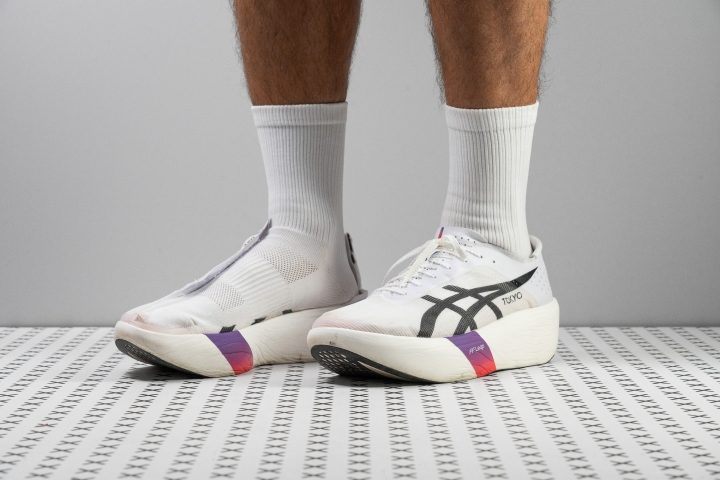
ASICS Metaspeed Ray Review
Quick Verdict
The ASICS Metaspeed Ray is not the low-stack 5K flat its name and 4.6-ounce weight might suggest. It is a nearly 40mm-tall distance-racing supershoe built from full-length FF LEAP foam, a highly stripped-back Matryx upper, and a shortened carbon plate concentrated toward the forefoot. ASICS positions it for elite runners—especially forefoot strikers—who want to start fast and preserve pace late in a race.
The resulting weight-to-cushion ratio is exceptional. The compromise is equally clear: independent reviews consistently describe a very soft, narrow, and flexible platform that is less stable than the Metaspeed Sky Tokyo or Metaspeed Edge Tokyo. This is a specialist race shoe for efficient mechanics on straight, predictable courses, not a broadly accessible shortcut to faster running.
TrainingPlan has not hands-on tested this pair. This review reconciles ASICS' exact-model specifications and launch material with independent wear and instrumented testing.
Key Specifications
| Spec | Value |
|---|---|
| Category | Racing |
| Cushion Level | High |
| Heel-to-Toe Drop | 5mm |
| Weight (Men's/Women's) | 4.6oz / 4.6oz |
| Stack Height | 39.5mm heel / 34.5mm forefoot |
| Pronation Support | Neutral |
| Width Options | Standard |
| MSRP | MSRP: $300 |
| Surface | Road |
The Ray is sold as a unisex model, so the table uses ASICS' 129g reference weight for both catalog fields rather than inventing a separate women's measurement. Actual shoe weight changes with size.
What Changed
The Ray established a new branch of the Metaspeed family rather than replacing the stride-oriented Sky or cadence-oriented Edge. ASICS introduced FF LEAP as its lightest and most energetic foam, used it throughout the Ray's midsole, and removed material from nearly every other component.
The carbon element is also unusual. Instead of the more stabilizing, full-length plate found in many super shoes, the Ray uses a smaller plate centered from the midfoot toward the forefoot. ASICS says this arrangement promotes propulsion; independent testing indicates that leaving the heel unplated also permits more foam movement. The minimal outsole and Matryx upper complete the weight-reduction strategy.
Ride and Intended Use
Manufacturer specifications establish the fundamentals: 39.5mm in the heel, 34.5mm in the forefoot, a 5mm drop, and a 129g reference weight. RTINGS' instrumented review measured essentially the same weight and characterized the A-TPU-based FF LEAP platform as deeply cushioned and quick to rebound. Doctors of Running likewise recorded a soft, lightweight ride built for fast efforts.
Editorially, that evidence suggests the Ray's core advantage is not minimal ground feel; it is the ability to deliver a full supershoe stack with less mass than many traditional road-racing flats. It can be used from 5K through the marathon, but longer-distance suitability depends heavily on whether the runner remains centered over the narrow, compliant platform as fatigue builds.
The shoe is most coherent at fast, steady paces on flat roads. Heel strikers, runners with large lateral movements, and athletes who want security through tight turns have stronger reasons to choose a more structured racer. The Nike Alphafly 3, for example, is much heavier but supplies a broader and more mechanically reinforced package.
Fit and Sizing
The standard-width Matryx upper is intentionally sparse. Its job is to secure the foot at speed without adding conventional padding or structure. Independent reviews generally describe race-oriented lockdown rather than a roomy daily trainer fit, and the upper offers little capacity to disguise a poor size match.
Start with your normal ASICS racing size, but treat an in-person try-on as part of the purchase decision at this price. Confirm that the heel remains secure, the upper does not create concentrated pressure, and the platform feels manageable through turns. A paper-thin upper and soft heel cannot be tuned like a padded trainer after the fact.
What Works Well
- Extraordinary mass reduction: A 129g reference weight makes the Ray lighter than many spikes while retaining a road-legal distance-racing stack.
- Deep FF LEAP cushioning: The full foam slab supplies a soft, energetic platform rather than the harsh ride expected from an ultralight flat.
- Clear performance focus: Every major component serves fast road racing; there is little excess material or daily-training compromise.
Tradeoffs
- Limited stability: The narrow base, soft foam, and shortened plate allow more movement than structured super shoes, especially under the heel.
- Premium price: At MSRP: $300, the Ray costs more than ASICS' already-premium Sky and Edge alternatives.
- Delicate construction: Minimal rubber and upper material prioritize race weight over the durability expected from a training shoe.
Who Should Consider This Shoe
- Efficient midfoot or forefoot strikers seeking the lightest possible high-stack racer
- Experienced athletes who can maintain centered mechanics at race pace
- Runners willing to reserve an expensive shoe for key workouts and races
Who Should Look Elsewhere
- Runners who prioritize stability, cornering confidence, or broad heel support
- Athletes seeking one plated shoe for both daily training and racing
- Anyone who values durability and price-per-mile more than minimal race weight
Cross-Brand Comparison
The Ray is considerably lighter and softer than most competitors, but “lighter” does not automatically mean “better.” The HOKA Cielo X1 2.0 offers more structure and a more forceful rocker at a substantial weight penalty. The Adidas Adizero Adios Pro 3 uses rods and a broader geometry to create a more guided marathon platform. Nike's Alphafly adds air pods and a full plate for a distinctly mechanical, stable-under-power sensation.
Runners deciding among these shoes should prioritize fit and late-race control—not a few grams on a specification sheet. The Ray's advantage is most valuable to athletes who can exploit its softness without fighting the platform.
Same-Brand Comparison
The Sky Tokyo and Edge Tokyo are the more conventional choices within ASICS' race line. Both retain FF LEAP but pair it with FF TURBO PLUS and more substantial plate geometry. That adds weight, yet it also gives the foot a more predictable platform. The Sky emphasizes a higher plate position for stride-style runners; the Edge places its plate lower for cadence-style runners.
The ASICS Superblast 2 is not a legal substitute for elite sanctioned road racing at every event, but it is the more durable and forgiving fast-training option. Use the Superblast for volume and save the Ray for racing if a two-shoe rotation fits the budget.
Value
At MSRP: $300, value depends on specialization. The Ray offers engineering that few shoes match: a maximal legal racing stack at roughly 4.6 ounces. It does not offer everyday durability, reassuring stability, or a versatile training role. For most runners, the Sky or Edge provides a more balanced return on a large investment.
No exact Metaspeed Ray listing was found on Amazon during the July 28, 2026 catalog audit, so this review intentionally omits an Amazon affiliate button rather than linking to a substitute model.
Final Verdict
The corrected picture of the ASICS Metaspeed Ray is more interesting than the old one. This is not a minimal-cushion short-course racer; it is one of the lightest high-stack marathon shoes made. FF LEAP foam and extreme material reduction produce a soft, lively package with almost no wasted mass.
That achievement does not erase the tradeoffs. The Ray is expensive, delicate, and inherently unstable. Efficient runners who land toward the front of the shoe and remain aligned at speed may find a uniquely energetic racer. Runners who need a calmer platform should choose the Metaspeed Sky Tokyo, Edge Tokyo, or another structured supershoe and lose the grams without losing confidence.
Key Takeaway
The Metaspeed Ray delivers extraordinary weight savings and deep, energetic cushioning, but its $300 price and unstable geometry make it a specialist racer rather than the safest supershoe choice for most runners.
Frequently Asked Questions
What distance is the ASICS Metaspeed Ray designed for?
How much does the ASICS Metaspeed Ray weigh?
Is the ASICS Metaspeed Ray stable?
References
- https://www.asics.com/us/en-us/metaspeed-ray/p/ANA_1013A176-300.html
- https://corp.asics.com/en/press/article/asics-unveils-their-latest-pinnacle-metaspeedtm-series-for-runners-looking-to-feel-speed-and-find-confidence
- https://www.doctorsofrunning.com/asics-metaspeed-ray-review-2025/
- https://www.rtings.com/running-shoes/reviews/asics/metaspeed-ray