
Contents
Brooks Cascadia 18 Review: Corrected Full-Stack Trail Specs
Research-based Brooks Cascadia 18 review covering its corrected 33/25mm full stack, 11.1/9.9oz weights, Trail Adapt protection, fit, and trail value.

What changed: Corrected weights and full stack; clarified the midsole-only height conflict, materials, protection, release, lifecycle, use cases, fit, sources, and affiliate status.
Quick Hits
- •Brooks lists 11.1oz for men, 9.9oz for women, and an 8mm drop.
- •Independent full-shoe references support 33/25mm; lower 20/12mm figures describe midsole thickness.
- •Trail Adapt combines a flexible rock plate, DNA LOFT v2, and TrailTack Green rubber.
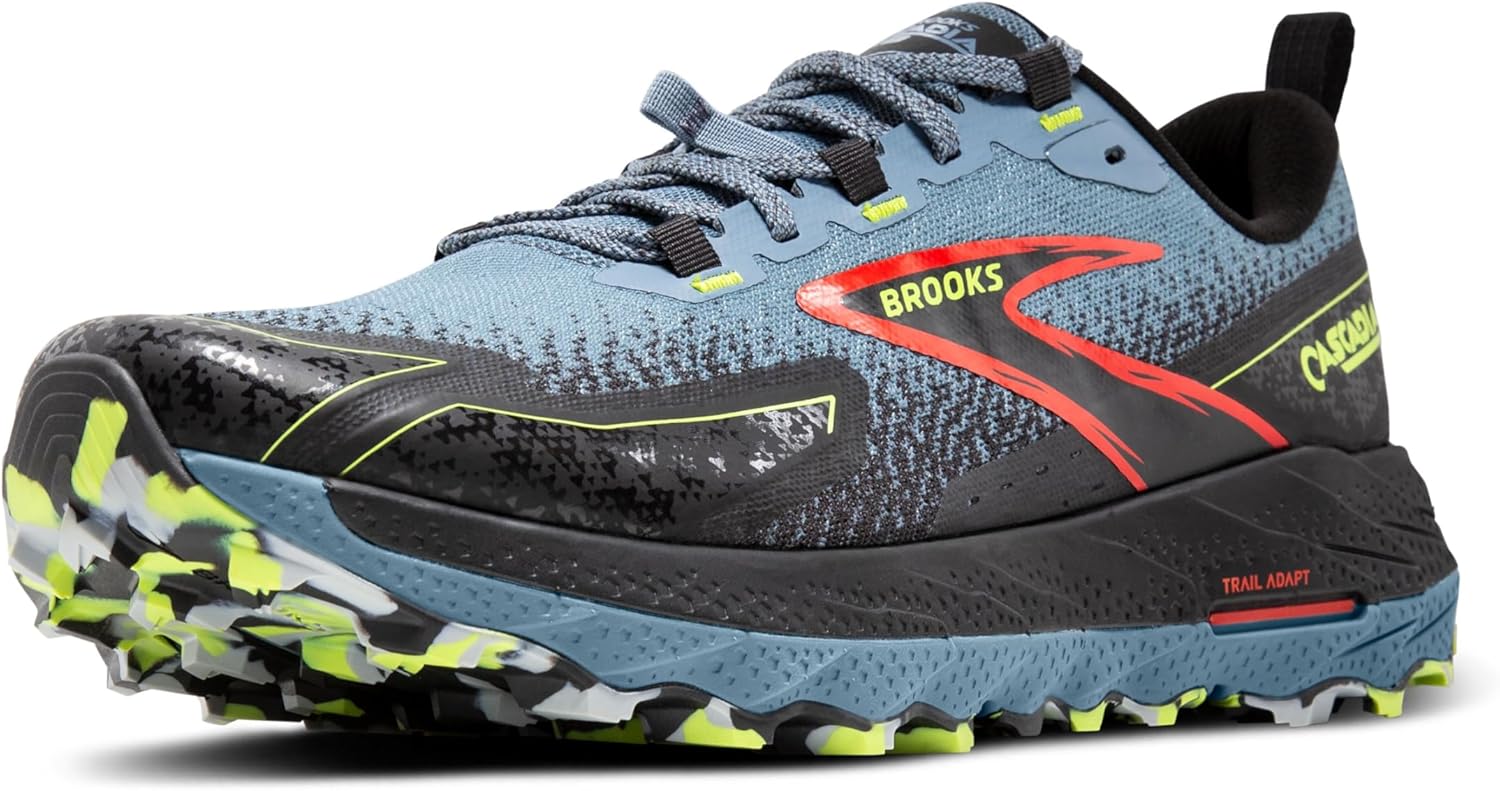
Brooks Cascadia 18 Review: Corrected Full-Stack Trail Specs
Disclosure: TrainingPlan has not hands-on tested this exact model. This research-based review uses exact-model Brooks material and independent testing. As an Amazon Associate, we earn from qualifying purchases.
Check the verified Cascadia 18 listing on Amazon →
Quick Verdict
The Brooks Cascadia 18 is a superseded protective trail trainer released in July 2024. Brooks specifies an 8mm drop and reference weights of 11.1 ounces for men and 9.9 ounces for women. Independent exact-model reviews support 33mm heel and 25mm forefoot as full-shoe geometry. Those figures correct the prior 11.0/9.8-ounce and 32/24mm entry.
Its purpose is durability and confidence rather than low mass or soft bounce. DNA LOFT v2, a flexible rock plate, and TrailTack Green rubber make it credible for rocky daily miles, hiking, and longer trail outings. It is less attractive when speed and nimble ground feel are the priority.
Key Specifications
| Specification | Audited catalog value |
|---|---|
| Category | Protective trail / long-run trainer |
| Heel-to-Toe Drop | 8mm |
| Weight (Men's/Women's) | 11.1oz / 9.9oz |
| Stack Height | 33mm heel / 25mm forefoot, full shoe |
| Midsole | DNA LOFT v2 |
| Protection | Trail Adapt flexible rock plate |
| Width Options | Standard and wide |
| MSRP | MSRP: $140 at launch |
| Release | July 2024; superseded |
What Changed
Brooks's sex-specific pages provide the weights, drop, construction, and width information. Meta Endurance, Road Trail Run, and iRunFar independently publish approximately 33/25mm full-shoe geometry. The database now uses that coherent pair and records the older one-ounce rounding and one-millimeter stack error as corrected.
Some exact-model material lists 20mm heel and 12mm forefoot. That is a midsole-height convention, not a second claim that the entire shoe sits only 20mm high. Both pairs produce an 8mm difference; labeling the measurement boundary prevents a false contradiction.
Ride and Intended Use
Cascadia 18 is stable and protective under uneven loading. The Trail Adapt system lets the flexible plate, foam, and outsole work together instead of turning the shoe into a rigid hiking boot. The ride remains relatively firm and controlled, which helps on mixed terrain but lacks the bounce of current race-focused foams.
It suits routine trail mileage, rocky routes, run-hike days, and longer events where sure footing matters more than weight. It can work for beginners because its geometry is conventional, but no shoe prevents injury. Start with choosing running shoes and prioritize secure, comfortable mechanics.
Fit and Sizing
Brooks offers standard and wide versions, a meaningful advantage over many trail models. The platform is secure through the heel and midfoot, while the toe area must still leave descending clearance. Try the width you need instead of adding length to compensate for lateral pressure.
Independent reviewers vary slightly on perceived volume, which is normal across feet. Test the shoe on an incline if possible. Runners wanting an anatomical forefoot rather than a conventional wide option can compare the Topo MTN Racer 3.
What Works Well
Protection is the strongest case. Full rubber coverage, a rock plate, and stable geometry make Cascadia 18 less vulnerable to a single sharp stone or awkward landing than stripped trail racers. The MSRP: $140 launch price was also reasonable for the material package.
Its high durability rating reflects protective construction and independent wear observations. It is still an editorial classification, not a guaranteed lifespan. Terrain, gait, storage, and fit all change wear.
Tradeoffs
At 11.1 ounces for the men's reference, Cascadia 18 is conspicuously heavy. The firm platform may feel dull on smooth trail, and its substantial upper is less breathable and agile than a race shoe. Runners who rarely encounter rocks may be carrying protection they do not use.
Watch lug rounding, plate feel, upper hold, and midsole change rather than obeying a fixed replacement number; when to replace running shoes covers those signals.
Who Should Consider This Shoe
Consider it if you want conventional drop, rock protection, dependable grip, and a true wide option for everyday or long trail use. It is especially sensible for mixed terrain and runners who prefer stable, firmer cushioning.
Who Should Look Elsewhere
Look elsewhere for very low weight, plush maximum cushioning, zero drop, or a flexible ground-feel shoe. The Altra Timp 5 is lighter and balanced, while the Brooks Caldera 7 emphasizes more cushioning.
Cross-Brand Comparison
The Merrell Agility Peak 5 is another protective Vibram option with a lower drop. Cascadia 18 offers Brooks's integrated plate system and familiar fit choices; Agility Peak 5 supplies a rockered alternative. Fit and terrain are more useful selectors than brand.
Same-Brand Comparison
The Brooks Catamount 3 is lighter and faster, with a more race-oriented response. Cascadia 18 is the better workhorse when protection, width availability, and predictable control outweigh speed.
Value
At MSRP: $140 launch MSRP, Cascadia 18 delivered strong material value. As prior-generation stock, it should now undercut newer Cascadia versions. The linked Amazon ASIN and exact title were verified on August 25, 2026, but marketplace inventory changes; confirm version, width, seller, and returns.
Final Verdict
Brooks Cascadia 18 is accurately an 11.1/9.9-ounce protective trail trainer with an 8mm drop and 33/25mm full-shoe stack. Its lower 20/12mm figure is midsole-only, not evidence that the corrected geometry is wrong. Choose it for durable grip, rock protection, and width options; accept the weight and firm ride.
Key Takeaway
Cascadia 18 is a heavy but dependable protective trail option whose 33/25mm full stack should not be confused with the lower midsole-only measurement.
Frequently Asked Questions
What is the Brooks Cascadia 18 stack height?
Does Cascadia 18 have a rock plate?
Is Cascadia 18 available in wide sizes?
References
- https://www.brooksrunning.com/en_us/mens/shoes/trail-shoes/cascadia-18/110426.html
- https://www.brooksrunning.com/en_ca/womens/shoes/trail-shoes/cascadia-18/120416.html
- https://meta-endurance.com/brooks-cascadia-18-review/
- https://www.roadtrailrun.com/2024/07/brooks-cascadia-18-multi-tester-review.html
- https://www.irunfar.com/brooks-cascadia-18-review